Romain Pouyau
Hi Romain, it says on your Instagram bio that you are a ‘paper addict’. I’m just wondering when that addiction started?
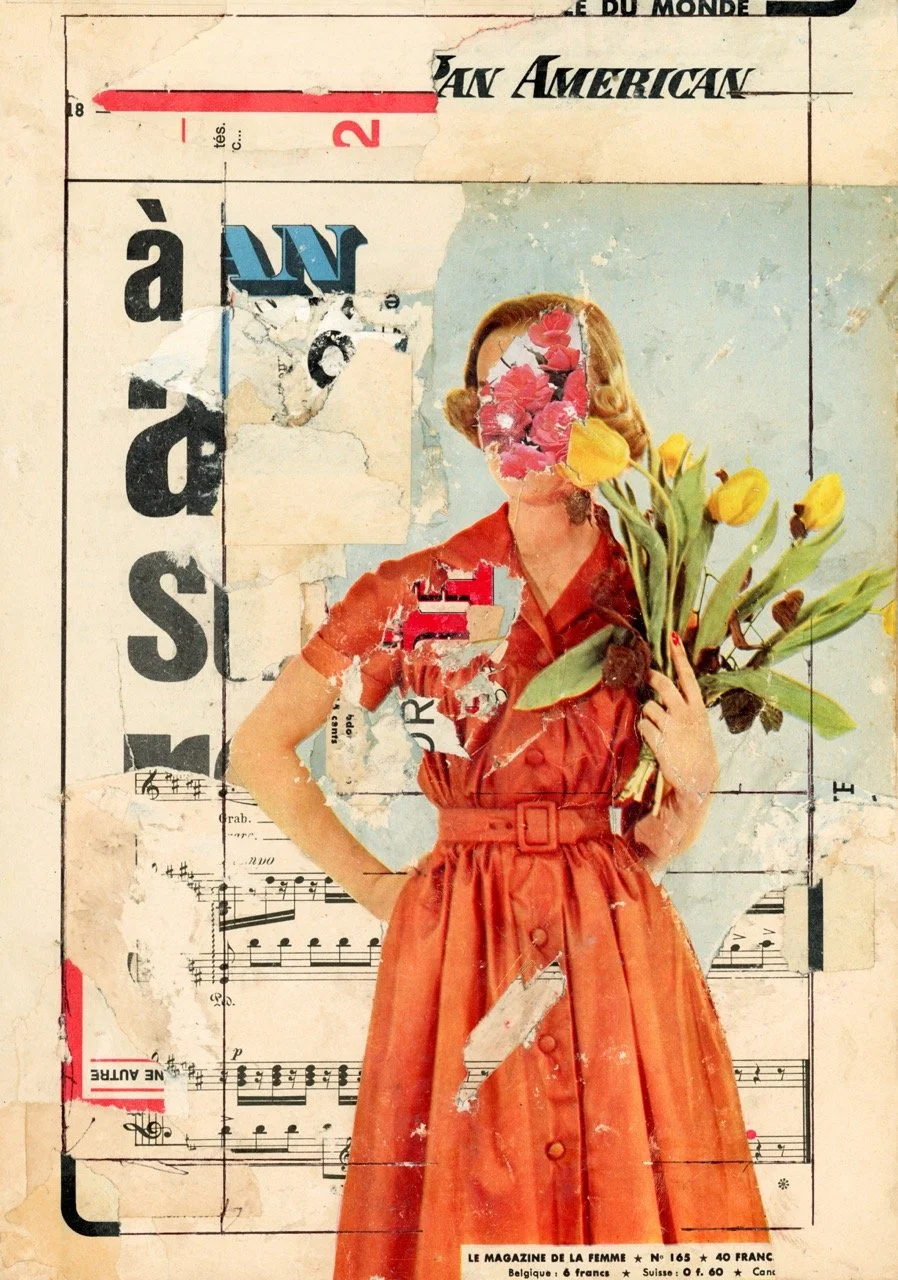
I was a digital addict for a while, and I’ve worked for years in communication and advertising, I was working with a lot of designers and other creative people. I started to save things that I liked on my computer, like ads and artworks. It was before Pinterest, so I was saving things in a file – I did that for years. I think I always wanted to be a designer but I wasn’t, I did communication studies. One day I was unhappy with some work I was doing and I needed to be more creative. I challenged myself to do the things that I liked to save. I started maybe five or six years ago, firstly doing collage and then paintings, but I was not as good with painting as I was with collage.
I started with issues of a vintage newspaper that my mother had from her father, a French publication called ‘L’Illustration’. It was made in the 1920s and it had great typography, illustrations and ads and the paper was really good quality.
Is your art now your full-time job?
Yes, it’s my full-time job now, but I am looking for something else to do alongside it. I haven’t found a good balance between my art, my business and my social life.
One of your most consistent approaches to your subject matter is producing portraits of iconic Hollywood stars, how and when did that start?
I live in Orléans, the city of Joan of Arc, and there are big statues of her, she’s very iconic - one of my first canvases was of a picture of her with that image transferred onto the canvas with street paper as the background, I did maybe four or five of Joan of Arc, and then I was wondering what I was going to do.
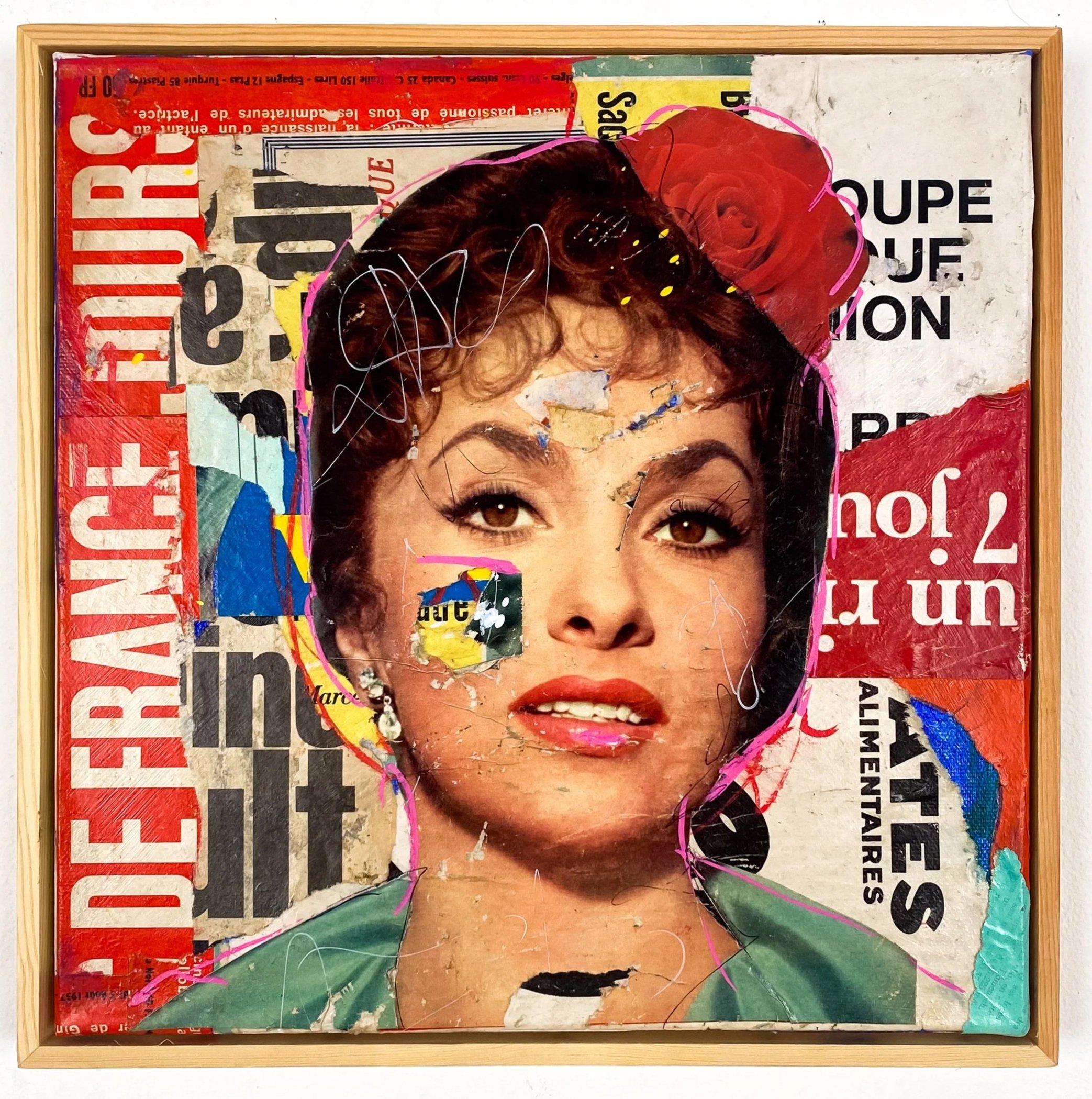
I found old iconic photos in old newspapers which I liked, so I added lots of newspaper clips and mixed media to my works. It was really cool and I found a style that worked for me. I didn’t study art, so my knowledge of the history of art wasn’t that good. I mainly knew about pop art and also some graphic artists like Shepard Fairey. I like the point where art meets commercial graphics, so I started to do something like that in my own style.
The more I learn about art the more I try graphic and abstract things. I find old newspapers at vintage markets, in France there are many markets like this. The key
for me is to have great typography - I love typography and I mix that with pen, acrylics and anything I can find. I try to make it stylish, original and lively.
There’s also an interesting juxtaposition between the gloss and ‘Hollywood’ feel
of the portraits and the roughness of the ripped street paper that goes with them.
Yes, I wanted it to have a kind of throwaway feel to them. I try to make my art true but beautiful, I like the idea, much like other people doing collage or even electronic musicians who make compositions with all things, to make it brutal but to keep a nice melody.

Are you familiar with and/or influenced by the work of Jacques Villeglé?
Yes, I discovered him when I started putting work on Instagram, I did kind of Villeglé things and I’m still doing similar work on bigger canvases. I’m like him with getting materials from the street and I like the rhythm. I’ve seen him in French galleries and I like how his work reflects the modern world, but there’s poetry in it. There are great colours and great designs working throughout it, there’s a duality in it, that’s what I also feel as an artist working in commercial art but fed up with it like everybody. There are such great designers working in the field that the work is wonderful sometimes, I’m trying to lead with this duality and do other great things with it. I love the idea to offer a second life to these papers, not a commercial one but an artistic one.
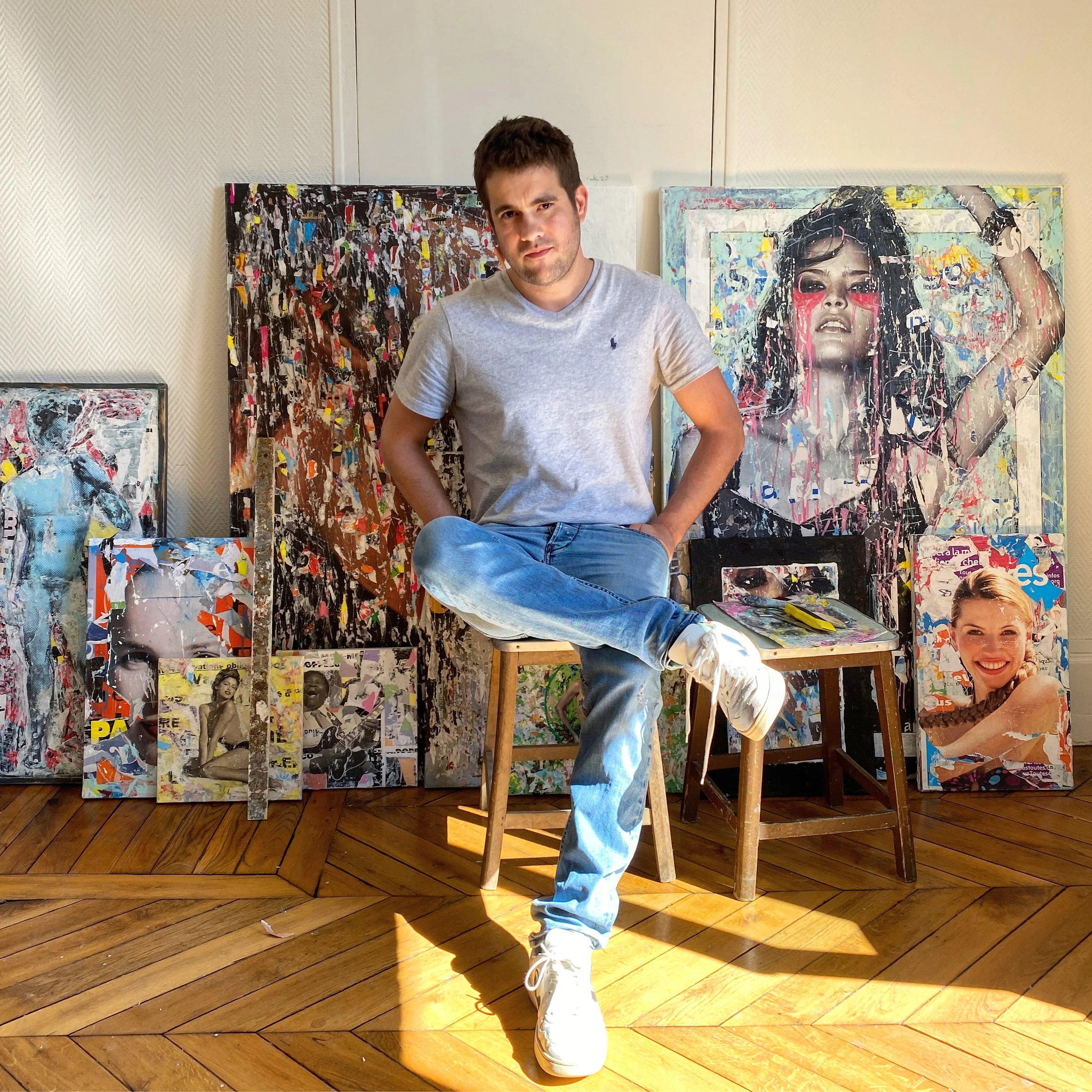
You said that you got into collage about five years ago, I wondering how the pandemic and lockdown were important for you to have time and space to develop your work. There’s a picture on your Instagram which says ‘Lockdown Work’ and you’re surrounded by all this work. Was lockdown important in terms of creating?
It wasn’t that good, for others maybe but I didn’t like it. I was really creative during this period and was working too much on my collages while I was supposed to be working on my real job, so I wasn’t too proud about it. I work in my flat and there was paper everywhere. Now I have a workshop not too far away, with other artists but during lockdown I was really invaded in my everyday life by paper, glue, posters and all that art stuff, an artistic mess even in my bathroom or my kitchen. It was kind of exciting having my workshop in my flat because if I had an idea I could work on it at anytime.
About the commercial side to your work, are you managing to sell pieces of your work. Is that side of what you do developing?
Yes, I’m developing but I’m not so happy with it. I’ve tried different things, but I haven’t found the right way to work with it yet. I did some solo shows in galleries which gave me some commercial success and some added credibility. I like to create and I like to show my work, but I don’t like the commercial part – I don’t feel good with it.
Do you feel a hint of sadness when someone buys one of your works and you have to part ways with it?
The first one, yes. But now I produce so many things I need to sell them. The piece that I like the most is the one I haven’t created yet. I have some strange relationship with what I do sometimes, I sometimes need to see them go away.
It sounds to me like it’s more about being in the moment and enjoying the process and once a piece is finished it’s pushed to one side so you can start another one.
When I’m doing collage I’m never bored. I’m in the creative process and I feel a kind of grace, I’m in the flow. And when It stops and the sound of the modern world starts to come back in, I don’t like it so much.
I did a solo show near to Paris this summer, I was excited about that. When I started to work on Instagram I had lots of invitations and messages from all over the world like New York and Singapore but it’s really difficult for new artists to deal with all these solicitations with all these international art strangers. I didn’t know how to manage making it all the way to the United States with my collages and paintings, I had my day work and I’m also a single dad of a twelve year old, so there was too much going on and I didn’t know how to manage.
Working with a gallery near to Paris was much easier. The gallery owner called me and she came to my workshop to discuss working together and to organise things further – I like it like that. I appreciate being reassured by a quality human relationship, working in trust with a shared vision. Don’t feel comfortable taking my work further afield right now, maybe in the future because I like the idea of it but when I have to do it it’s like – ‘Whoa, how can I really do that?’.
You mentioned the future there, do you have any plans or visions for where you’d like to take your art?
Yes I did some new work recently, I’m showing more organic things. This time I am trying collage, décollage, and painting – something brutal. I’m experimenting with painting backgrounds. Collage is very lively, whereas painting is much more peaceful, I think I’m looking for more peace, so this is one thing that I’m working on and developing.
When I make collage, I sometimes think of action painters like Jackson Pollock with his paint drops, I work in a similar way, I don’t sit, I stand up and splatter the imagery. I’ve found a serenity and a peace with my work. I did a series of 100 little squares which are more brutal and lively so I have a lot of influence and ideas. I need to work - I know I don’t do it as much as I need to on the commercial side, like working with galleries and other people.
I need to find the right way for me to work and be productive. I sell on Instagram and on other platforms where you can sell art through auction. I’ve tried many things but I need to organise it better. The creativity is always there and I feel like I’m in an evolution. I think what I do is good but sometimes I just want to say ‘OK, stop with impulsive collages and try to organise things’ but the more I organise, the less my collages are cool, and the less I feel the creative dive I’m looking for. I need to find the right balance.
Perhaps you need an agent?
I think so, I need someone whose job it is to do that but I haven’t found the right person yet.
I’m sure it will come at some point, it sounds like an exciting journey you’re on at the moment where it’s unfolding in front of you. Yes, collage is a journey. The greatest thing about it is when I started collage I didn’t know where I was going, so the journey was the better part of it. When I try to do something a bit more constructive, I’m bored – it’s not lively and not what I want to express. So I’m learning to accept a more chaotic creative process because it’s the best way for me to have great artworks.
The Big Crunch
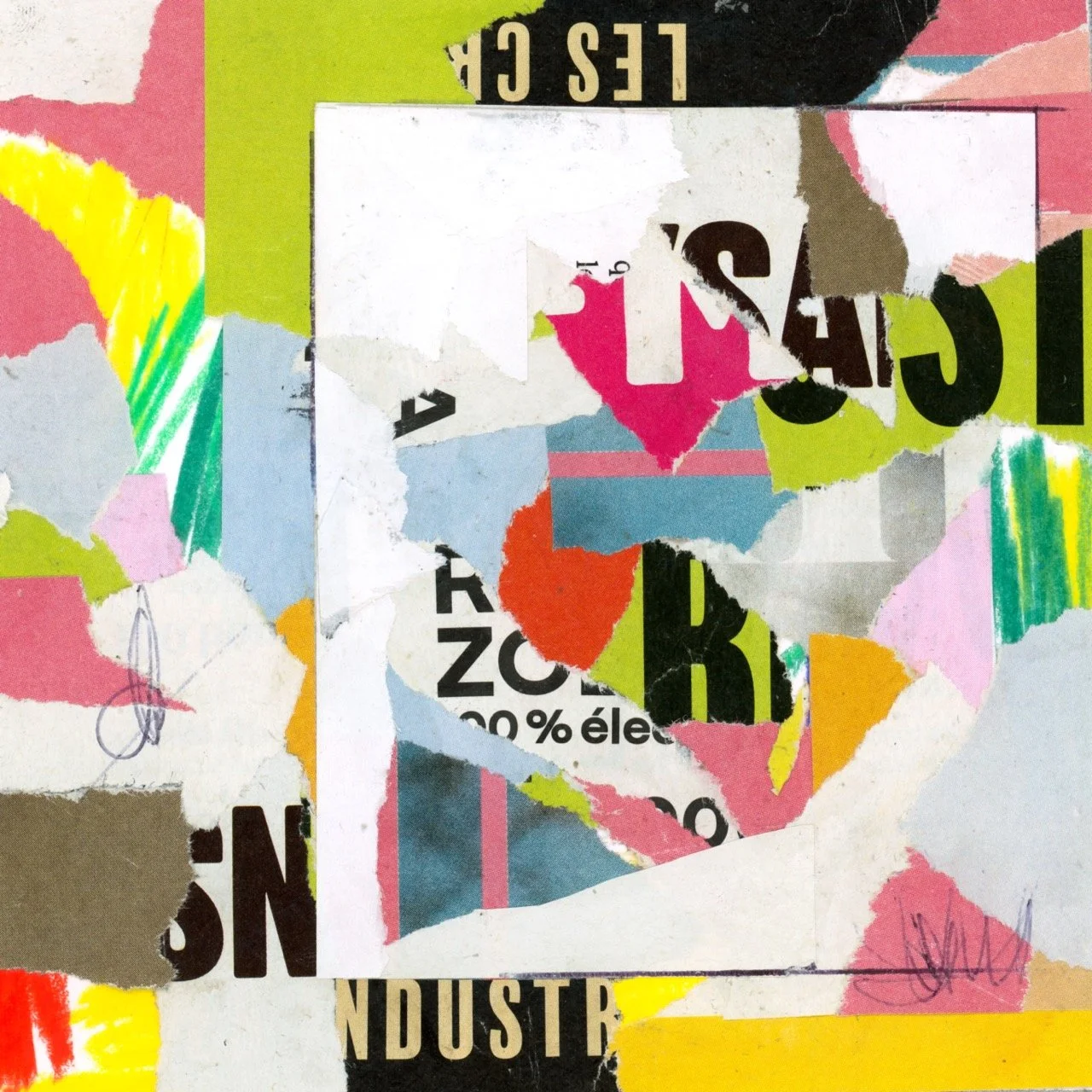
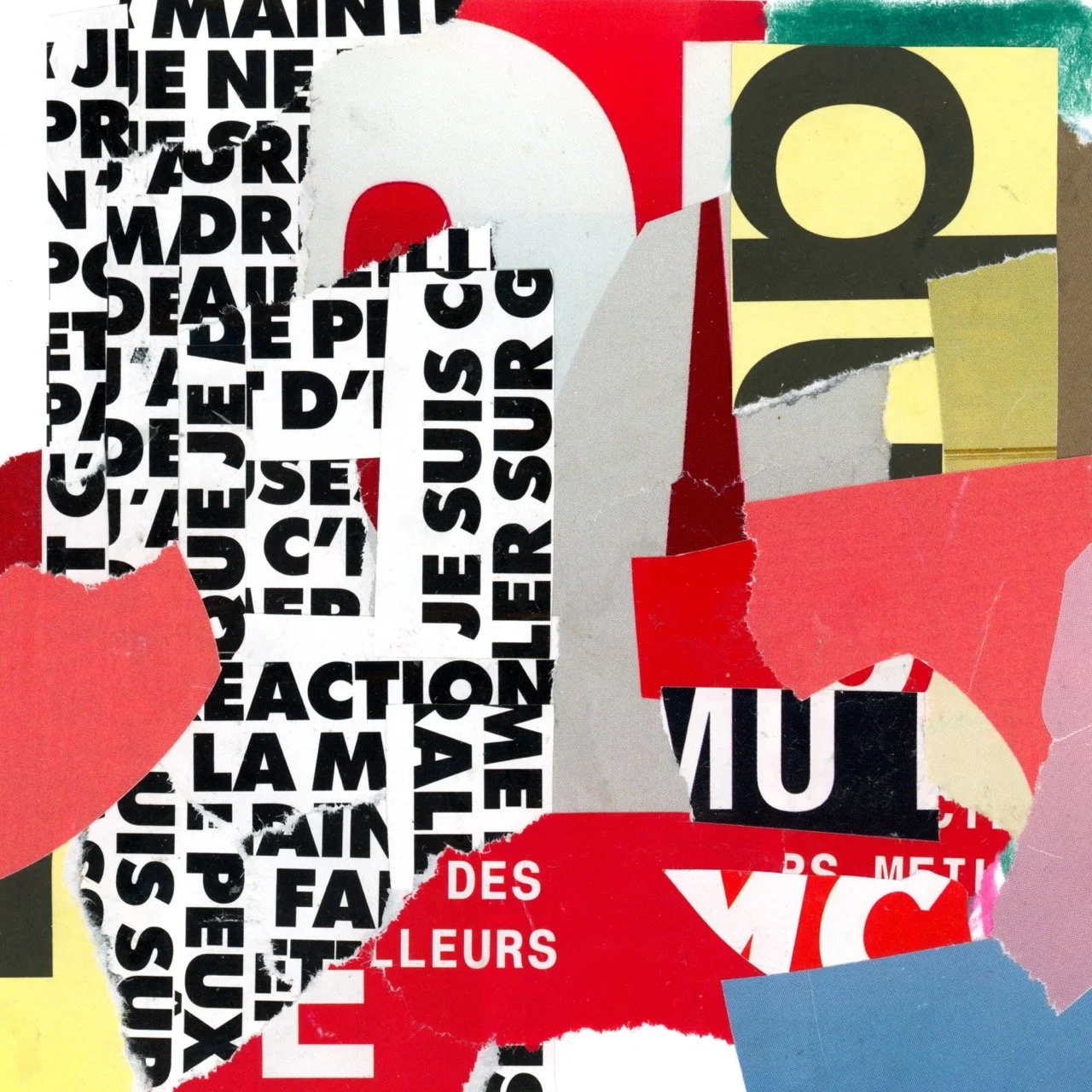
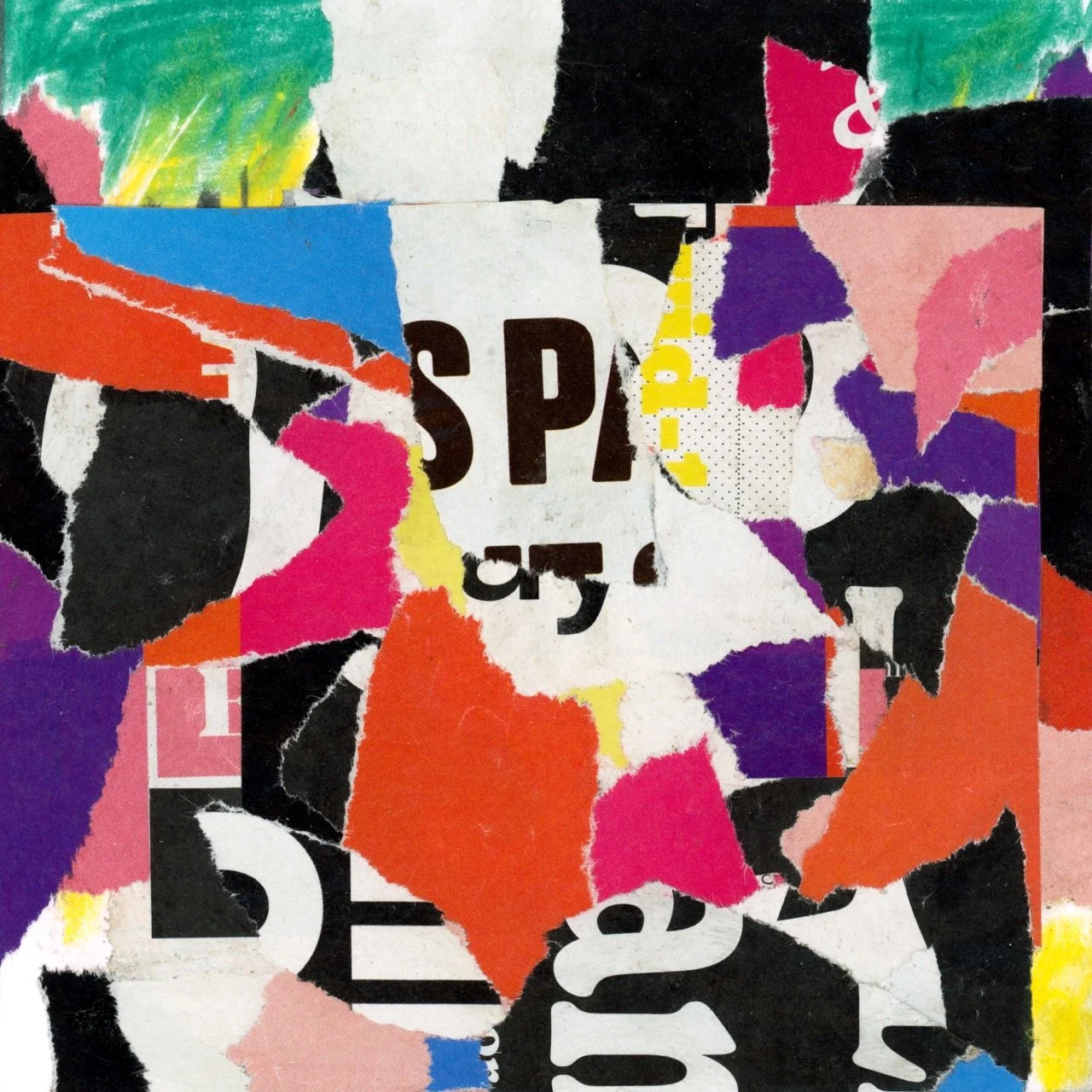
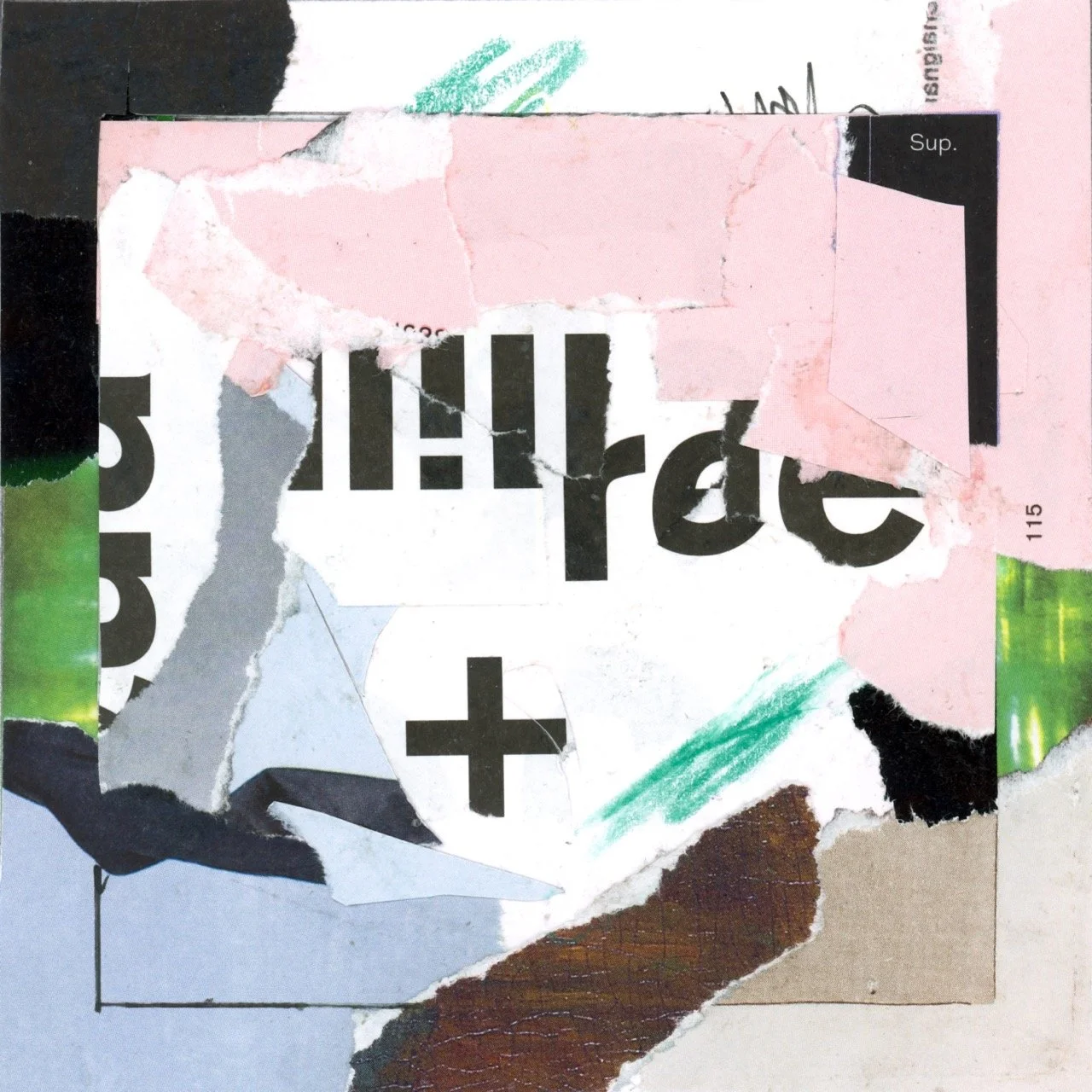
The Big Crunch is the story of a possible collapse of the universe. A cosmological model with a contraction phase following its expansion phase. A reversed big bang, where time and space disappear, where density and temperature reach unthinkable levels. Material structures are compressed, destroyed. Human activity, that tiny drop in the cosmic ocean, makes no exception.
These pieces are from a series of small handmade artworks made with modern magazines, pens, paper pen and also colour pencils of my daughter. The artworks were made in 2022, during lockdown. In this changing world atmosphere, this work reflects my questioning on the meaning of human activity in a world in ecological, demographic and philosophical overheating. A new perspective on the infinite vanity of a world of lifelong production on a planet with limited resources. I translate this scientific theory into art, to create a series of 100 compressed squares.
Shapes, colours and typographics clash and blend together. Material structures are compressed and destroyed. I like the contemporary, colourful result, but this work is also in line with works of famous French artists. It is my humble tribute to the inspiring work of Jacques Villeglé who left us in 2022. It also makes me think of the compression sculptures of the French artist César.
La pianiste
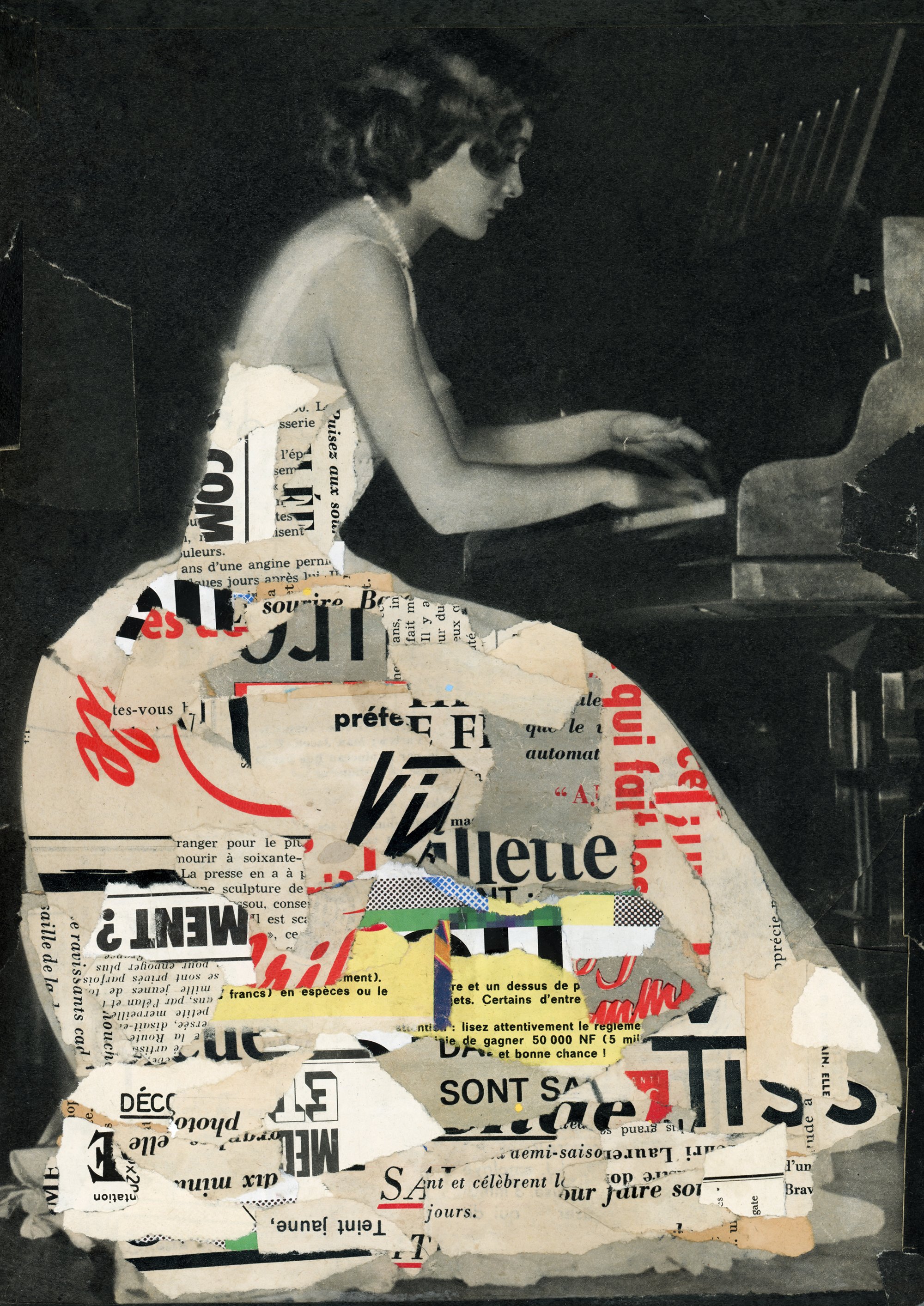
I found the original picture of a Russian pianist in a French Magazine called Paris Match. I don’t remember her name, nor the date of the picture as I often rip things and put them in folders or do stacks. I added many typographies on her dress from old newspapers and few contemporary elements to make contrast and a kind of distortion.
I love the rhythm of this artwork. The dress seems to move and be lively, while the background stay calm and quiet. The result reflects my work quit well, as I often have the feeling of being a visual DJ who creates melodies with shapes, letters and colours.