Millie Bartlett
Millie Bartlett lives in Australia and has been collaging for just over nine years. Her collage work is almost exclusively derived from one source - old copies of America's Saturday Evening Post. It's a fascinating relationship that results in beautiful, thought-provoking work. We chatted to Millie to get a further insight into her unique way of working.
Hi Millie, let’s start with the obvious question in terms of medium then, why collage?
I used to draw and paint. My mother was a painter so I grew up around creativity. I do remember having some artistic epiphanies when I began collaging. It was an electric feeling, it felt so easy, there was no friction or doubts. In a way it was less about imagery and more about the sensation and feeling. I think I was also creatively frustrated and stuck which led me to the genesis moment with collage.
When you’re working, do you have a particular aim, are you working towards something or is it a discovery process?
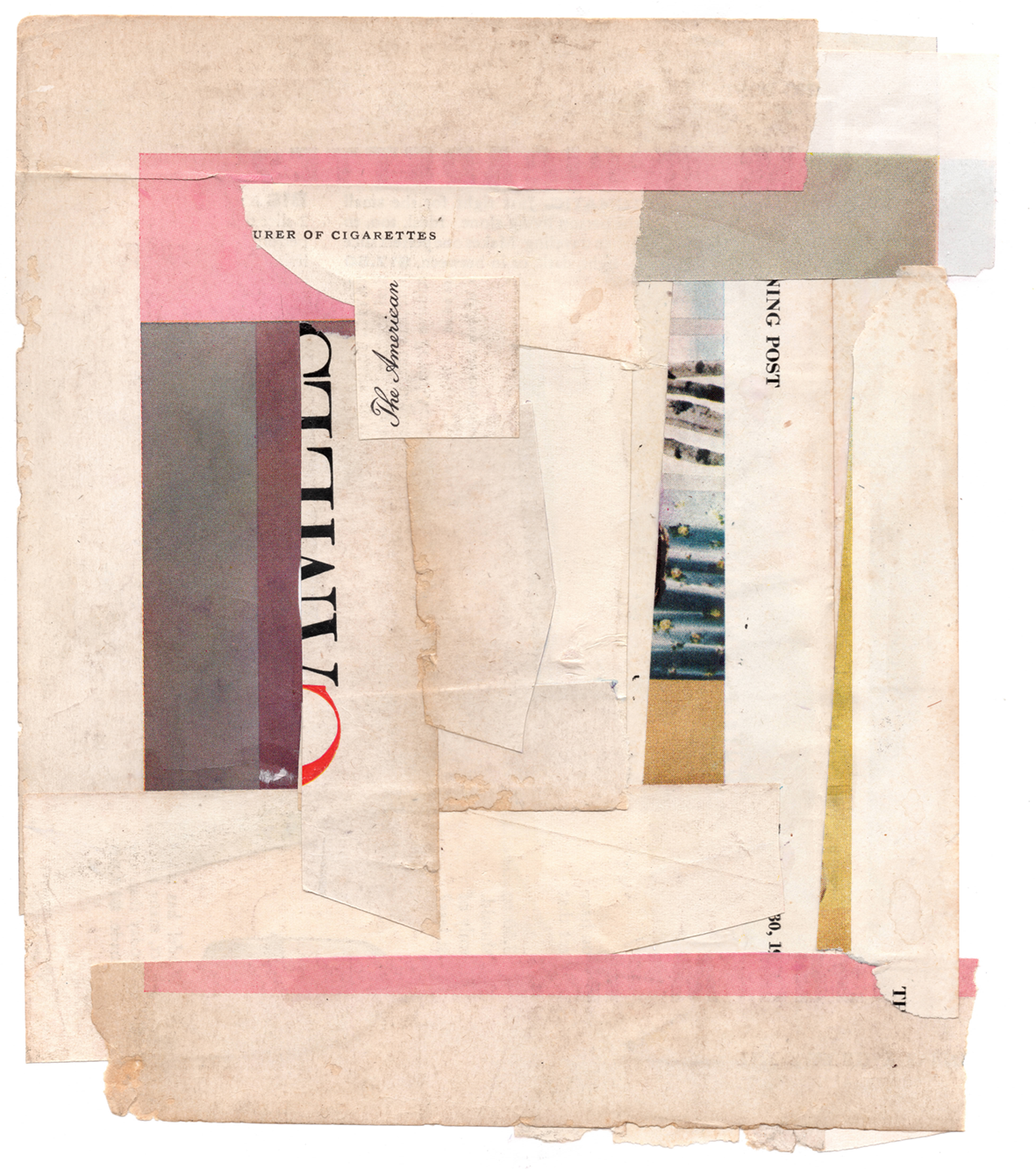
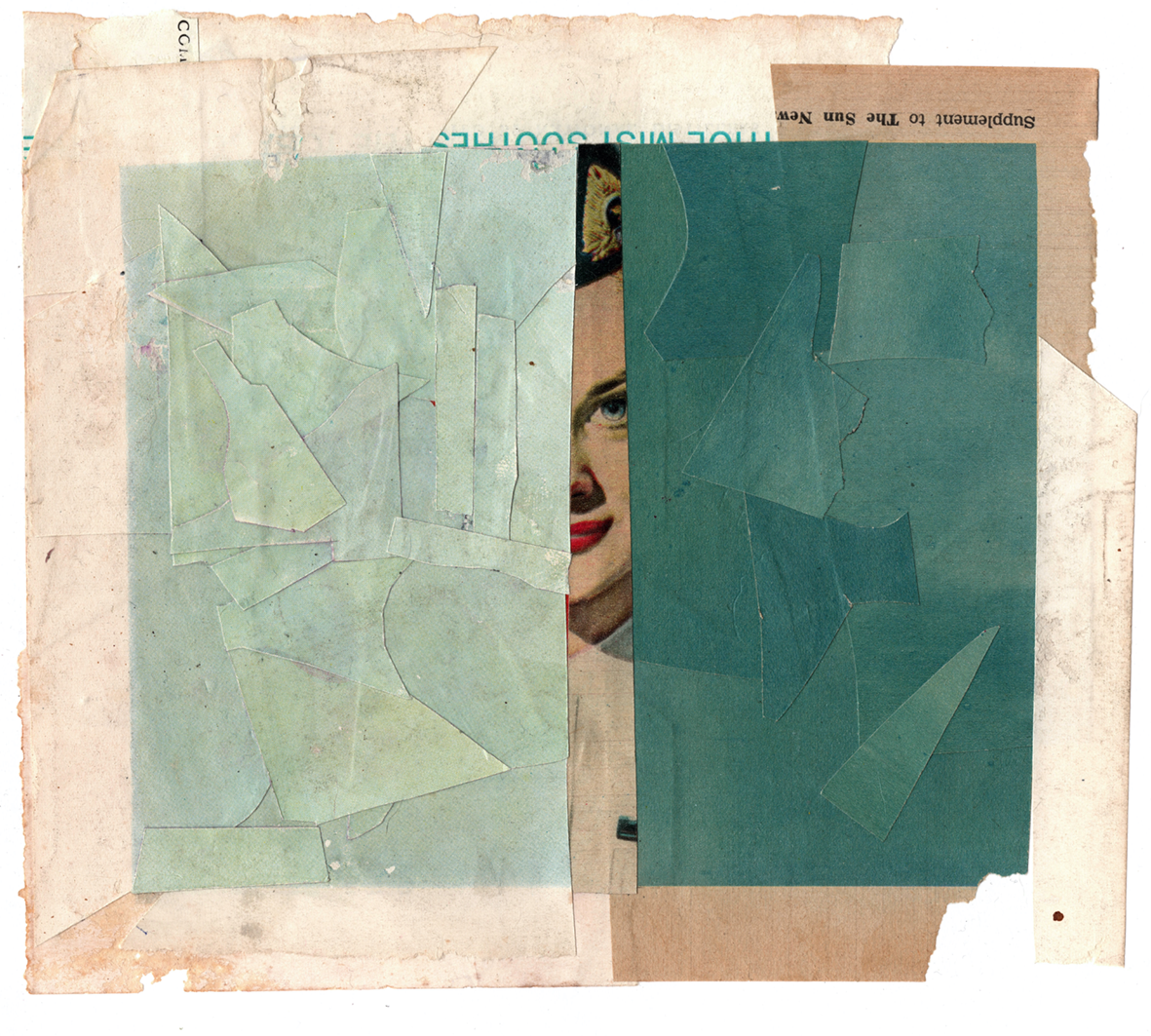
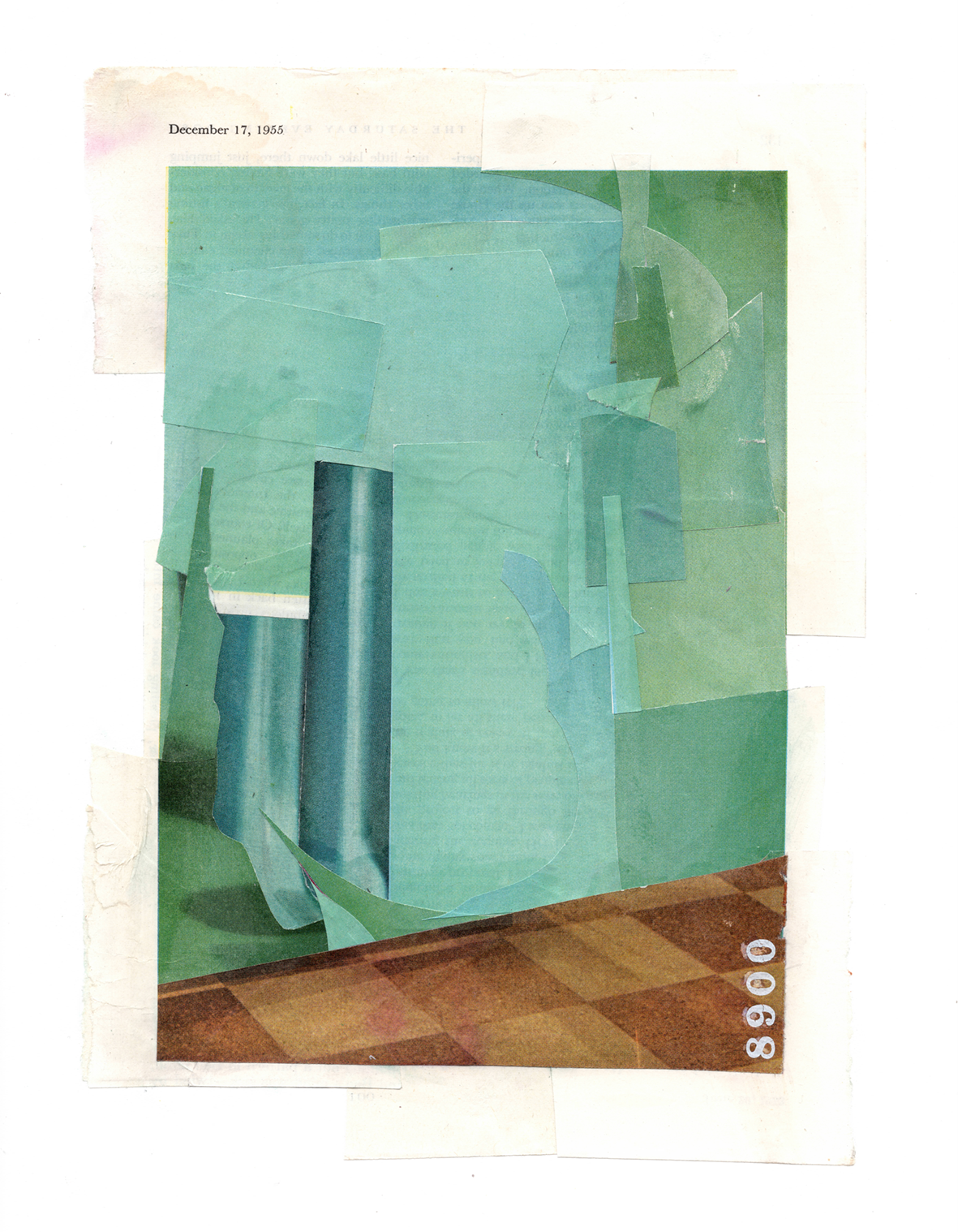
In a frustrating way, it’s all of those things. In terms of beginning on a collage it has to be about setting up the background first. For a long time my work was quite colourful and bright, there was a lot of colour blocking - I really enjoyed that and still sometimes go back to it. Then my work evolved to using a lot of beige backgrounds and I still use those now. For a while I painted the backgrounds and would distress them. And that method has evolved again into the work that I’m making now.
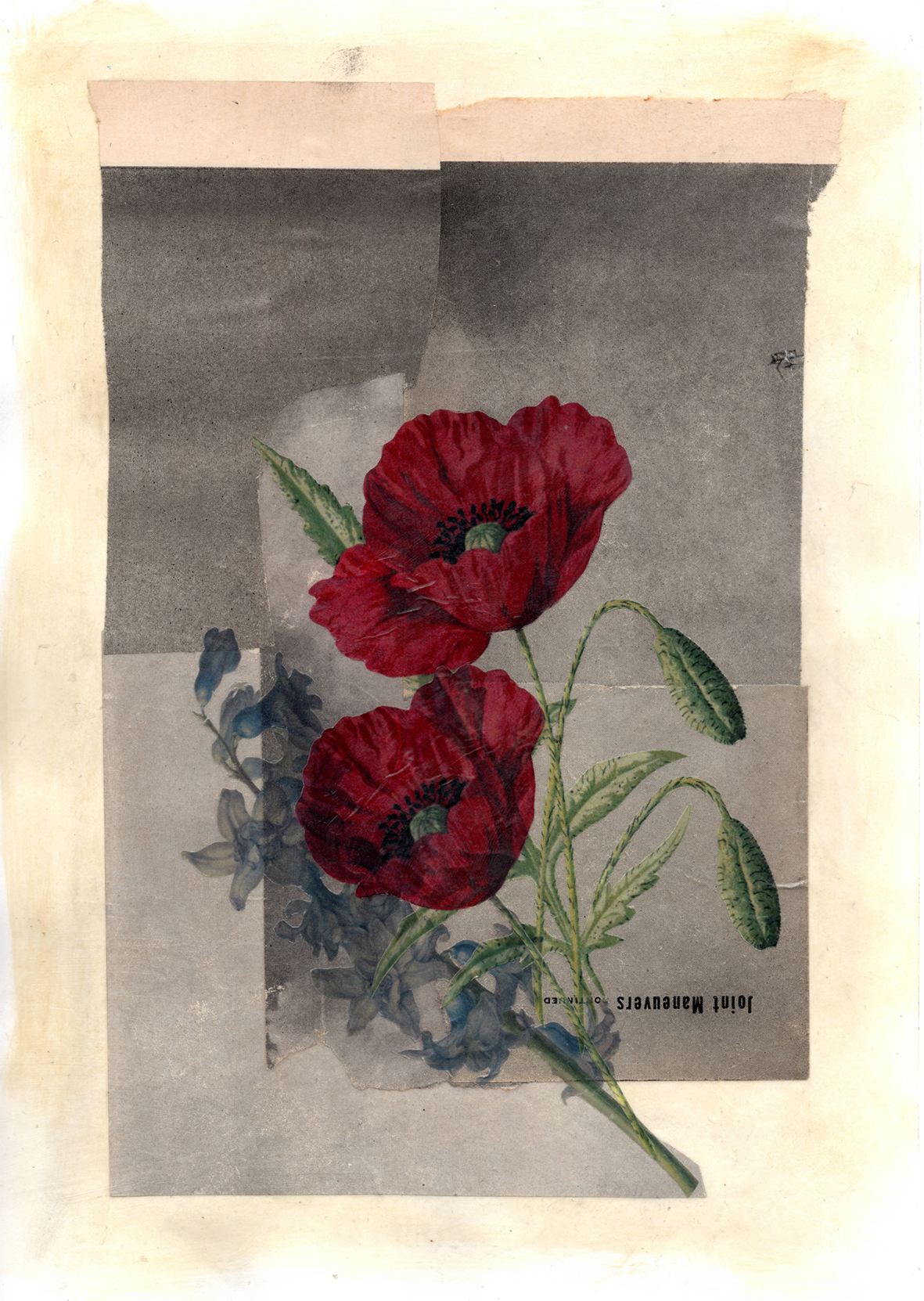
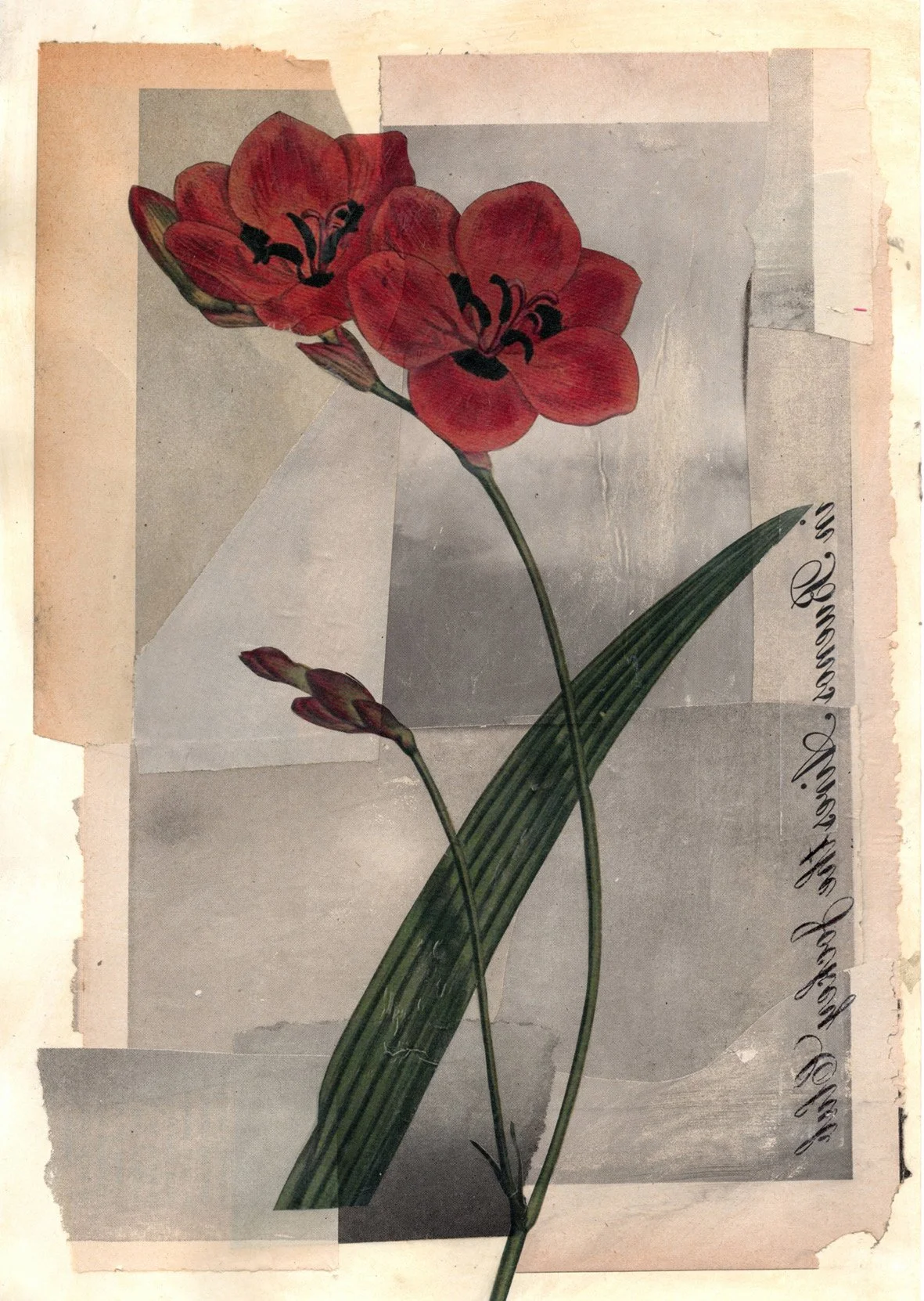
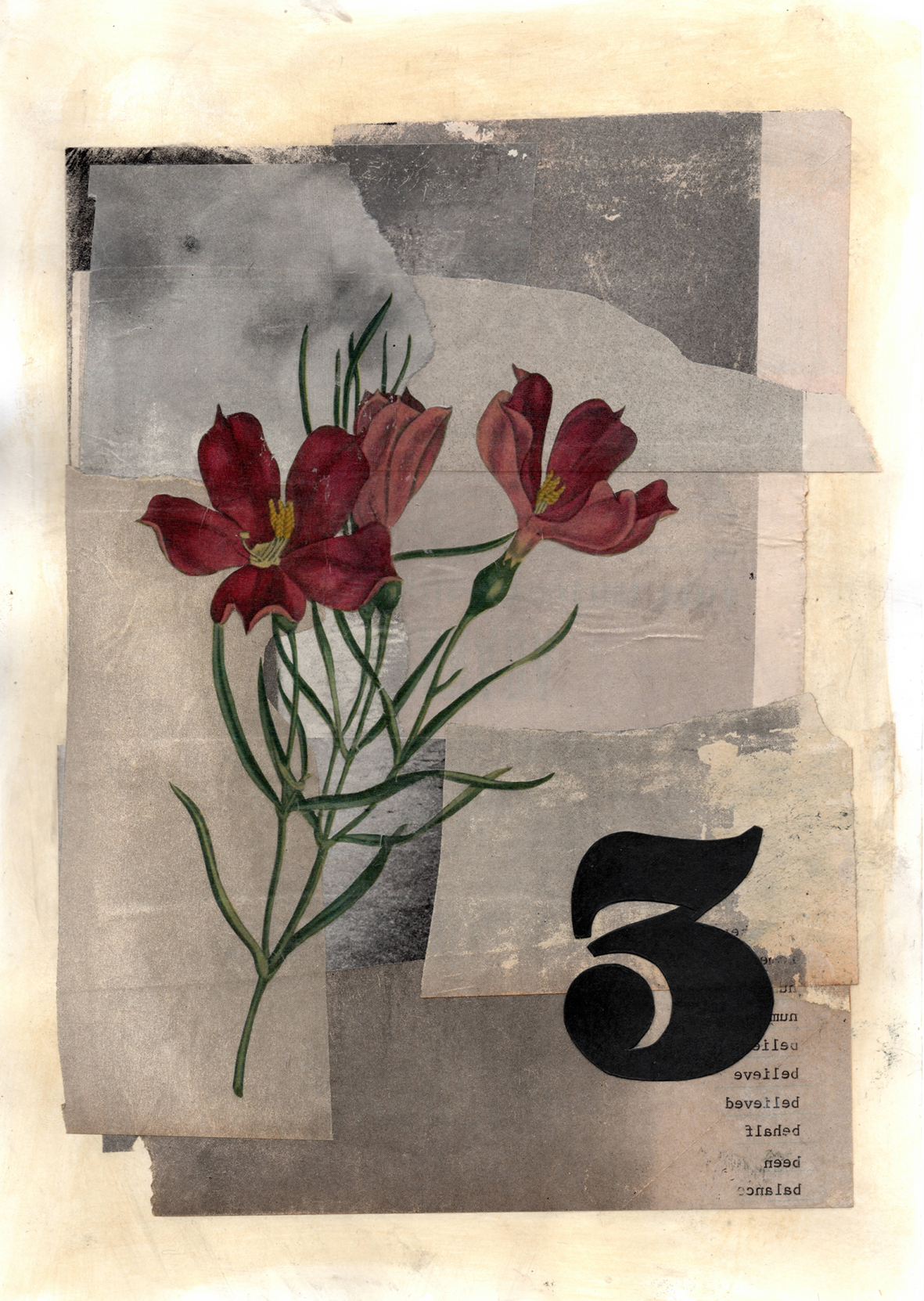
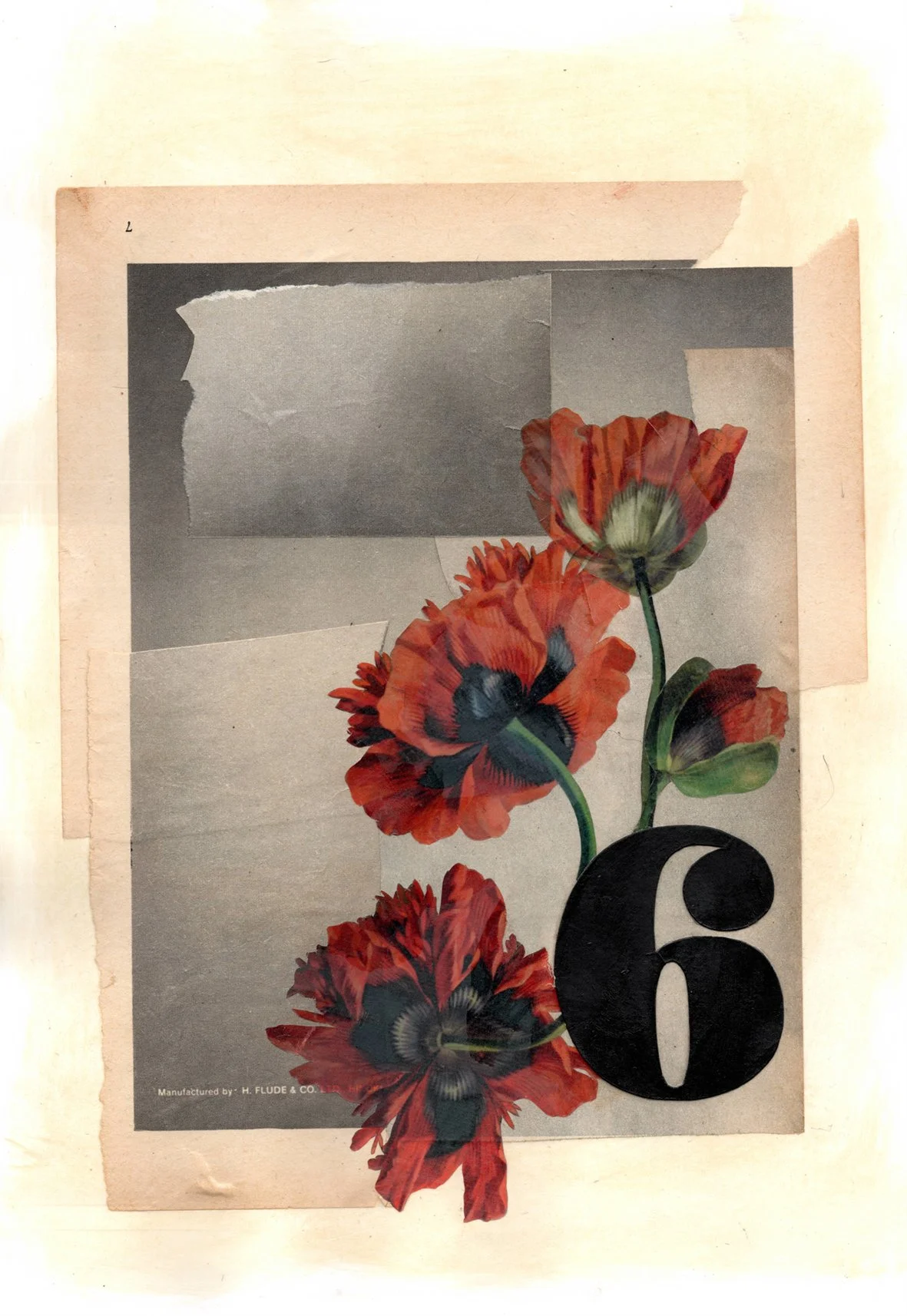
Now, I work fairly exclusively with Saturday Evening Post magazines. They’re sort of a cross-between a magazine and a newspaper. Obviously the quality of the paper that they print on is aged and discoloured. I spend a lot of time cutting the edges of each page and the blank spaces in the adverts. In that way, sourcing my materials is now inverted - instead of cutting imagery from the page I now leave the images and dissect pages for their blank ordinariness. I use the negative space in the magazine and that becomes the backdrop of the collage. It gives a good texture because none of the bits that I cut out are the same shade due to age and discolouration and paper quality.
It’s almost like a painter preparing the canvas in that sense...
That’s pretty accurate. I love hearing about how other collage artists approach their work. Some do backgrounds and some just start by fleshing out the concrete image. For me, creating the background just sets the tone for what comes next.
Is it a piece by piece thing or do you have a day doing backgrounds, and prepping canvases as it were?
It’s a piece by piece thing but having said that I will sometimes create a few backgrounds at the same time. The difficulty with that, and also this source material in general, is supply. I now have to keep scouring the internet and estate sales and thrift stores for the magazines on a regular basis in order to maintain supply levels.
It’s an iconic magazine and it really spans the ages. I’ve got copies from the 40s through to the 60’s and they’re just wonderful. Once I found them they were all I wanted to use. It’s become the kind of relationship now where it’s very exclusive. The paper is not so technically advanced that it’s glossy but it’s not like paper where you can feel that rustle of the fibres.
It’s effortless for things like gel transfers and layering without the bulkiness. The fact that I’m in love with a finite resource makes it sad and exciting in a way and definitely makes me try to use every part of the magazine. It keeps it interesting. There’s also the cultural aspect of the magazines themselves - you get historical events, celebrity culture and the rise of fear in advertising and, to varying degrees, social conditioning. I do work with other materials of course, but that magazine is my happy place.

In terms of the people we’ve interviewed, that’s quite unusual. Lots look to old books and old magazines but are perhaps not quite as narrow in terms of finding one publication that they’re wedded to.
One of the reasons I am so enamoured with it is because I know it’ll become harder to obtain. Sometimes I get lucky and come across a whole stack of them where someone’s mother has passed away and her kids are clearing out all of their stuff. There is so much the paper goes through just to get to me. It’s lived its own life and that all comes to bear in the collages too, I think.
But also, when that day comes when I run out of Saturday Evening Post magazines I will just use what I have and my work will reflect that change in materials. When a door closes, open a window, as they say.
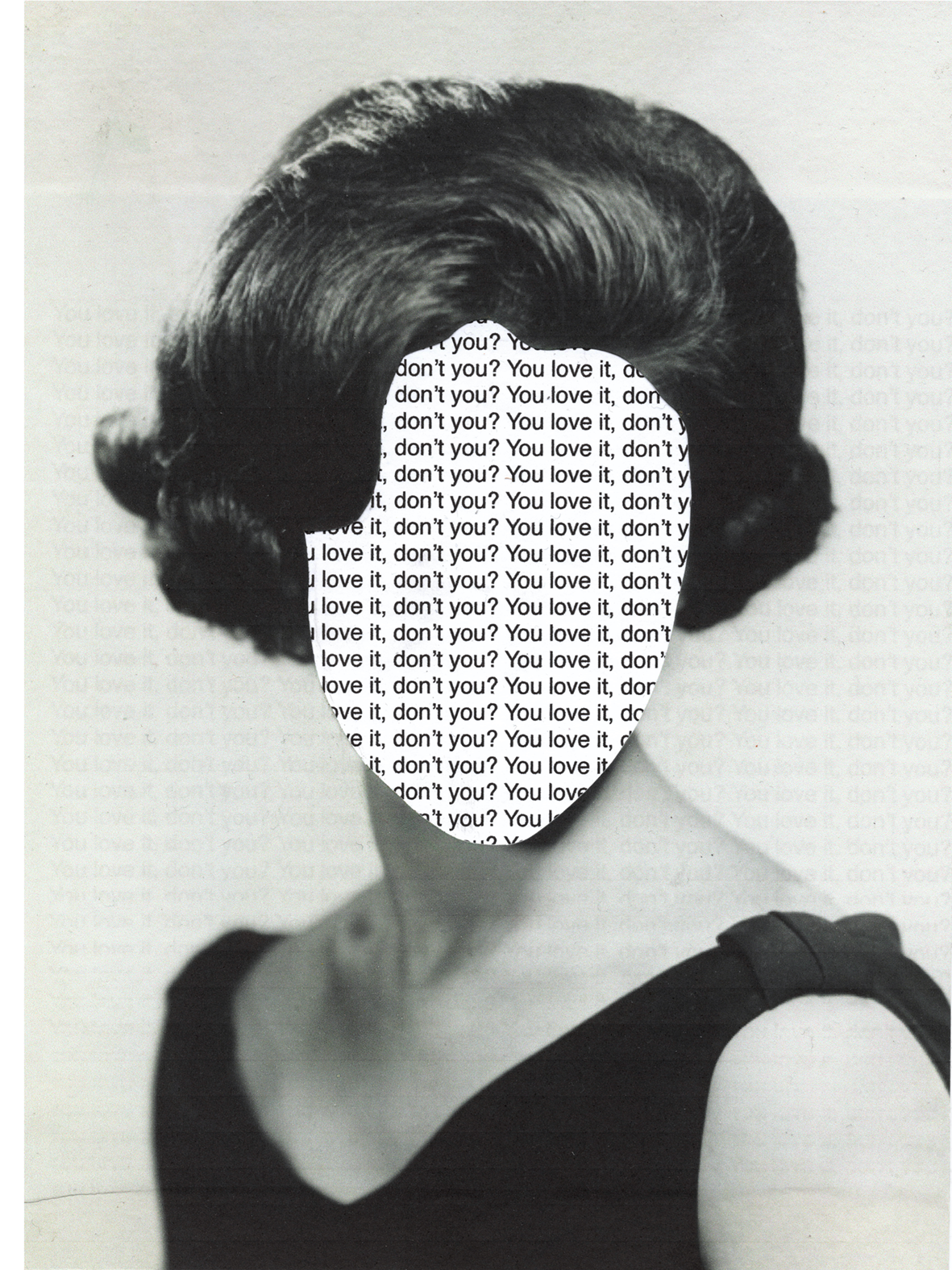
No Darling, You Love It
(2016)
This collage was a kind of turning point, I think. I was coming out of the blank-out-the-faces period but this one drove a message, or at least I like to think it did. I was thinking about the song Blurred Lines by Robin Thicke and Pharrell WIlliams (I have never listened to it) and I was thinking generally just how shitty it is that men can literally make a ton of cash by sexualising women and reducing them to body parts for gratification. (And the fact that they also sampled Marvin Gaye was vile too.)
Misogyny is everywhere. Every. Where. All the time. I remember being sexualised by a man when I was in my early teens. Girls grow into women at lightening speed. We live with it from childhood. It’s exhausting.
When I was a child, hair metal prog-rock bands were rampant. I remember watching the film clip for Cherry Pie by Warrant and I remember feeling very unsettled. That men, anywhere, could be so predatory. But little old me had no idea how bad things could get.
So, the title No Darling, You Love It is a kind of galvanised response to all of the media that we are bombarded with that normalises the sexualisation of women and
girls. Putting it back on the toxic masculinity brutes that perpetuate it and make our lives uncomfortable at best, gut-wrenching at worst.
Technically, I love that it’s just two pieces of paper conveying all of that for me. This was a bit of a gateway collage that led to other collages that just have lyrics instead of faces. The idea of 1950s white women saying rap lyrics was amusing at the time but also was a fun exercise in trying to flip certain scripts. That women in rap are now empowering women everywhere turned out to be a nice destination from where I began my lessons in feminism in childhood with hair rock bands intimidating me from the TV.
So you’re making your backgrounds using the negative space from the magazine, once you’ve got your canvas sorted, are you then delving into the content of the magazine and using that to overlay on top?
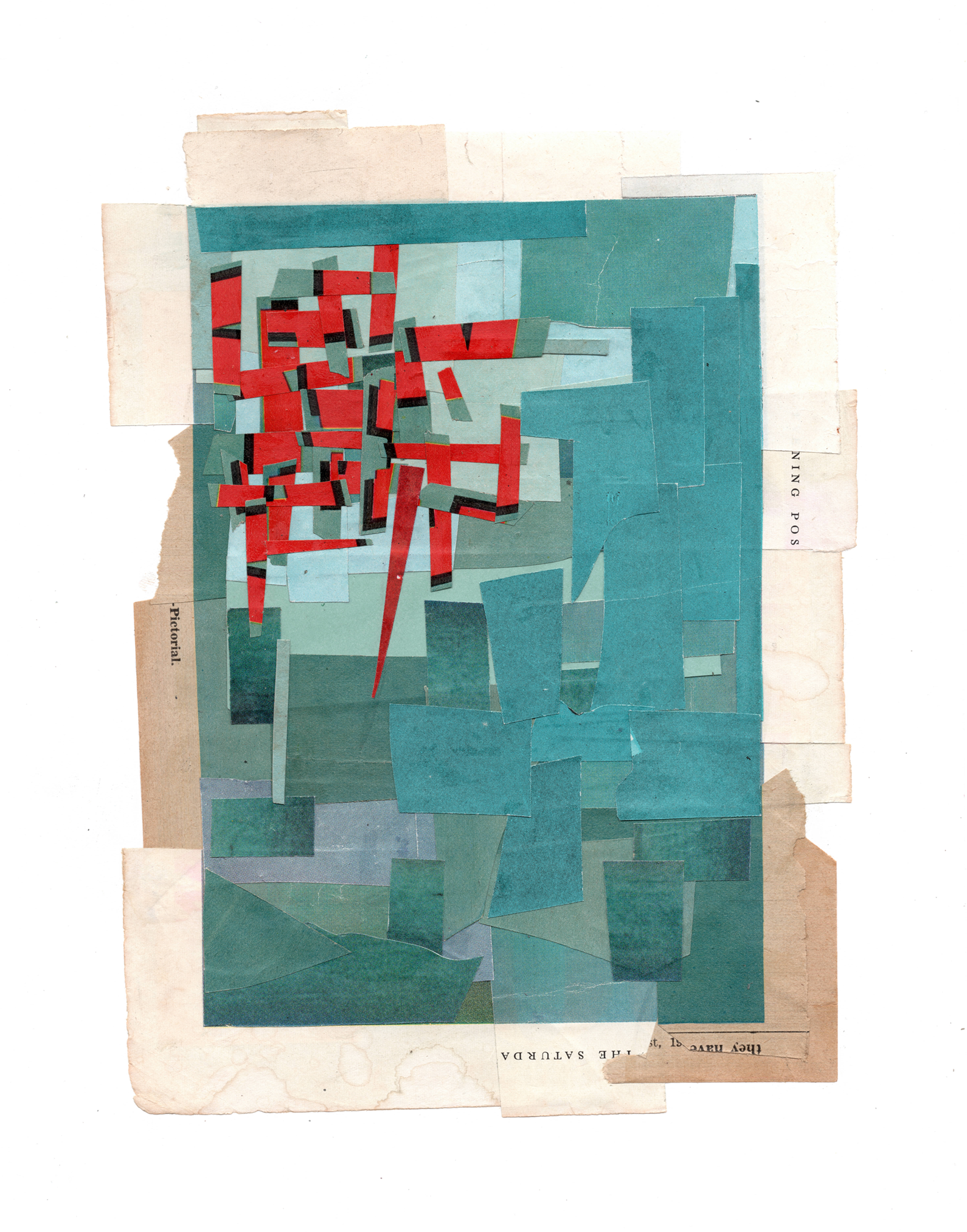
Exactly. Lately, I’ve been doing pieces with borders and then action within to create
some drama in the pieces. I’ve really enjoyed making those and it really comes back to using anything I can find that has those beige tones.
My standard for a long time was figurative and message sending and social commentary, but I’ve moved into more abstract work, which was a total surprise. I’ve been really enjoying just working with colours and textures. I’ve found it really interesting investigating colour in terms of that abstract drama. I also have this kind of 90’s grunge aesthetic that I’ve had for a long time where I don’t try and hide the glue I use or keep everything pristine. People tend to have a particular ‘period’ in mind when they say they like my work and it’s cool finding out what really resonates with people. It’s a bit like bands having a country album or an 80s synth album.
I suppose the kind of air of nostalgia that permeates through your work is pretty much inevitable because of the source material that you’re using.
It feels inevitable to me and I’m happy for that. And again, the thing I love about collage is what you have at hand. I find it interesting to sometimes introduce limitations when I’m creating. A lot of people who know me in my day to day would ask ‘What makes good art anyway? It’s so subjective, how can you tell?’. And it’s a three colour rule for me. I’ll go through three colour phases. I find it helpful if I’m stuck in a rut or things aren’t really flowing.
Collage is such a forgiving medium in some ways because there’s nostalgia, accidents, mistakes and it’s trial and error. If you kind of screw it up, it still works on some level. You’re constantly learning and evolving, even the mistakes are useful.
Sometimes, I’ll photograph a collage piece I’ve done and take it onto my screen, I’ll zoom in and find little compositions that are just one part of a bigger piece. You can get lots of ideas that way too.
I get that a lot! Oftentimes I will see a miniature composition in a scanned collage and that will inspire another piece.

‘We Stopped Looking For Monsters Under The Bed When We Realised They Were Inside Us’ (2021)
This collage speaks to vulnerability at its core. I think of it like a self-portrait. Without trying to sound dramatic, I carry around a deep sadness inside me that I can never outrun and I see it all over my collages.
I remember reading somewhere that artists spend their lives trying to perfect their message, the articulation; the same messages with different intonation. I feel like I do this in my work too. I try to construct a sort of tangibility in my work that combines the image and the title, but the third ingredient is what the viewer feels and responds to. It’s like “garden-pathing” where I take you inside the image but let go of your hand.
The title is a quote by Charles Darwin which, given his contribution to evolutionary science, makes the title scream a little louder for me - we grow and evolve and swallow hard truths and face fresh fears and we know that we are all we have in our efforts to rail against those fears and we feel deeply inadequate.
What or who are your influences Millie, if you have any?
Well, it’s funny you should ask this question after the last question! I think the artist that I most consistently return to is Sister Corita Kent. She was a nun and an art teacher but also a pop artist in the 50s and 60s. She would take her art students out on little field trips in and around L.A. and she made every student carry a small piece of cardboard fashioned like a
photographic slide so they could look through it and find little compositions out in the world, as if they were looking through the viewfinder on a camera.
She was pretty unorthodox in her teaching. She even got Charles Eames and John Cale to be guest lecturers. She embraced it all without ego and everyone benefited. What she did artistically was, and still is, quite revolutionary. She brought real humanity to her art and shone a light on social issues. It still feels totally egalitarian. Her work has a simmering intensity at times but also a real joy and lightness to it. She used text from the bible to emphasise her message which actually feels more secular in its approach. I’m not a religious person at all but I love what she did with it.
People have called my work socio-political which I’m totally OK with. The personal is political. Feminists have said it forever and now that Roe v Wade looks set to be overturned I think more and more people are realising the same thing. The world has evolved into a deeply unfair and unjust place. If art wasn’t agitating I would feel really disillusioned.
Tell me about how you title your work...
Firstly I try to read a lot.
I try to save the little tidbits I read and hear. I keep them in note apps on my phone and I’ve got a long running list of potential titles. When a piece is ready, I’ll open the app and scroll through, and it can take a long time, but eventually something will resonate.
When you’re in that process and scrolling through the possibilities, then you find the match, does the title change the work for you at all, do you see it differently once it’s named?
That does happen occasionally. I’m surprised when it does. Usually the meaning goes way deeper. When I find a title that fits, it’s like you’re looking at something in two dimensions and then the title clicks and you can suddenly see around corners.
Have you ever been tempted to look at a piece of your work and just wait for the words to come into your head?
You know, I think it would take me a long time to wait for the words to come into my head. It’s nice when these two disparate things - the collage and the title - align. I’m the only one who knows where the titles come from, so it’s just a neat little thing just for me. If I waited for the titles to come to me I probably wouldn’t make as many collages.
What’s the day job then? Do you do this commercially?
I do, but it’s not as consistent as I’d like it to be, so I have to supplement my income from somewhere else. I’m a really fast typist and I transcribed interviews for the police, the Australian Defence Force and other government bodies. I had a weird unexpected look into crime and the military. Essentially, I would come into work and pick up a DVD of an interview and I would type as I listened. So many of my collages had their names taken from police statements. It was its own kind of weird inspiration, but on the flip side of that, there were some harrowing stories and very sad people and events. Anthropologically it was incredible.
There are people from those interviews that I’ll never forget, despite never even meeting them. There is a girl I will always remember - her name, the crime, even her birthday month. She’d be older now. I remember reading a Frida Kahlo quote that said, “...Well, I hope that if you are out there and read this and know that, yes, it’s true I’m here...” and saying it to someone she doesn’t know. That I’m aware of this girl and she’s growing up and moving past the tragedy but I keep holding space for her.
It’s respectful to give a victim their dignity. In the weirdest way that job was also very inspiring and at the time I used collage as a way to decompress from that. But now I work in admin, basically pushing paper around. All of this to say that I draw from everywhere when I collage.
Is your collage a purely personal thing or do you sell your work
I sell my work. We’re all conscious of how we’re received in the world but it’s always better when you’re not thinking about your audience and you’re doing it for yourself. That’s where the dividends come from.
Final question, there’s a quote on your Instagram page: ‘You’re looking at it like
a Woody Allen film when your family is more like a Chekhov play.’ Where is that from?
Ha! My sister’s therapist said that. It’s asking where the humour is inside the tragedy and he’s flat out saying there is none and that there is some pretty dark humour. I can’t take credit for that one unfortunately!
You can see more of Millie’s work on her Instagram: @ms_millie_bartlett