
Kate Newington
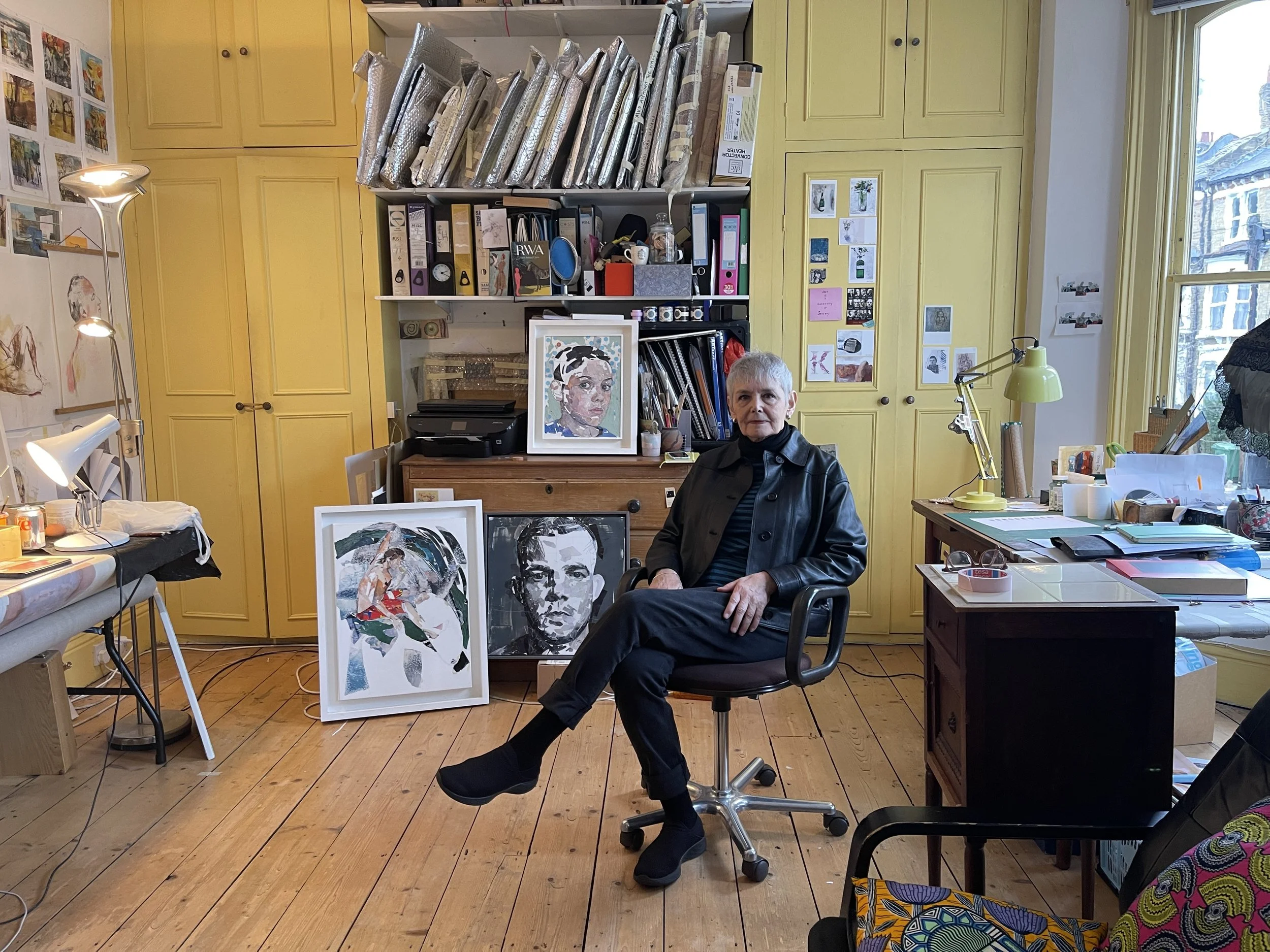
Kate Newington produces exquisite portrait and still life collages from her home studio in Brixton, London. We went to meet her to get an insight into her meticulous approach to her art.
Hi Kate, when did you start getting into collage?
It was when I was about fourteen. I grew up in London and my parents met at art school. My Mum was a theatre designer and my Dad was a painter who became a film director, so there was always a lot of art around. I think I became aware of Cubism from going to galleries with them - I used to love Juan Gris’ and Picasso’s still lifes and how they often used pieces of newspaper in their work. At that time (the 60s) that was still considered quite ‘out there’ and appealed to my teenage self. My brother was very long suffering - he’s four years younger than me and he would sit for me while I made collage portraits of him with old bits of wallpaper and colour magazines.
So, I started using collage when I was really young and my collage still lifes were all around the house. I also did a big montage of clippings of photographs from Sunday supplements up our hallway at home. When I went to art school, they were not into me doing collage at all. They told me “No, you’ve got to learn how to paint in oils, and to draw from life.” So, I worked in that way all through my 20s and 30s. Even when I went out to full-time work in my mid 20s, I would always have some artwork on the go. Collage came back into my life again after I had my son and he was at primary school – they had an auction of promises at the school where I offered to contribute a collage portrait of someone’s child or children and it grew from there.
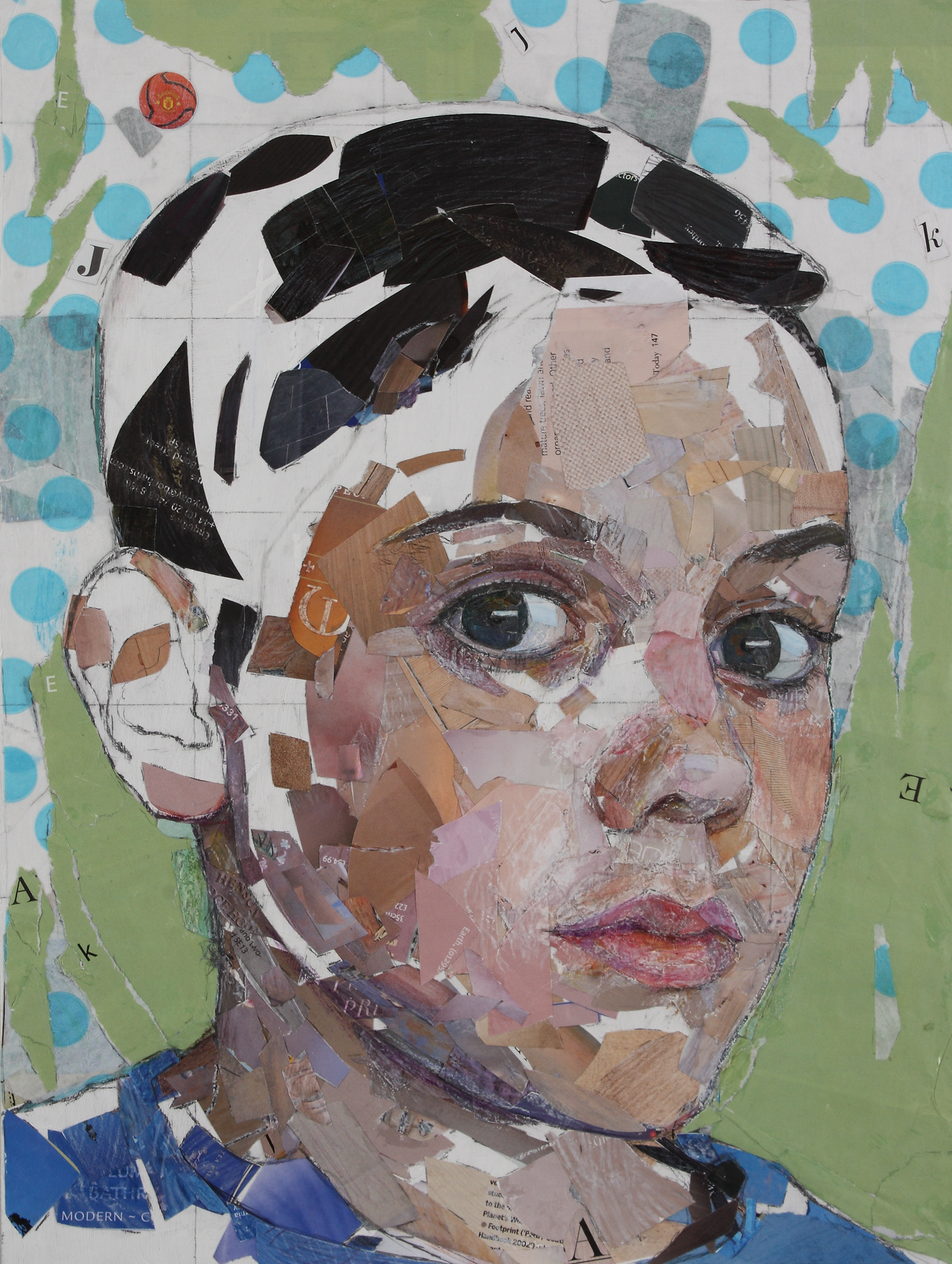
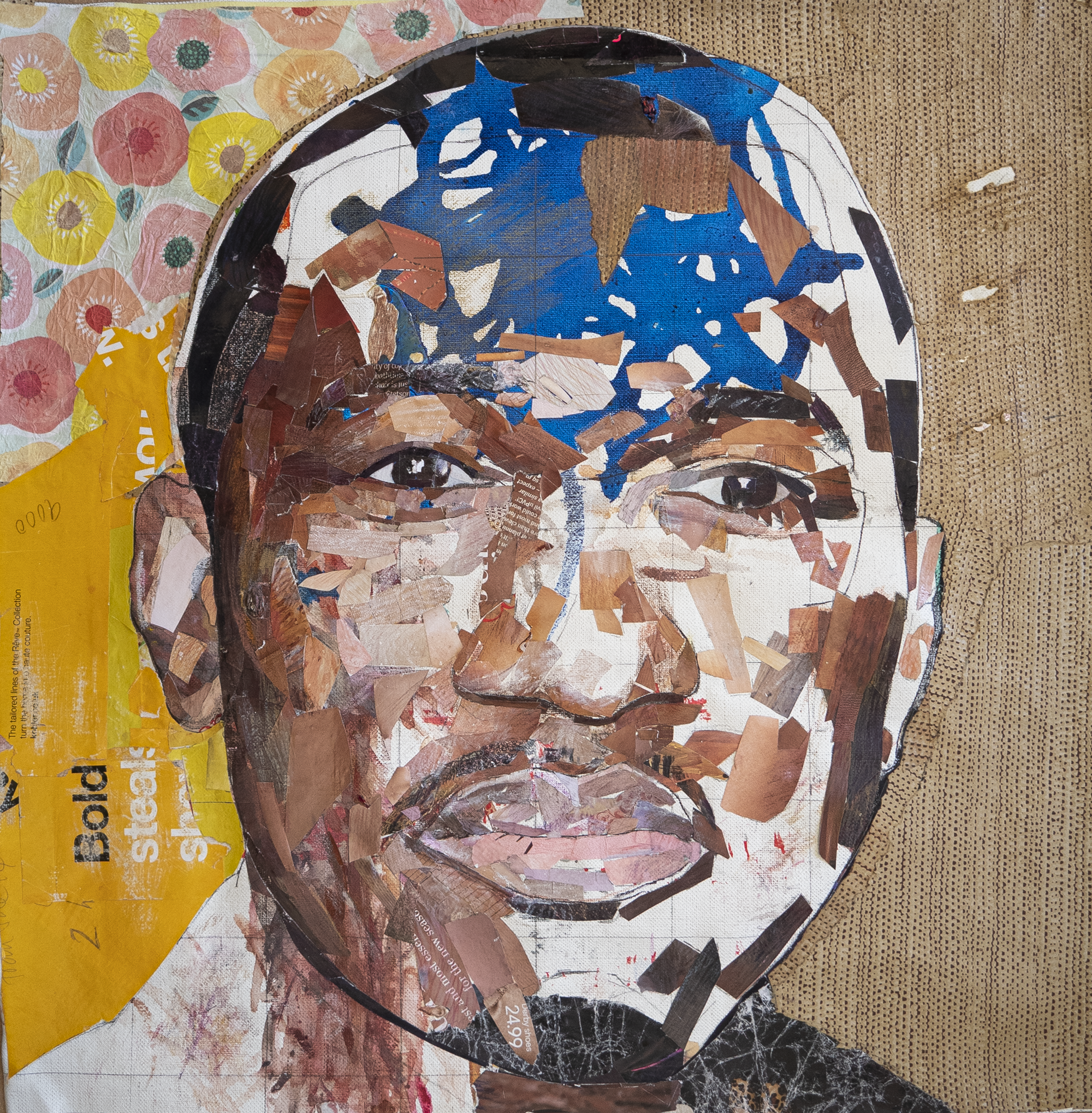
Jake
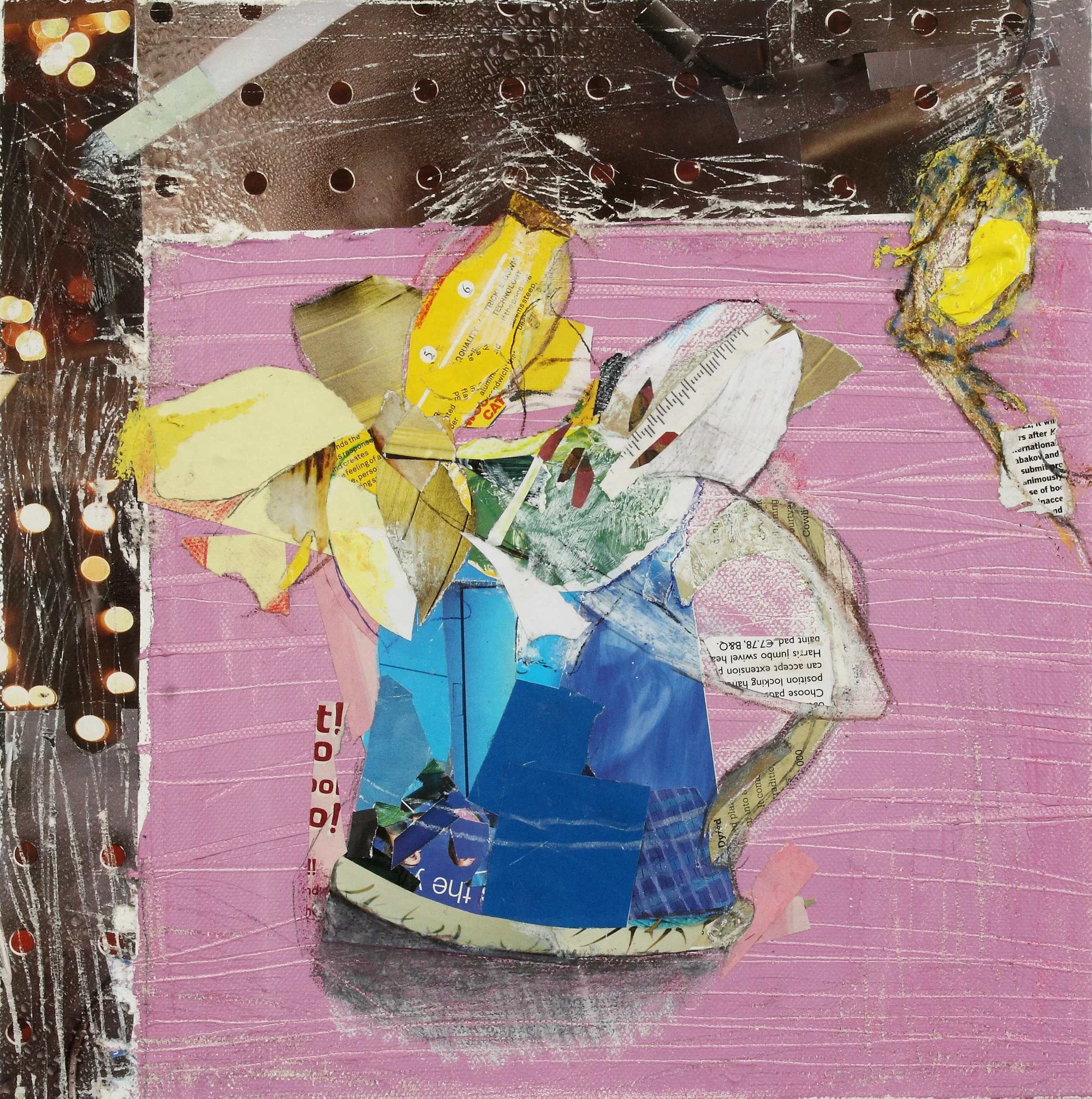
After that, lots of people asked me to do portraits and it gradually became a proper part-time job. Then a magazine ran an article on my work and I got a lot more commissions, so I’ve been doing that ever since really – along with other stuff as well. We often go down to St Ives where I’ve made many collage still lifes and I’ve sold a fair few of them. I’ve also chopped up the odd one and made giclees of others to use in new still lifes which I then use as reference for paintings. I’m now enjoying doing paintings that look like they’re collages - I like to play with the two ideas.
It’s almost a passing of the baton from one piece to the next piece.
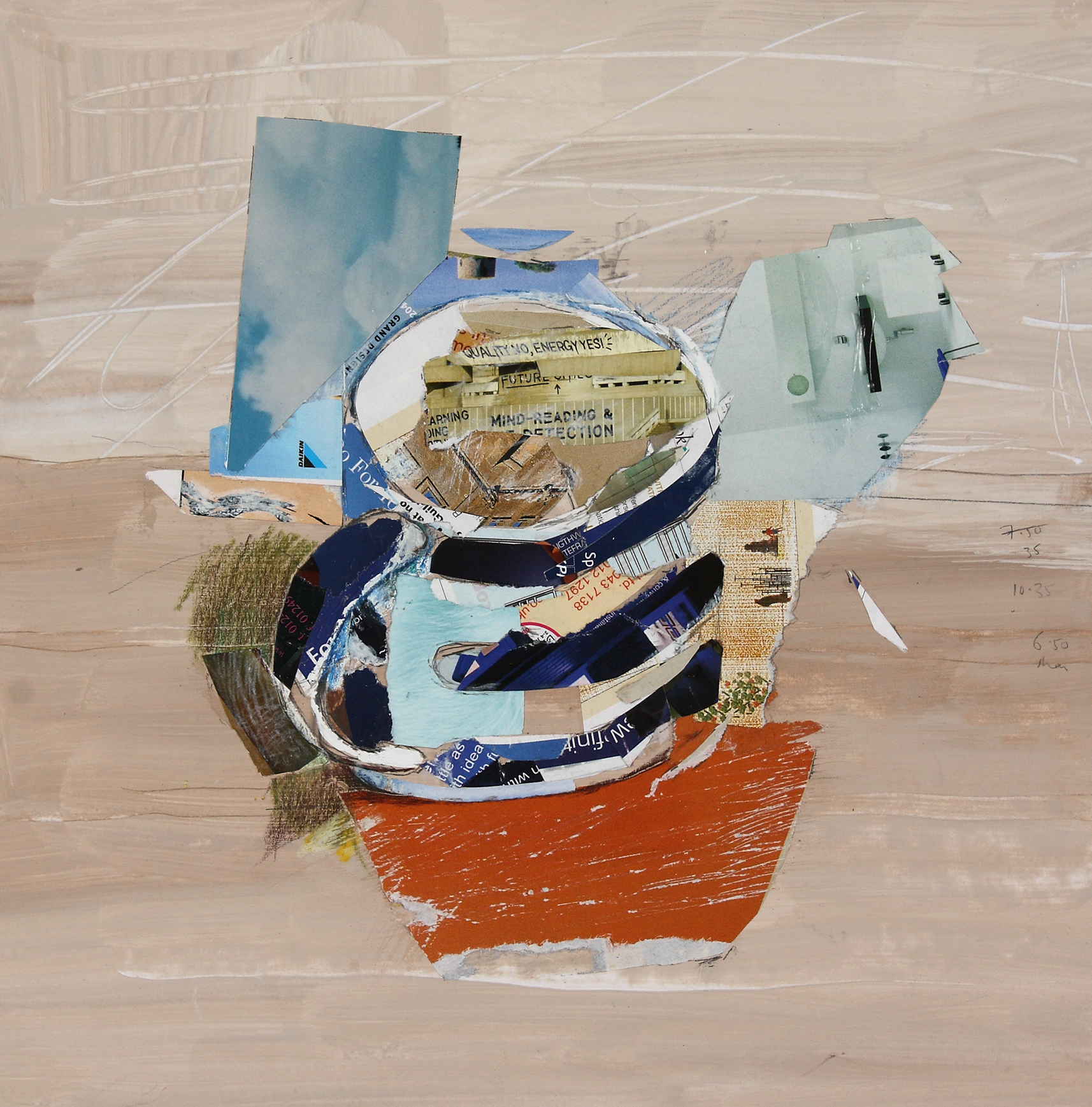
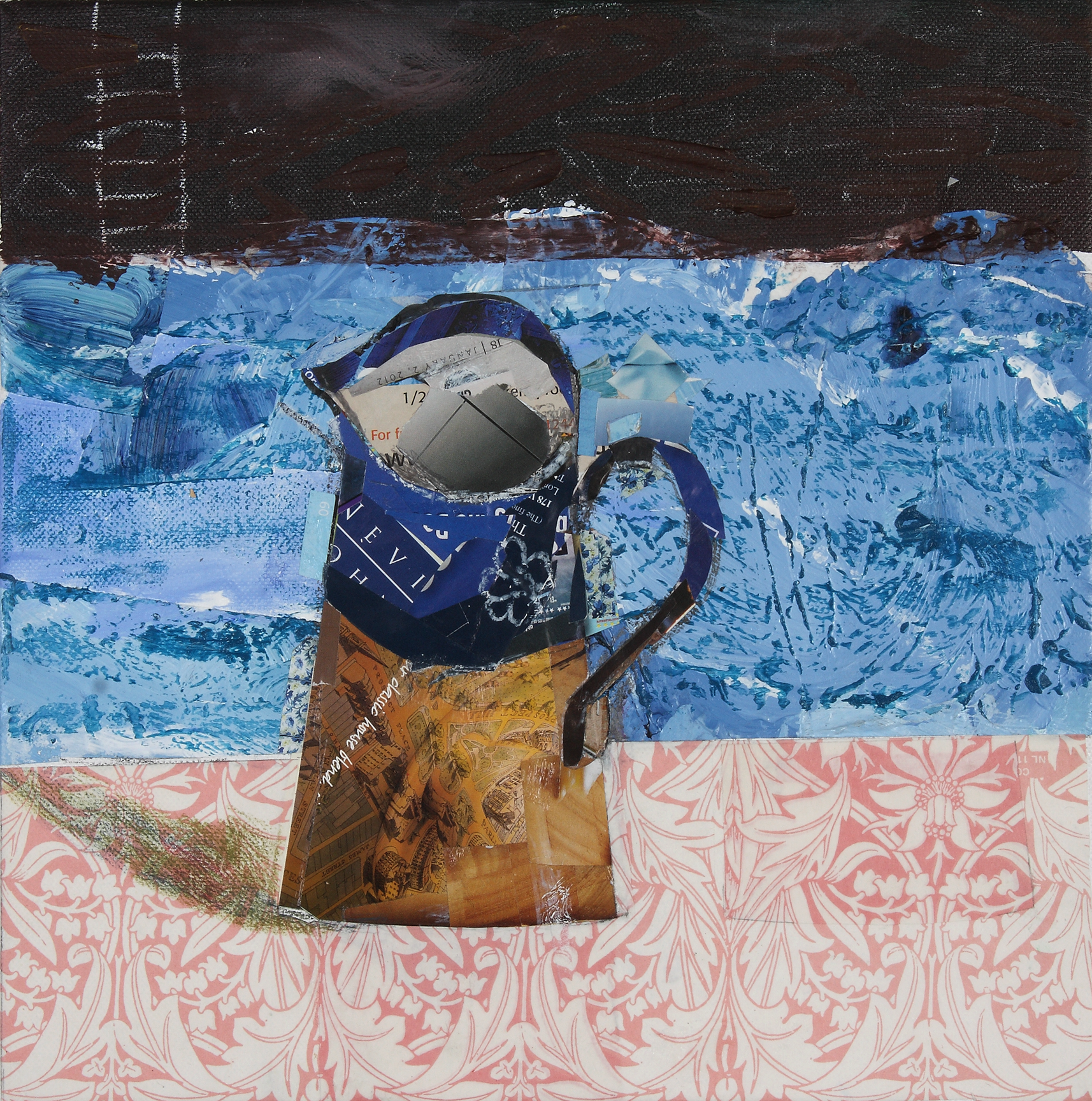
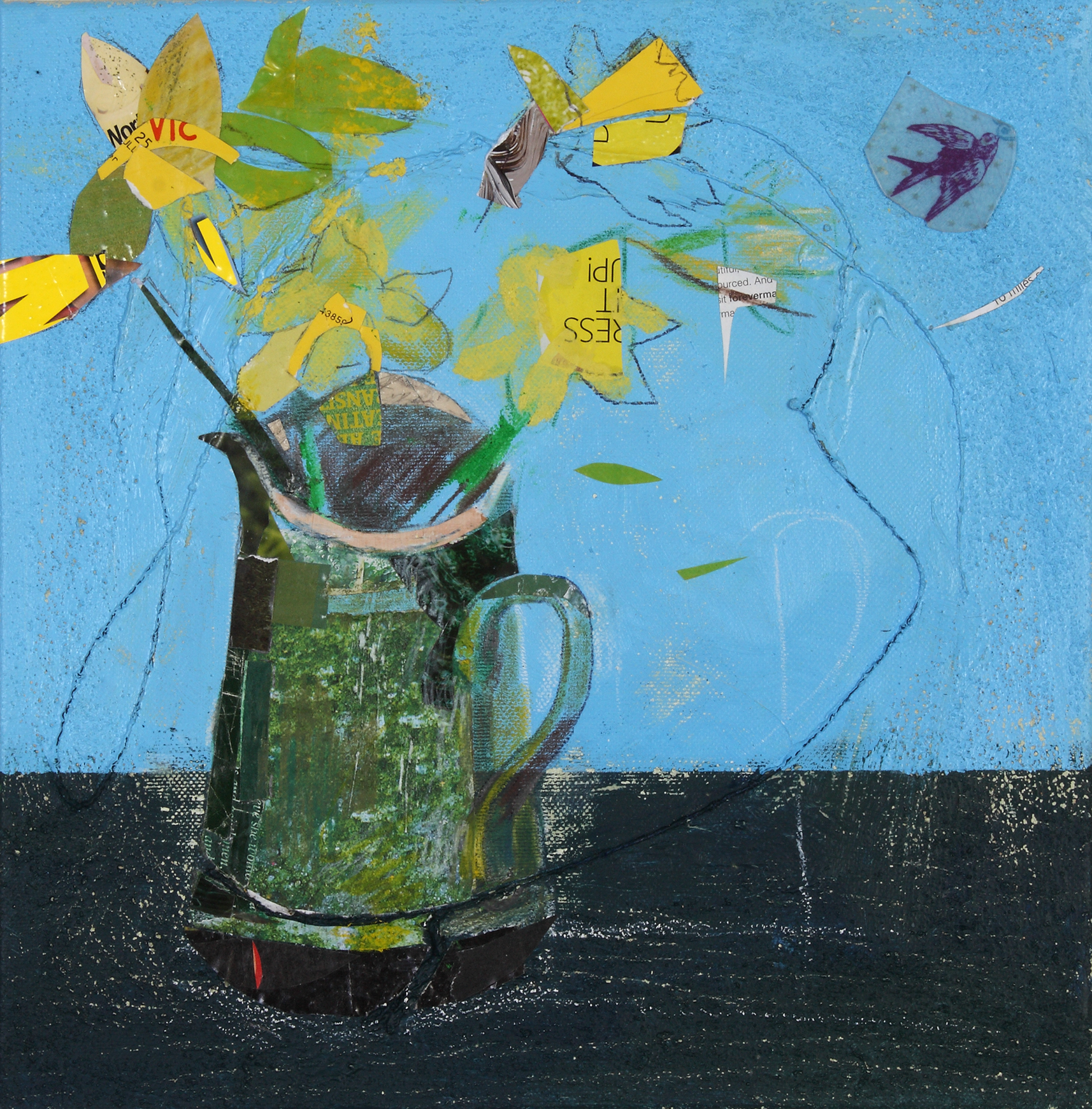
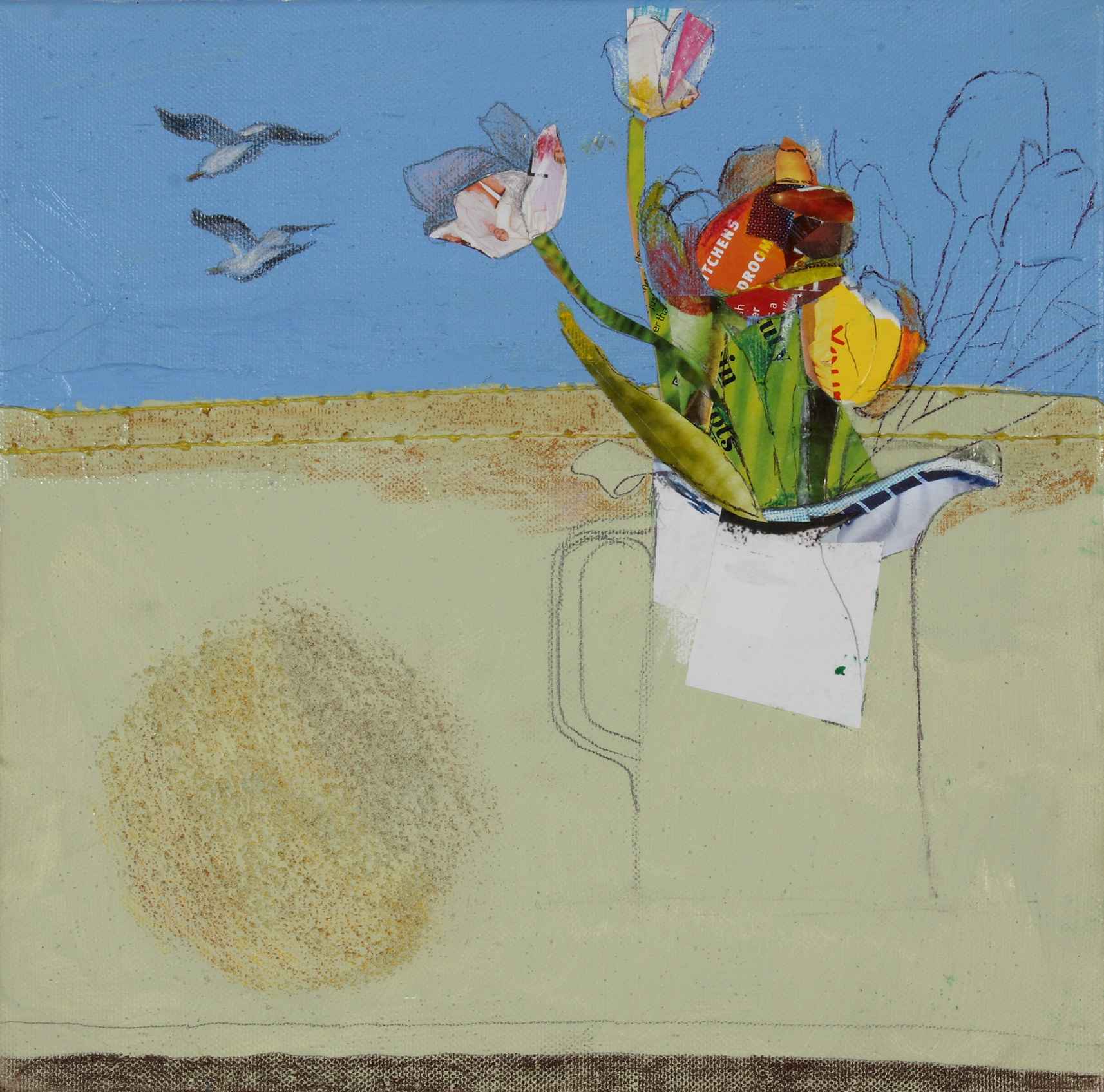
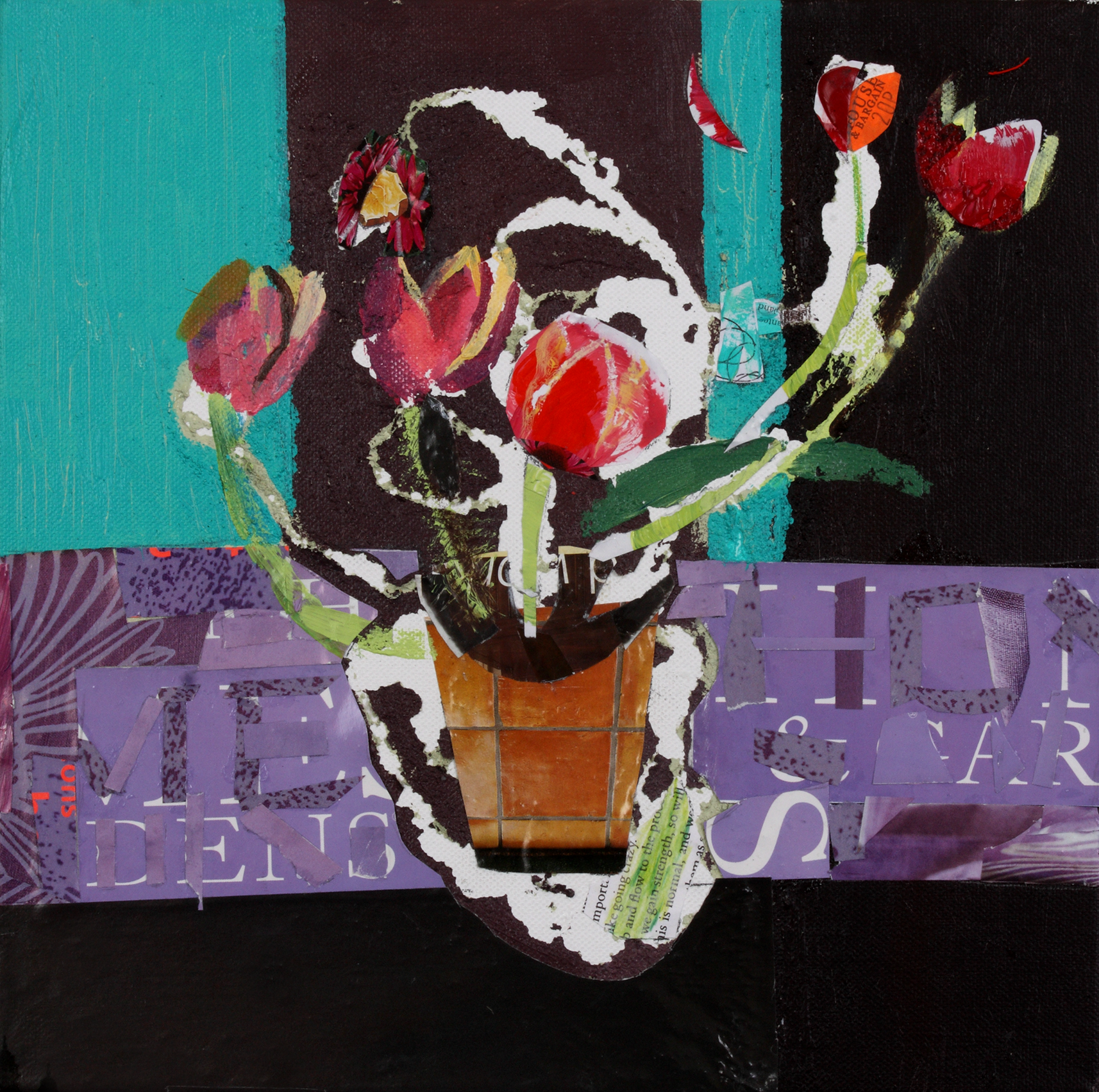
Exactly. You work out a motif that you like, and I love cups and vessels, it’s very English and very St. Ives. I enjoy the crisp edges that you get with collage – that’s partly why I love doing it so much, it’s a very graphic thing.
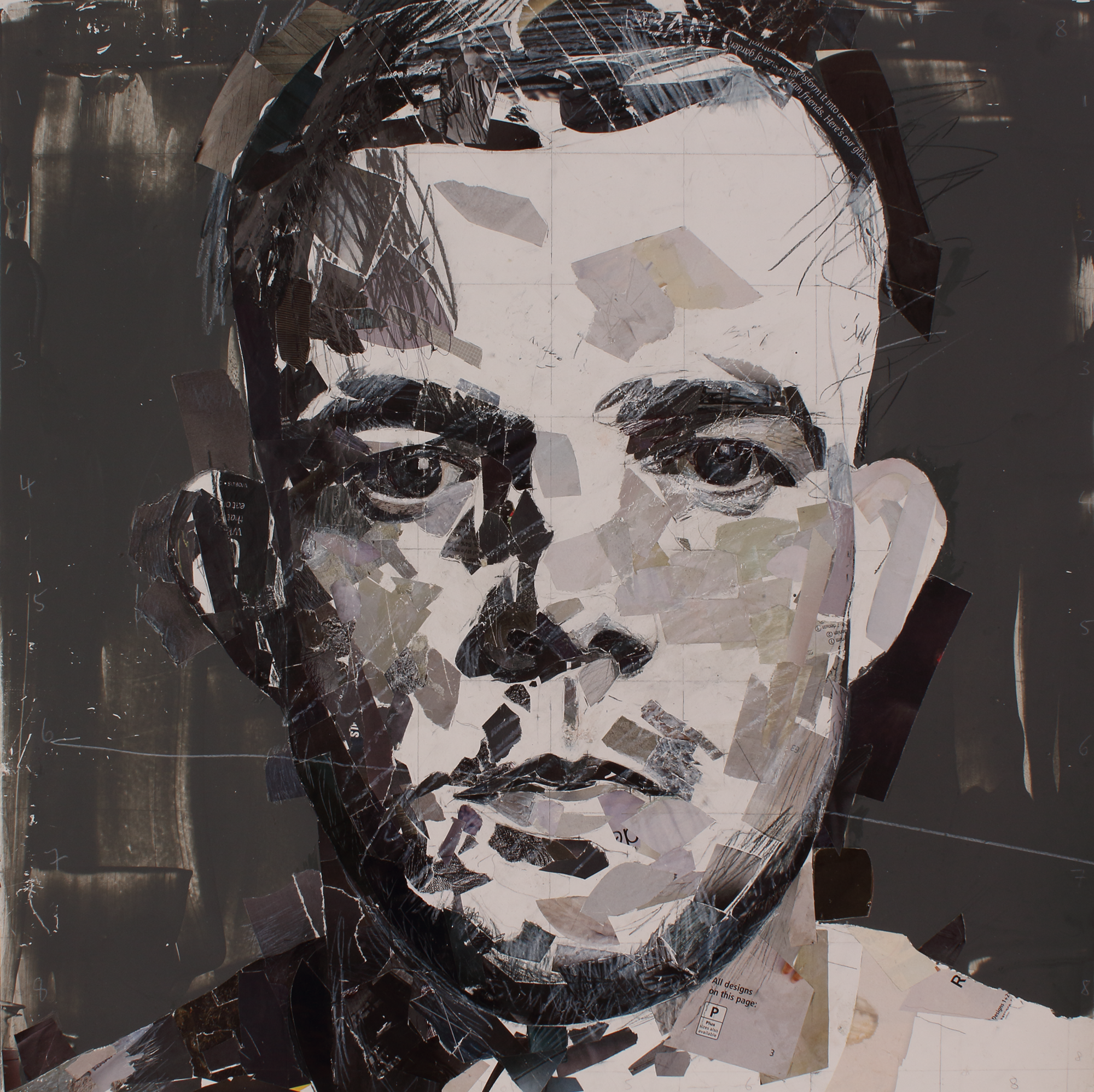
I saw Ken Loach at a Royal Society of Portrait Painter’s private view and, although I didn’t know him, I went up to him and asked him if I could do his portrait. I’m a big fan of his, and he was absolutely lovely. He asked me if I had any work exhibited there. He liked the collage portrait I showed him and agreed to have his portrait made. I phoned his PA and arranged a time to take photographs of him to use as reference. He’s incredibly humble, not remotely vain, so the idea that he would have commissioned a portrait of himself is unlikely!
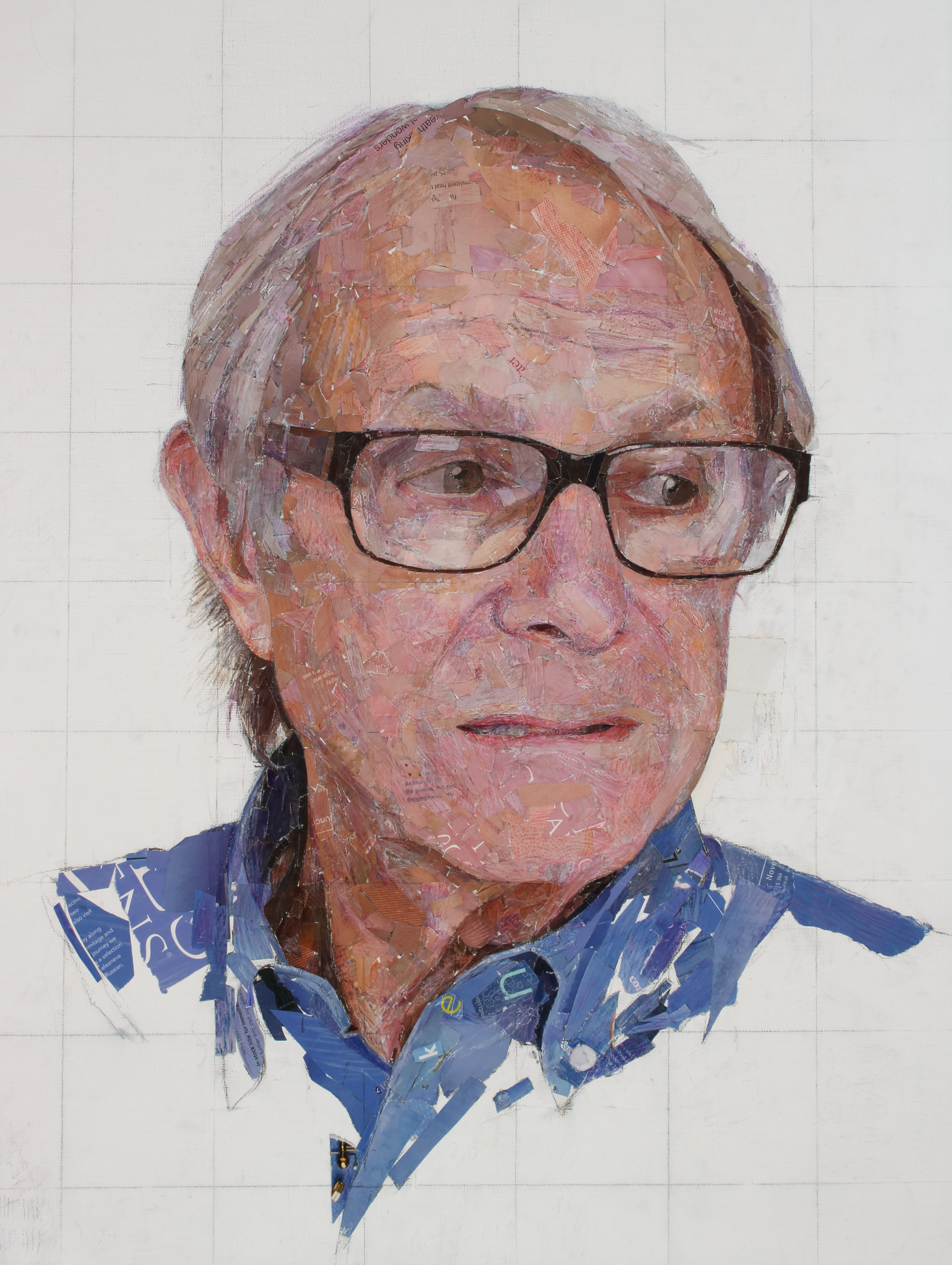
Ken Loach
Did you end up giving it to him?
It took me around 400 hours to make Ken’s detailed portrait, with tiny scraps of paper. I took it to his office and they said lots of nice things about it, but I’m afraid I didn’t give it to him as I wanted to exhibit it. I’ve shown it in about eight or nine exhibitions. Ken took his family to see it when it was shown in Bristol, which was nice. There are other portraits I’ve done which are less meticulous but I don’t still have them because they were commissions.
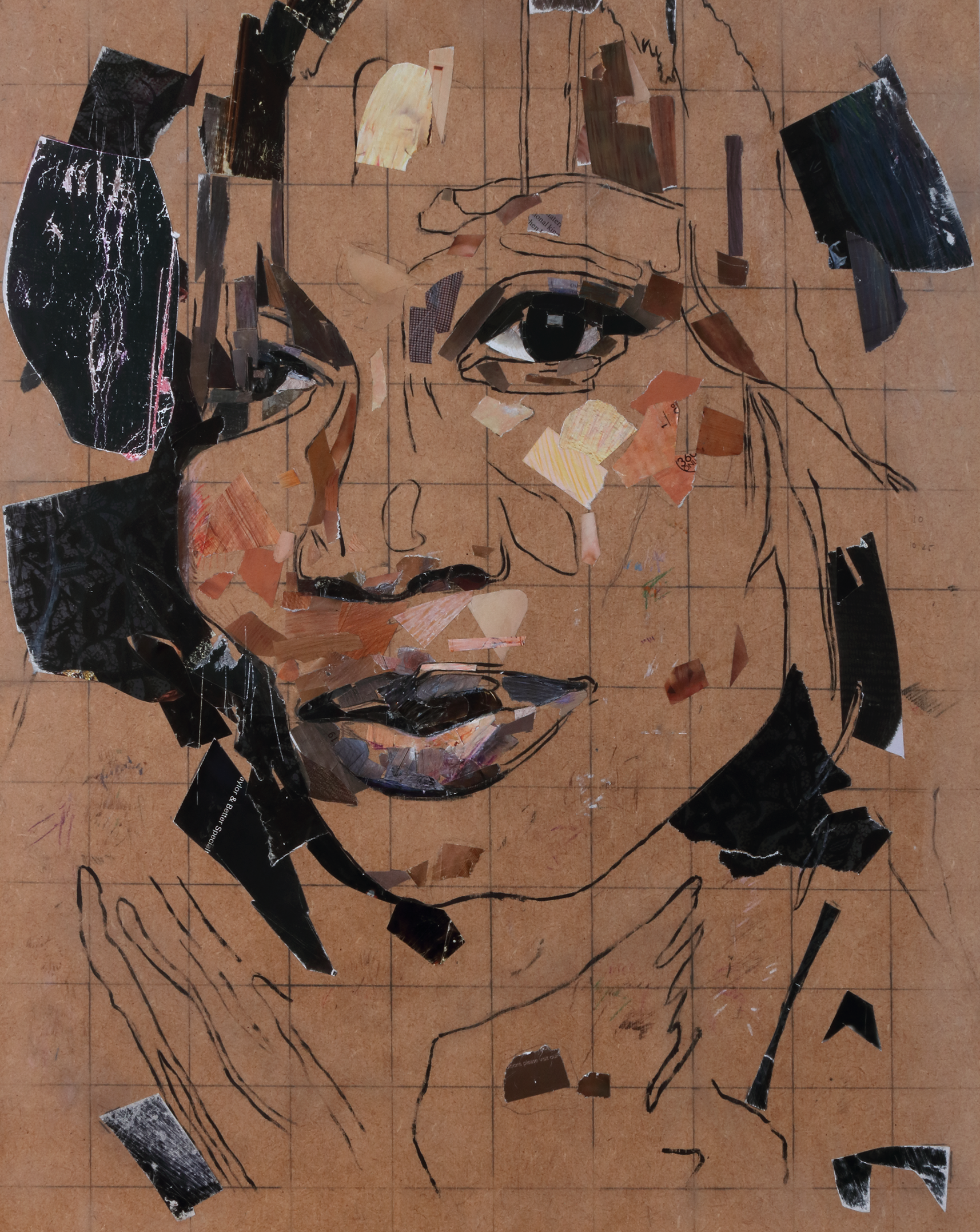
I made a portrait of the theatre director, Kwame Kwei-Armah because he has a very strong face and I just wanted to do it. I showed the original in The Discerning Eye exhibition and somebody bought it. I also made a portrait of Kanye West… which they also bought. I can experiment more with collage portraits that I’ve chosen to make, they can be looser and freer. Beverly Knight was a judge in a show at Mall Galleries, I thought I’ll make a portrait of her and see if I can tickle her fancy. She didn’t buy it but I was happy with the portrait.
It’s very strange, isn’t it? Why someone wouldn’t buy a beautiful portrait of themselves?
It’s a lot to do with personality. I guess not everyone wants to hang a portrait of themselves on the wall. I did one of Davina McCall and she did buy it.
Is art your full-time job now?
Yes, it is now, I quite often show at Mall Galleries, I’ve just shown at The Gallery at Green and Stone. I’m showing some work at Mall Galleries at the moment and I’ve just shown some work at the Anna Lovely Gallery in Sydenham. A lot of stuff is out – ‘Ken Loach’ is in Sydenham, and before that he was in Fulham.
Can you talk us through your process when you’re doing portraits? They are incredibly detailed and I’m sure most people would say, at first glance that they were paintings, but they’re obviously not.
It’s become like that. They weren’t so detailed when I first started doing them, they were looser. When you make artwork regularly – the more you do, the more detailed and finessed you get, you don’t always want to be, but you can’t help yourself.
With regards to my process – I have done a lot of portraits of children. I’d meet them, photograph them, ask them about themselves, and then I would work from photos to decide on a composition. From there, I would draw the outline. I’ve got boxes of magazines and I normally sit next to my window for the light and the displacement activity of sussing out the street action in our busy street! I rifle through magazines until I find the colours I want and match them to the photographic reference I have and then I start to build up a picture firstly with bigger pieces, then gradually smaller and smaller ones. I usually focus on the facial features first.
I love collage because you get all these lovely textures, which you cannot foresee and plan. For me, paint is just so dead by comparison. To get a pink for example, you might use the pink in a photo of a basket weave perhaps, then next to that a textured pink from something completely different, and you select both pinks because pink is the colour you want. Although you’re trying to build up a likeness, all the contrasting textures
are what makes the portrait interesting, they are the surprise element that you can’t possibly pre-plan. The background is always important. With ‘Ken’ I was experimenting with having no background, so there’s just white canvas. I realised afterwards how important the background is. Because it’s a foil to the face, and completely made up. It’s nothing to do with what was there in the photographic reference. A child I recently made a collage of, was young, and he was football mad, so everything was about circles and footballs –it’s about having some fun with it.
With my portrait of the actor, Russell Tovey, I used paint and collage, but in a way I think it’s more interesting just to have one or the other. Although, I would say it works pretty well. It felt a bit of a cheat to me to paint the background. But it’s always good to experiment, it helps you work out what does and doesn’t work. I try things out all the time, I can’t just stick to one way of doing things, which is tricky when you’re trying to build up some sort of a name, because people like to associate you with one style or approach.
I think the unifying force in my work is the shapes and outlines that collage instantly give you and the surprise meanings that emerge with the random words on the bits of paper. Going through magazines, I can cut a bit out from a page, put the page back and, suddenly, you can see the page underneath through the shape, an instant collage. Sometimes I’ve cut out the two pages and just put them in a sketchbook, because I’ve thought that’s just a little moment.
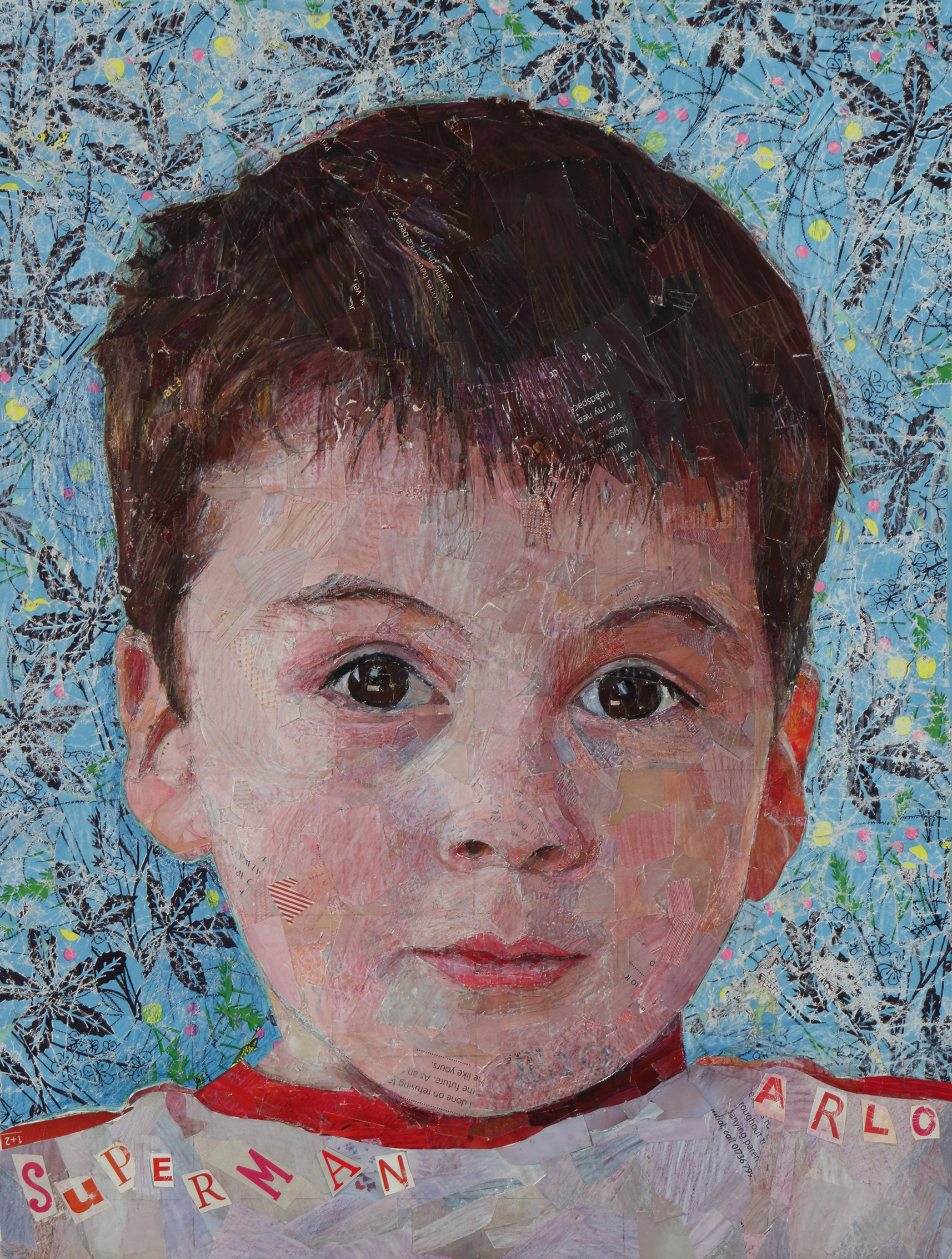
Arlo
Is that quite important to you to have your work seen or on display?
It is. I’m not one of those artists that are just happy to shove pictures under the bed when they’re finished. The walls of our house are covered with my work but that’s really just storage, because where else do you put it?
I always try to get work exhibited, I submit to a lot of open submissions and I do get work shown and sometimes sold. That said, a lot of my work has never been selected, which is fair enough. I think the whole thing is a dialogue between what you want to make and what you think somebody might relate to, but you have to find the audience that you respect. It’s nice when my pieces get selected by Bath Society of Arts or the Society of Women Artists (SWA), because I feel they’ve really looked at work. They’ve given some time to it and if they select it then it feels quite good. But then I don’t want to start thinking, “Oh, God, they like that so I’ve got to do ten more just like that.” I don’t want to do that either. It’s a meeting of what feels true to you and what other people get something from as well. It’s like speaking a language – there’s no point speaking in that language if nobody is going to understand what you’re saying. You need to speak a common language and then say the things you want to say.
That’s really interesting, do you have ambitions for the future in terms of what you’d like to achieve with your art and your collage?
I show with different art societies at Mall Galleries in London and I exhibit at the RWA in Bristol sometimes. I’ve just been made a member of the Society of Women Artists which I’m really pleased about – it means that I am guaranteed to be able to show say three or four pieces of work at Mall Galleries with them every year which is great.
Do you think collage is gaining more respect and attention in the art world?
I think it’s become much more acceptable. I had trouble a few years ago, I showed some collages in a little gallery in St Ives and the owners really liked them. They exhibited them but couldn’t sell them. In the end, they told me that people think that collages have no longevity, that they’re literally going to disintegrate. They might like and be intrigued by a collage still life, but they won’t actually buy it, because it feels too temporary to them. Although when you look at those Picasso pictures that were done over a hundred years ago, the collage elements are still very much intact. Providing collages are treated properly, there’s no reason why they should deteriorate. We just have to let people know that.
I’ve not heard that before when I’ve asked other artists a similar question. That the longevity of the actual piece is the barrier that people can’t get over.
I think that is a thing, people often say to me, are you sure it’s not going to fall apart or fade? Well, don’t put it in direct sunlight, but, then again...don’t put any artwork in direct sunlight. It is definitely a concern for some people. I use acid-free glue obviously, because otherwise the glue would stain through black after a while. I think there is much more appreciation of collage as an art medium now and people think it’s modern and fun and interesting, but in terms of forking out money to own a collage, they might be nervous about it.

Do you feel in any way that you are pushing the medium of collage or is that not something that’s within your thinking.
I think it’s unusual that I do these very highly figurative pieces. To me, there’s a difference between collage and montage and a lot of people think that montage is collage. For me, they’re very different. Montage is a series of images that you’ve found and you put together, they’re often whole images in themselves, they’re lovely, like sort of Victorian screens, but that, to me, is not collage. To me collage is about random scraps of paper that aren’t images in their own right. Kurt Schwitters was a huge inspiration for me growing up. I loved his work although I suppose you might say he was more on the montage side but he used scraps and never whole images. I used to live in Paris and loved all those doorways with the torn off posters. Those are fantastic.
It is an interesting definition you put forward there between collage and montage. If I took that as a definition, then clearly a lot of the stuff that we feature within CC. Magazine would fall into the montage category, where artists are juxtaposing one representational image with another. For you, collage is a pure medium that uses the scraps of paper almost like pigments and paint.
Yes, exactly. That’s what I think - I paint with paper. That’s what I do. I think that is quite unusual, if there was a calling card I think it’s probably that. Instead of mixing a colour I look through magazines and find the colour…eventually.
You’re never tempted to think – I’ll just do 20 skin tones on a piece of paper and then cut them up?
It just doesn’t do it for me, I love the torn and cut edge and the patterning you find on random bits of paper. Paint just feels like this kind of smear when it’s initially laid down. Obviously, if you are a very refined hyper-realist artist, it doesn’t end up as a smear, it becomes defined. I like to feel that a picture is complete at every stage though, that you could walk away and it would stand, even dramatically unfinished, as an image.
It’s funny because I recently submitted six pieces to the Royal Society of British Artists. I was struggling to think what the sixth might be, so I put in a piece I was still working on and that’s the one that was chosen. So, it just shows that you might think that you’re not finishing a picture in a way that people might imagine as finished, but actually, maybe that graphic, simpler feel is what can appeal to people.
Cutting out pieces of pre-painted paper could be interesting, but you don’t get that surprise texture that you do from cutting paper from magazines. What’s really annoyed me in past years was applying to the BP National Portrait Prize, when it existed. They would religiously say that all portraits submitted had to be made with paint. I would describe in my submission the way I used paper like paint. But they wouldn’t have it and it really pissed me off. For me, it’s the same thing, you’re finding a colour instead of mixing a colour, it’s just as time consuming, believe me. It was very elitist. There can definitely be some snobbery towards collage in certain spheres.
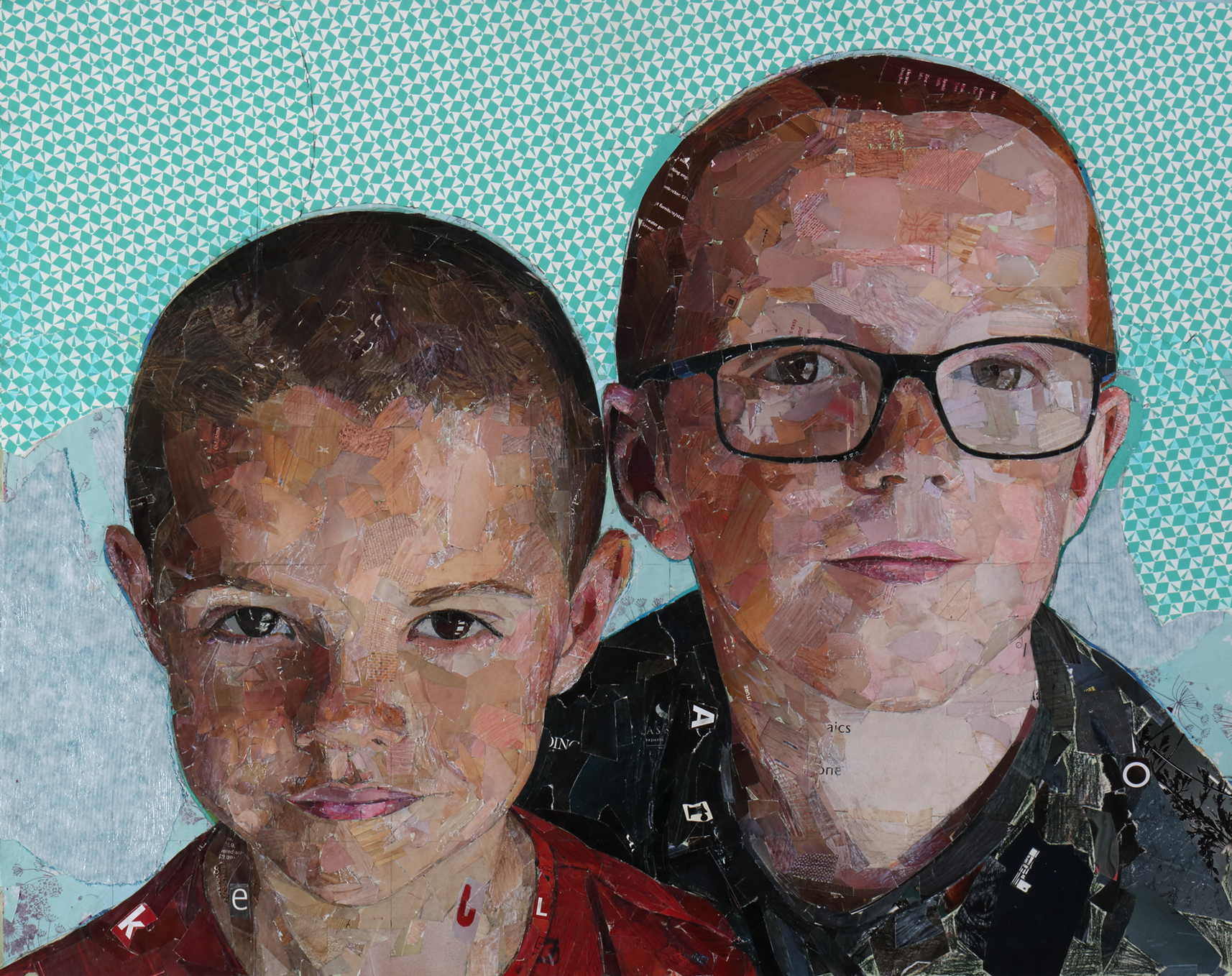
Two Brothers, Arlo and Kell
You can see more of Kate’s work on her Instagram: @katenewington