
History of Collage : Benode Behari Mukherjee (1905 – 1980).
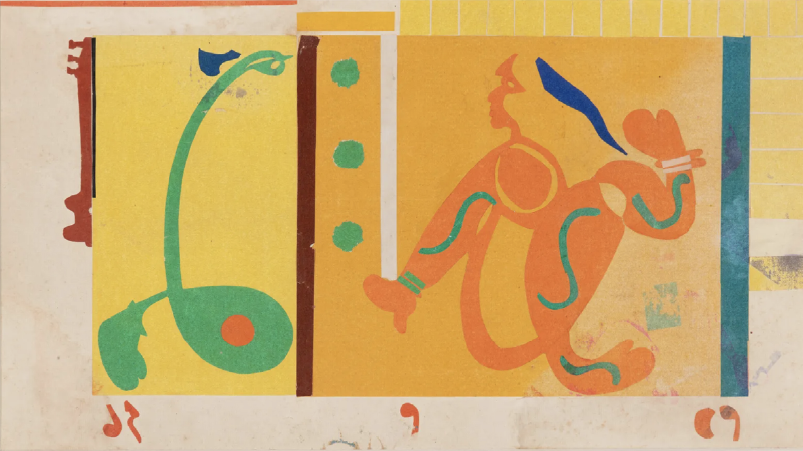
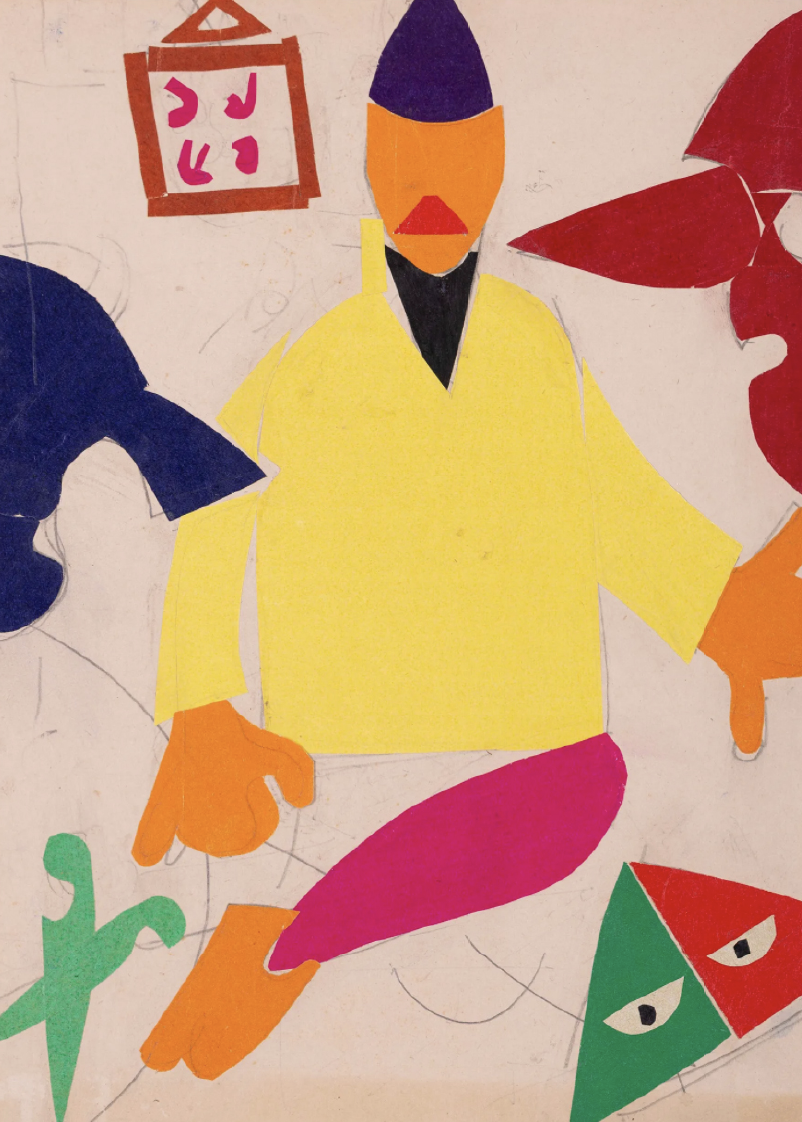
Benode Behari Mukherjee is most often remembered as a muralist, teacher, and quiet revolutionary of Indian modernism—but his late-life collages reveal a practice that feels startlingly contemporary. Working after severe visual impairment reshaped how he perceived the world, Mukherjee turned to cut paper as a way of thinking through form, rhythm, and space by touch as much as sight. These works are not minor footnotes to his murals at Santiniketan, but intimate, radical experiments: compositions built slowly, deliberately, and with a profound sensitivity to balance and material presence. In his collages, fragmentation becomes a form of clarity, and limitation opens onto new freedom—offering a powerful lesson in how artistic vision can evolve, persist, and deepen against all odds.
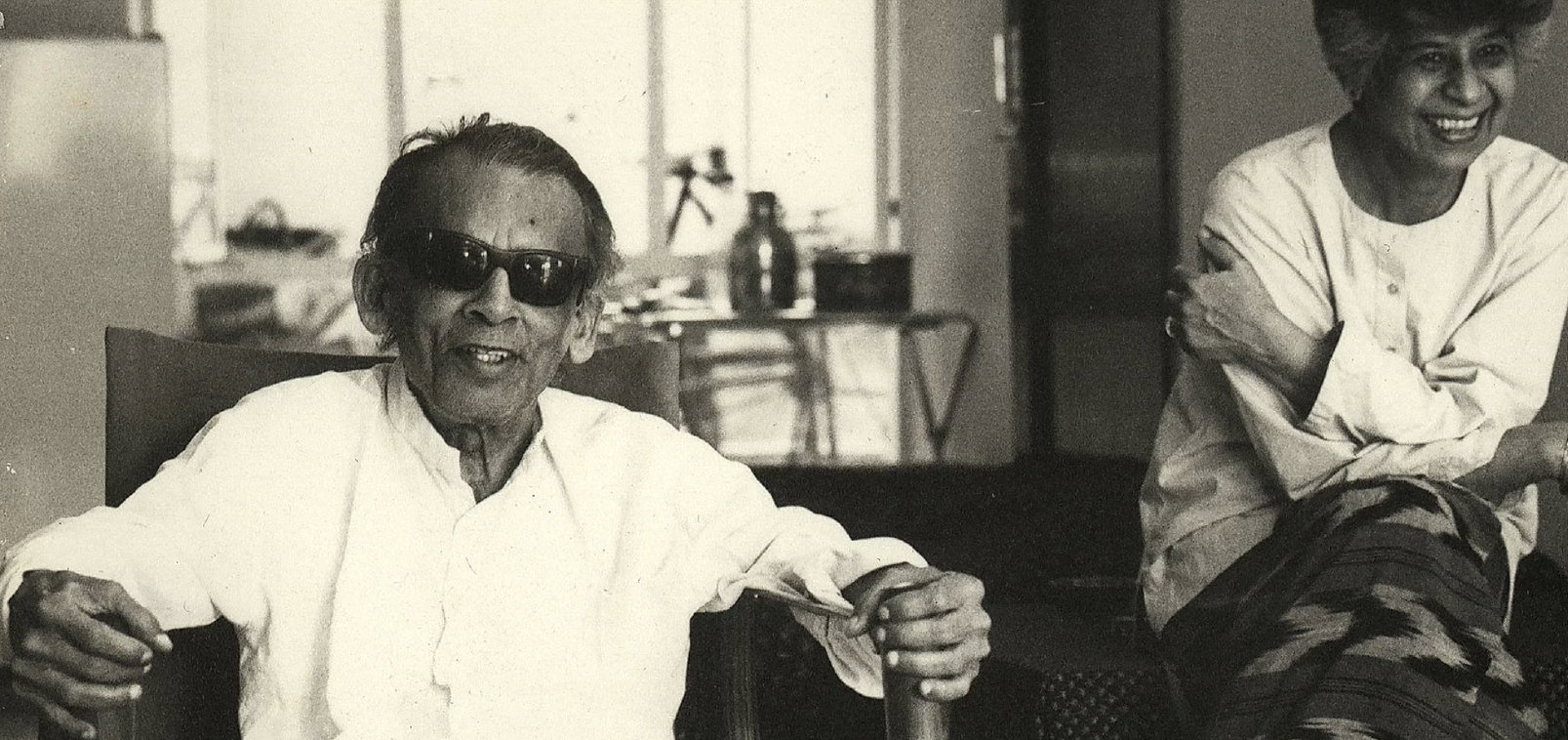
Benode Behari Mukherjee was a pioneering Indian modernist who blended imagery and iconography from Indian life with a distinctive visual style influenced by Indian, East Asian and Western art and culture.
His story and his art is made all the more remarkable by the fact that he was born with a severe eye problem – he was myopic in one eye and blind in the other. His impaired vision denied him normal schooling and resulted in a lonely childhood. However, it also brought him close to nature which had a deep and lifelong impact on his art.
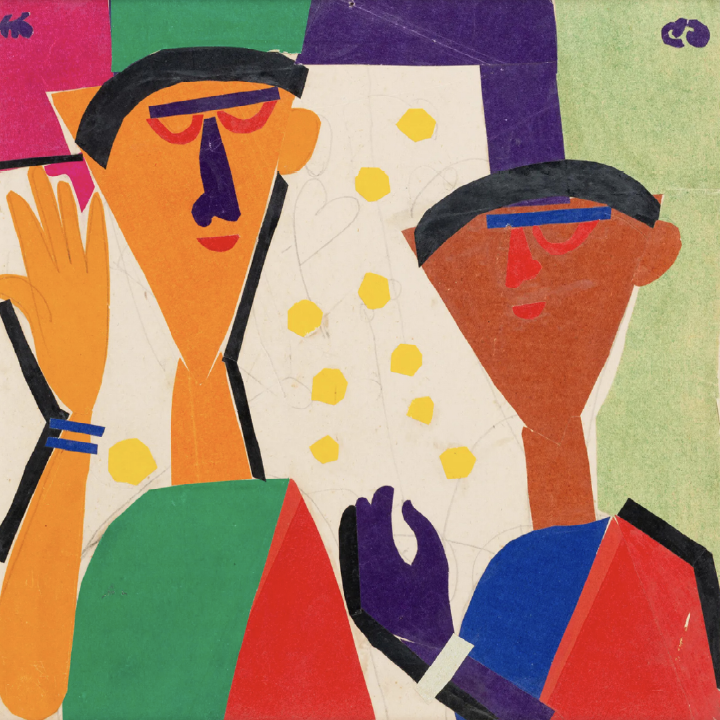
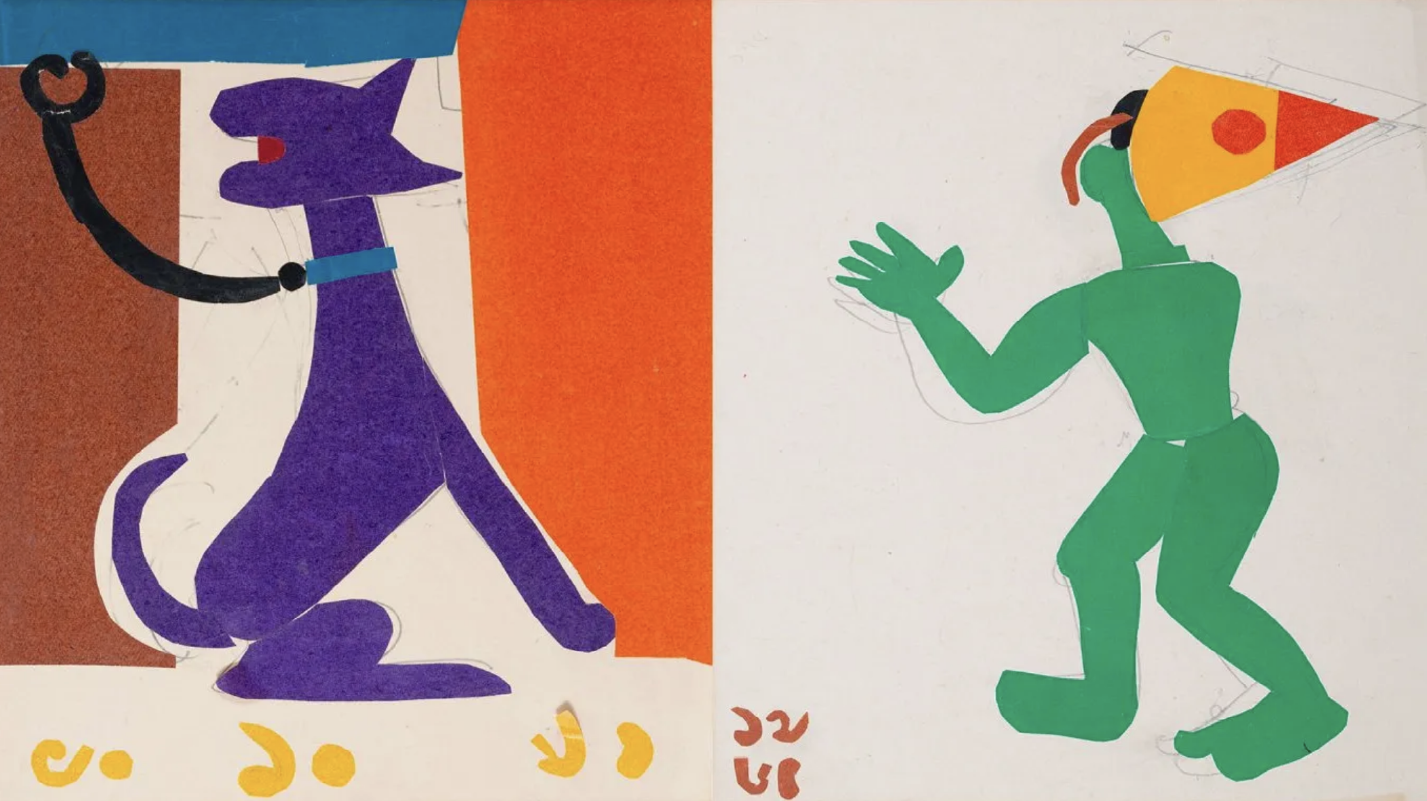
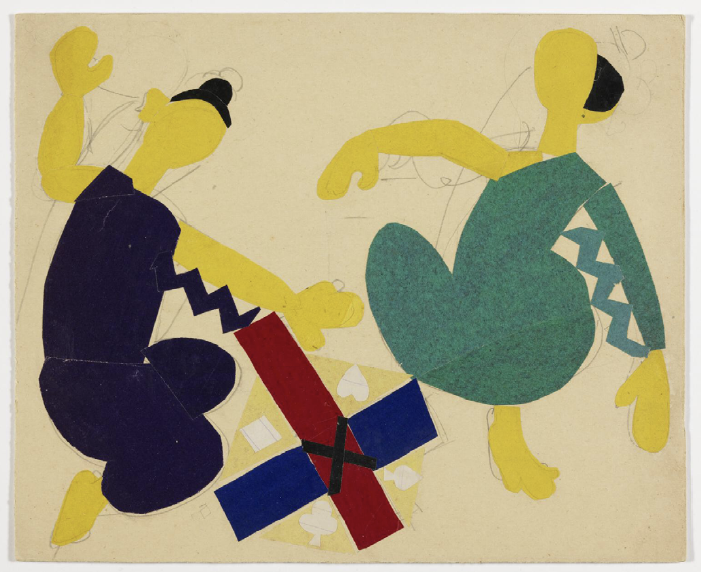
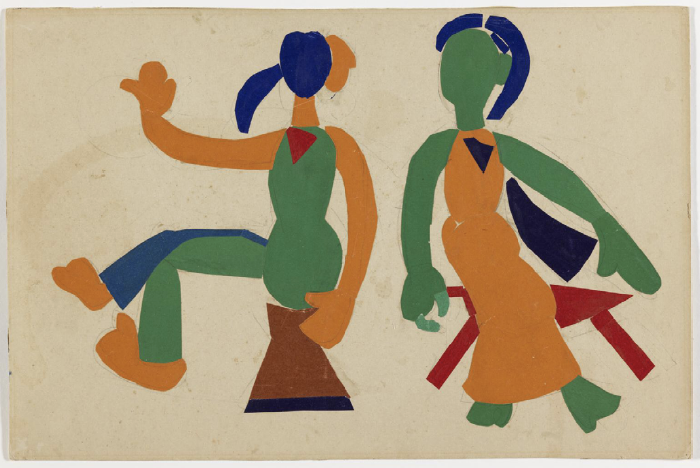
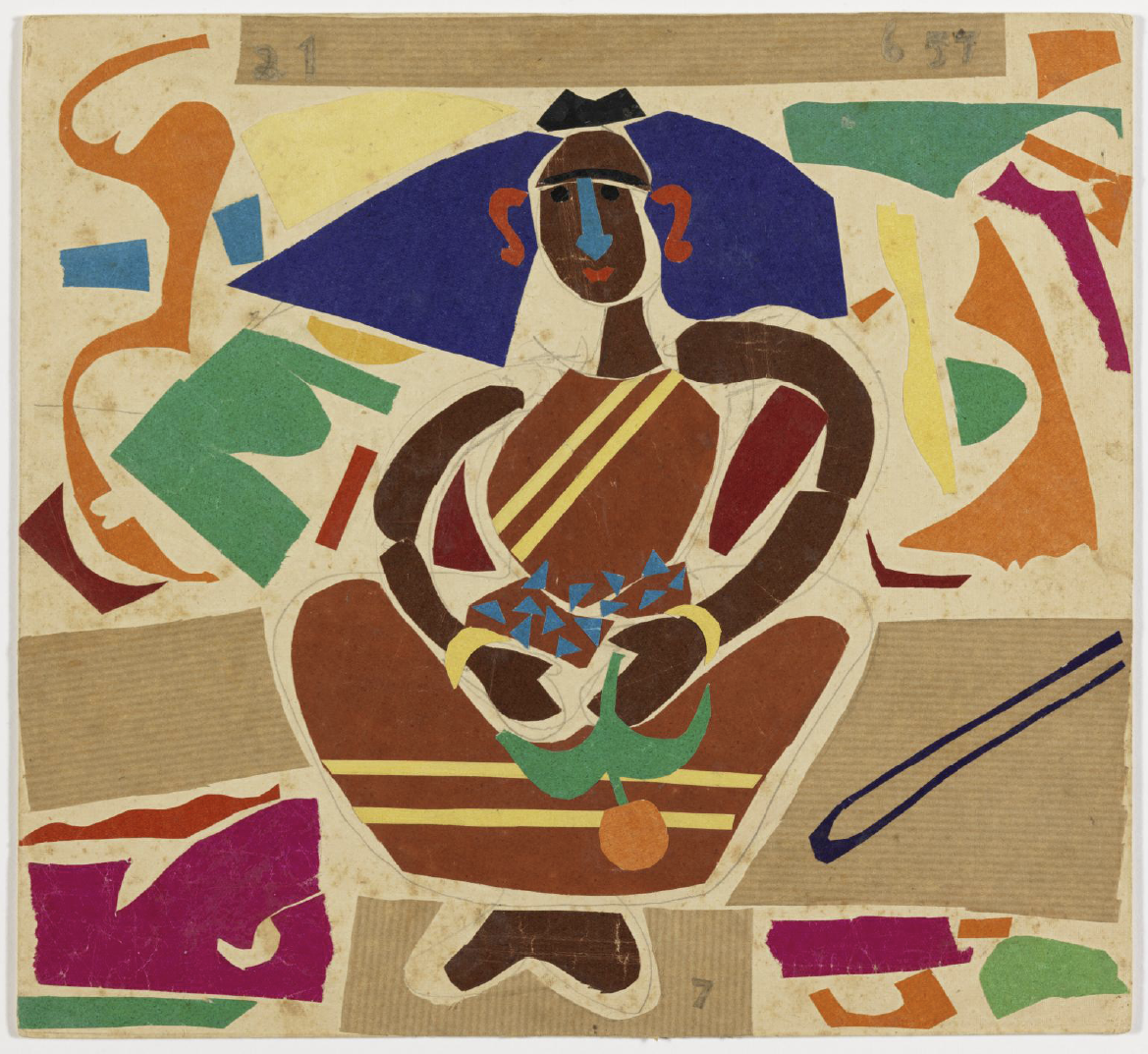
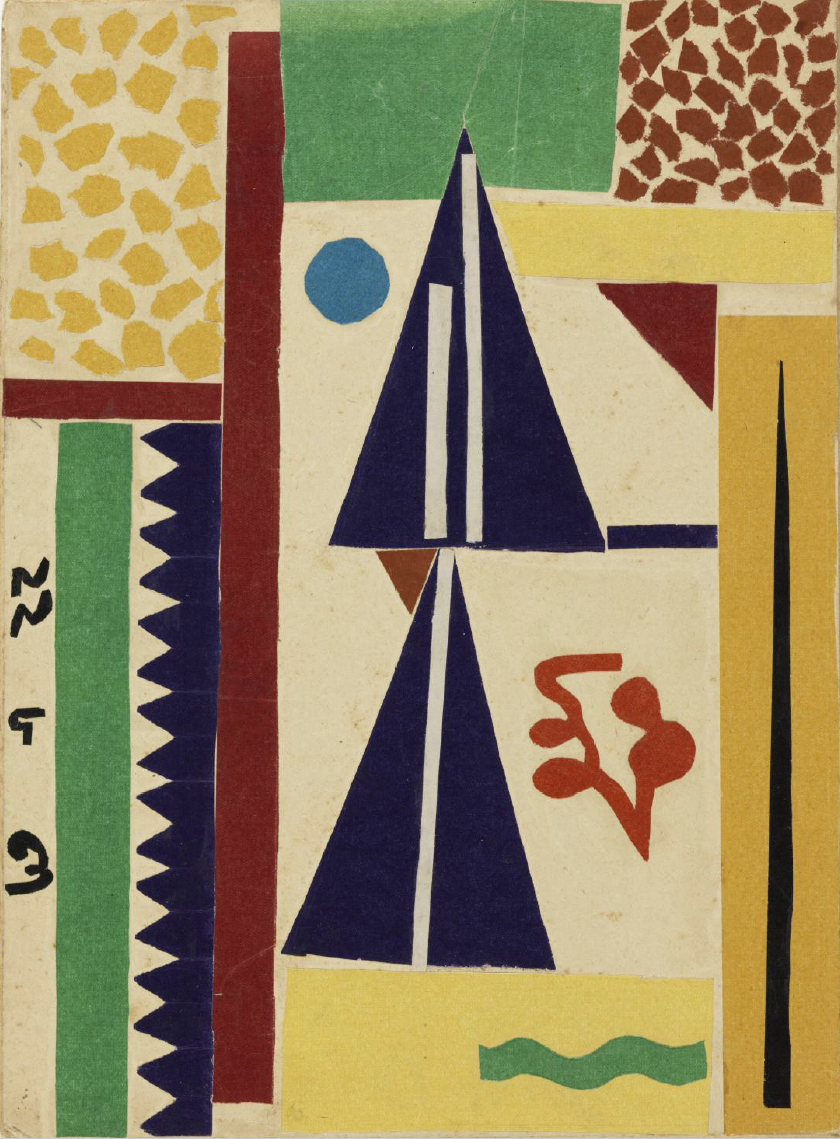
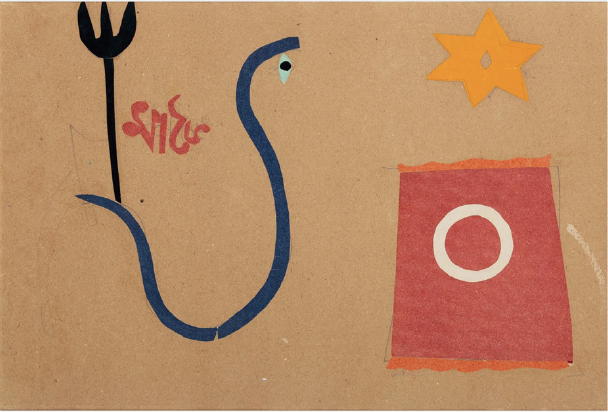
In 1956, he lost his eyesight completely following an unsuccessful eye cataract operation. Having lost his sight, he turned to paper collage as a medium for his artistic expression. His lack of vision meant he was limited to working with simple shapes that he would create by feeling the edges of the card he was using. Using these shapes and flat colours, he would compose complex images from memory, with the help of his assistants.
Behari was also a prolific writer and in one essay wrote:
“A man who has the power of sight need not be told what light is. And where there is light there is colour.”
Perhaps no one could have expressed his acceptance of his blindness better than the renowned Indian art historian, KG Subramanyan. “Nothing could have been more tragic for an artist at the height of his powers, but he stood up to it with characteristic stoicism. He did not resign himself to inactivity but diverted his creativity in other directions. He made paper collages with the assistance of his associates; he modelled sculptures with plasticine, clay or wax; he built forms with folded paper (which he later used as the basis for a tile mural); he made drawings and prints.”
Discovering Mukherjee's work has been a delight. His bold colours and abstracted figures have a playfulness and lightness of touch that make them as relevant and contemporary today as they were over 60 years ago when they were produced.
If you’d like to write a ‘History of Collage’ article for a future magazine or blog post, we’d love to hear your ideas! Send them to hello@contemporarycollagemagazine.com