Eve Bridges
Originally published in Issue #25 of Contemporary Collage Magazine 2023
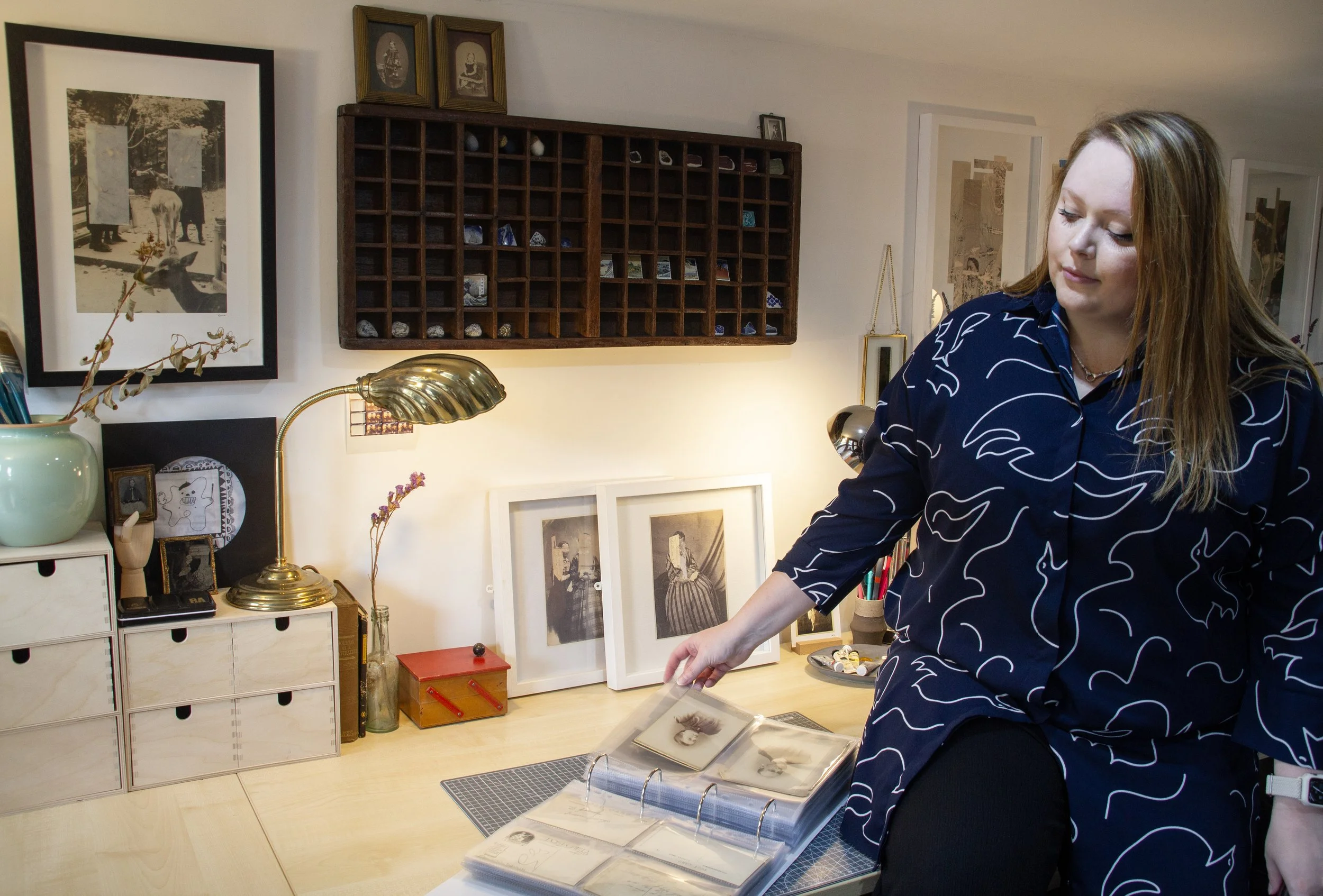
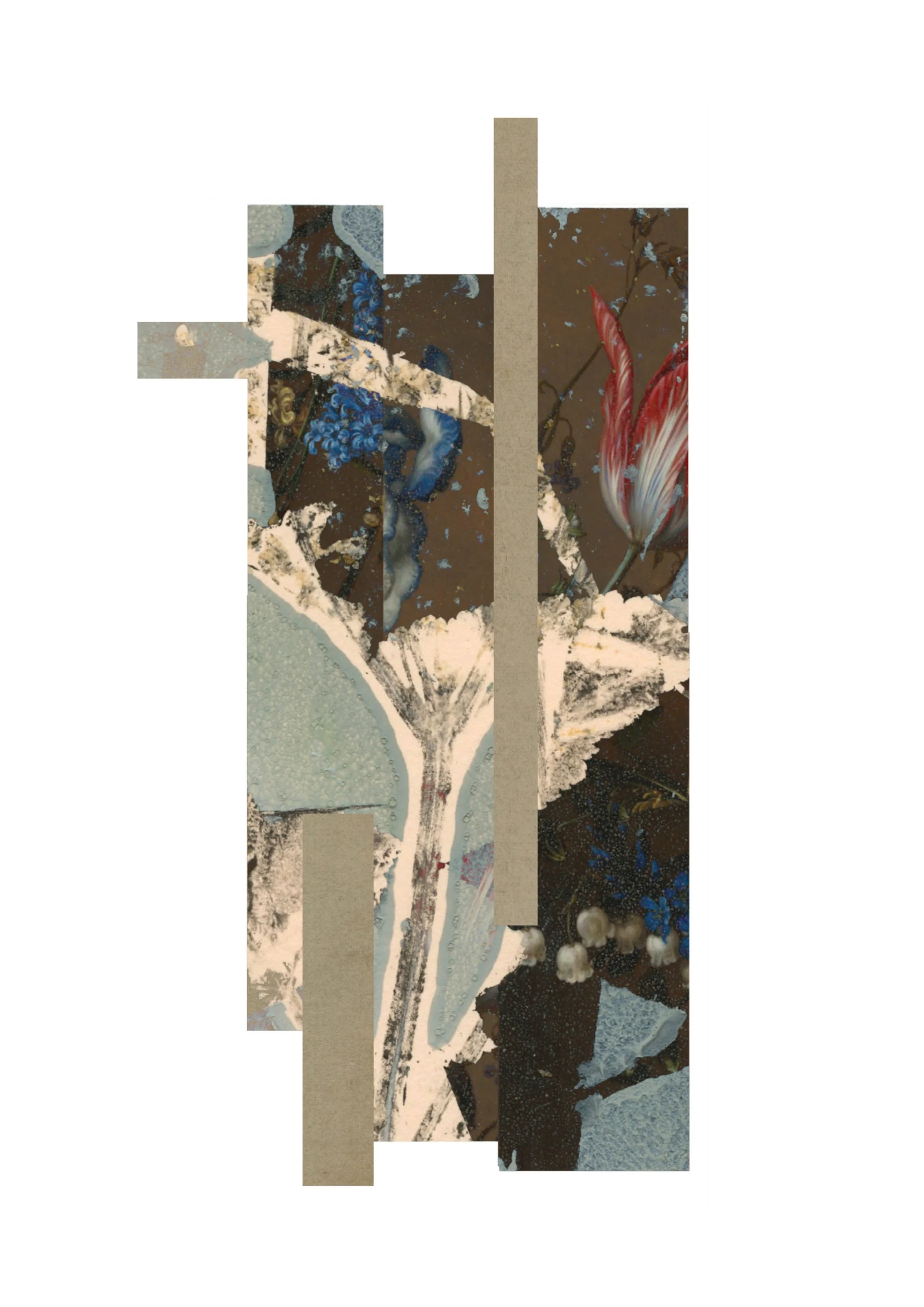
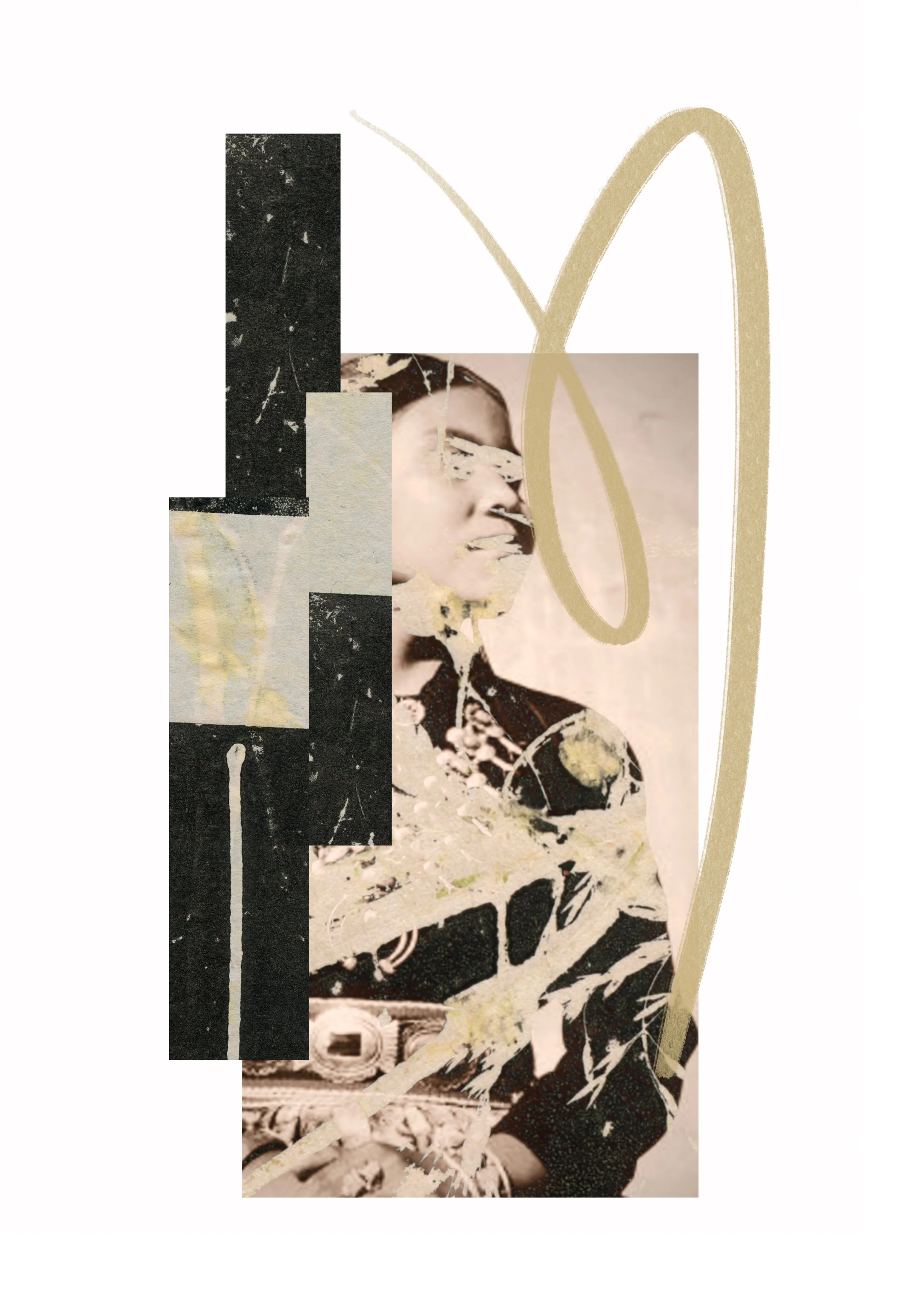
UK-based artist, Eve Bridges creates delicate and evocative collage interventions using found and rescued old photographs. Her works create new meanings and imagined memories. We spoke to Eve at her studio in Derbyshire about her work.
Hi Eve, can you give us a little background and context in terms of your route into illustration and using collage specifically.
My collage journey started at university. In my second year, we had a project that was to use no line work – no pencils or pens, just whatever we could think of that wasn’t a ‘traditional’ medium. I decided to use scissors and I had the best time! I’ve collaged as an artist ever since then. I was line work-based before that project and I did enjoy doing single line drawings, but it was quite confining. In comparison, collage was very freeing. It’s such a diverse practice and there are so many ways you can work with it.
I’ve always loved photography and so has my family, so naturally it began to feature in my collage work. My dad is a photographer, and my Gran always has a camera in hand. She loves taking photos and looking back over them - we’ve got that in common! I really enjoy the preparation of a project too, it’s almost as exciting as the project itself – I always start by looking through a heap of old photos looking for inspiration.
The creative collage work you do, is that your job, or is it a side thing?
I do a mixture of things. In addition to my art, I help run my family’s art gallery, Elephantstones Gallery. We have a small exhibition space where we also sell gifts and homewares. My dad runs a marketing business, so I also do artworking and designing for him, but my focus is my illustration. The way I always think about it is, I like to have a steady job and then do the fun stuff on top! Both the gallery and my dad’s business help me with creative work too – I’ve got a permanent place to exhibit, and I have learnt how to market myself!
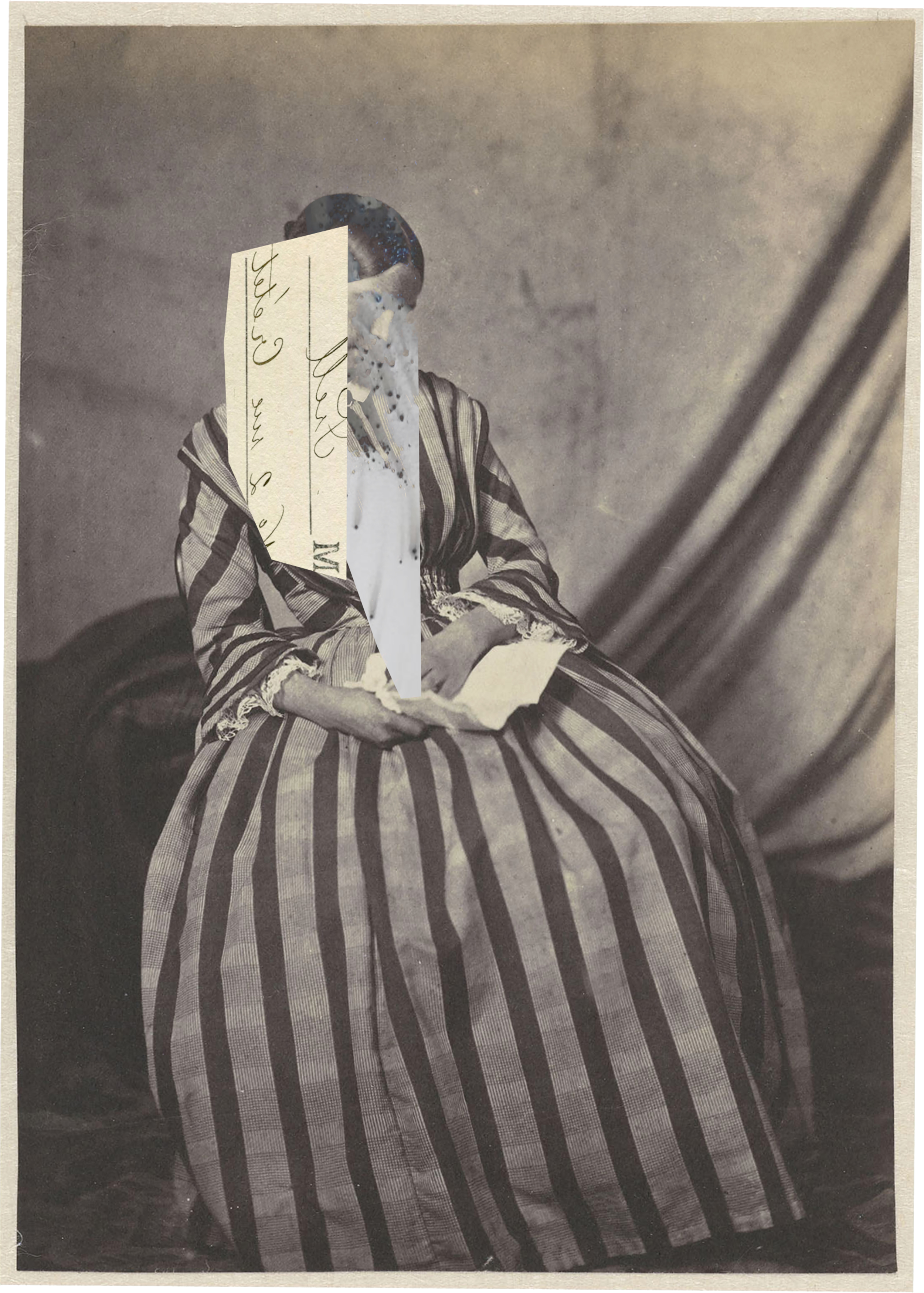
In Thought
That’s a nice way to do it. You never know when things might take off so it’s good to have that regular income coming in. Obviously you’re working a lot with found photography. What is it about the found photography that particularly pulls you in?
When I first started working with photography, I worked with my family’s old photographs which are so special to me. But when I was doing my masters, my tutors suggested working with photography that I had no connection to – people I had never met and places I had never been.
So, I started collecting found photography that was on the edge of disappearing and being forgotten. I loved searching for them and carefully archiving each image, trying to find out as much as I could about the people and how they ended up in a charity shop or for sale online. I’m fascinated by what happened to them, who was it that didn’t want them anymore? That was really the drive of my creativity.
On a more basic level, I love the muted colours – I just think they’re so beautiful! I never work directly onto the photographs – I always scan and archive them first and work with a digital copy. I preserve them all and keep them safe in my studio. I think they’re so special and carry so much historical significance.
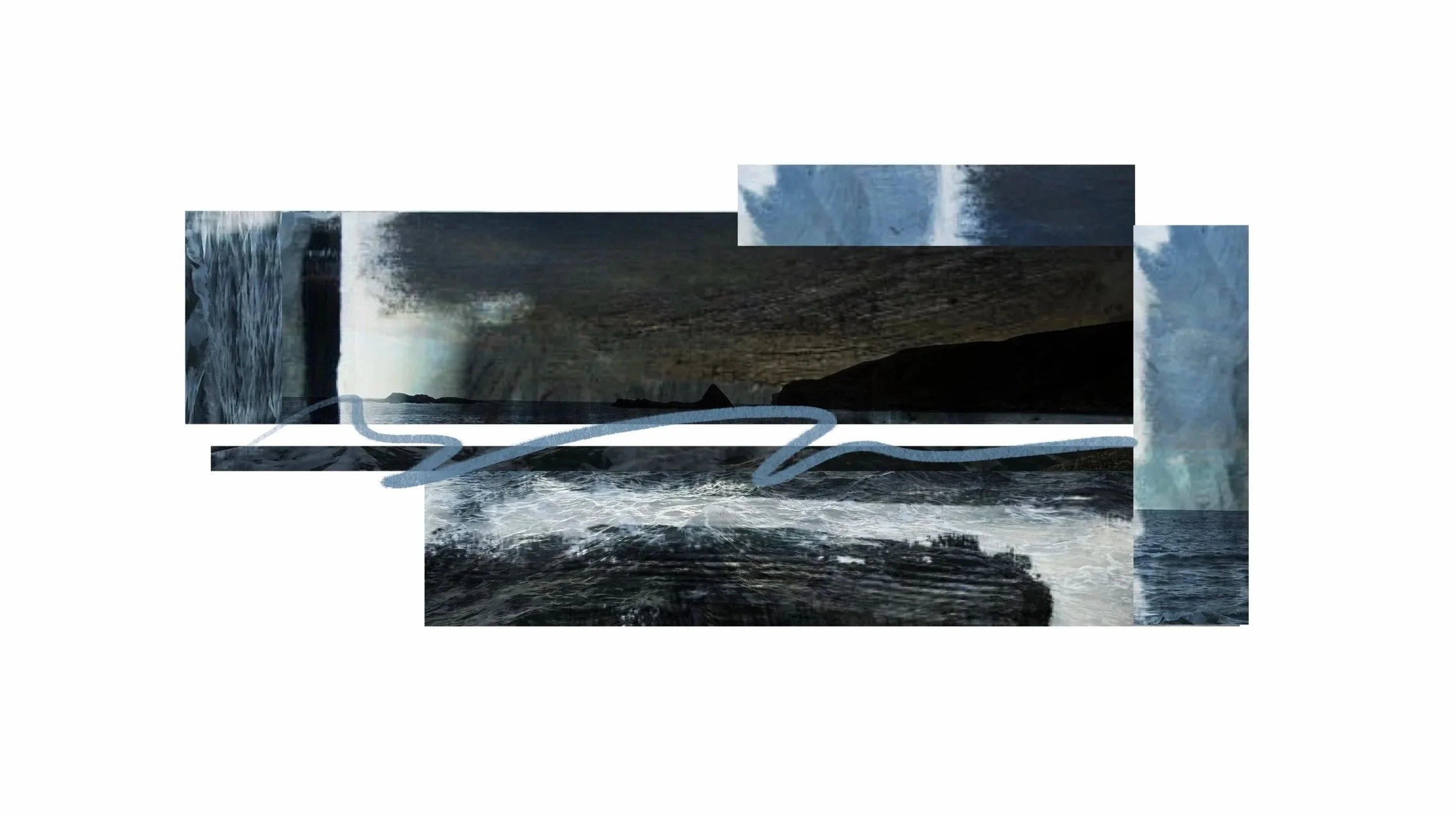
Catterline
Looking at your work, I was trying to work out whether it was all analogue or whether there was a digital element to it. Obviously I get the scanning to preserve the original. Are you then printing that out and then working on top of those things or are you working on screen with them?
It’s a mixture really. Sometimes I print them out and work very analogue — paint, colour, pens. Then other times I work completely digitally. Sometimes I do a mix of both and see where it takes me or I’ll make different elements, both analogue and digital, and then bring them all together digitally at the end to make a final piece. I go with the flow of the picture. If it feels right, I do it.
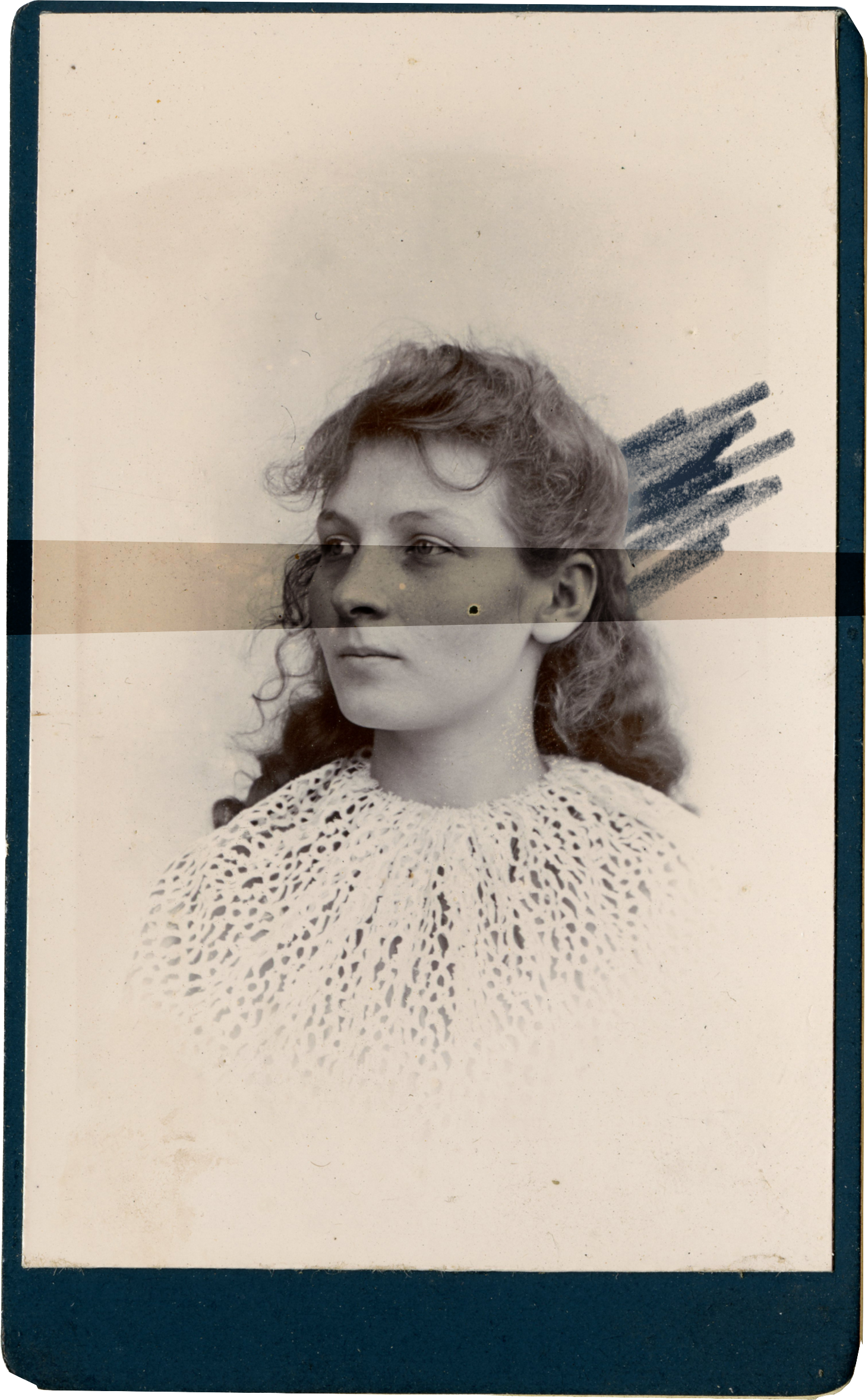
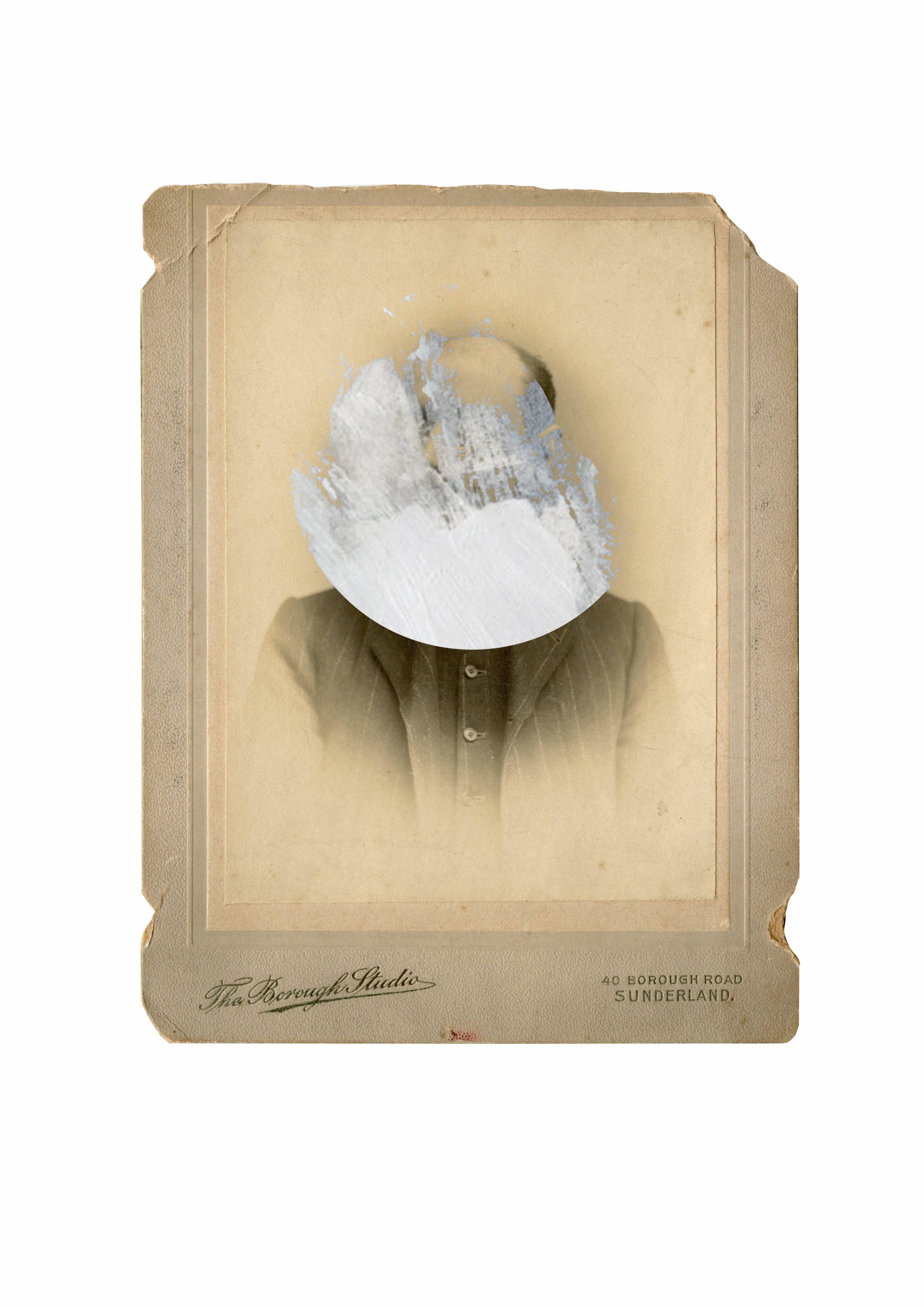
What would you say your objective is when you’re working with the old photographs? There seems to be an element of disruption going on where you have the purity of the original imagery but then a face gets covered over. What’s your thinking behind that?
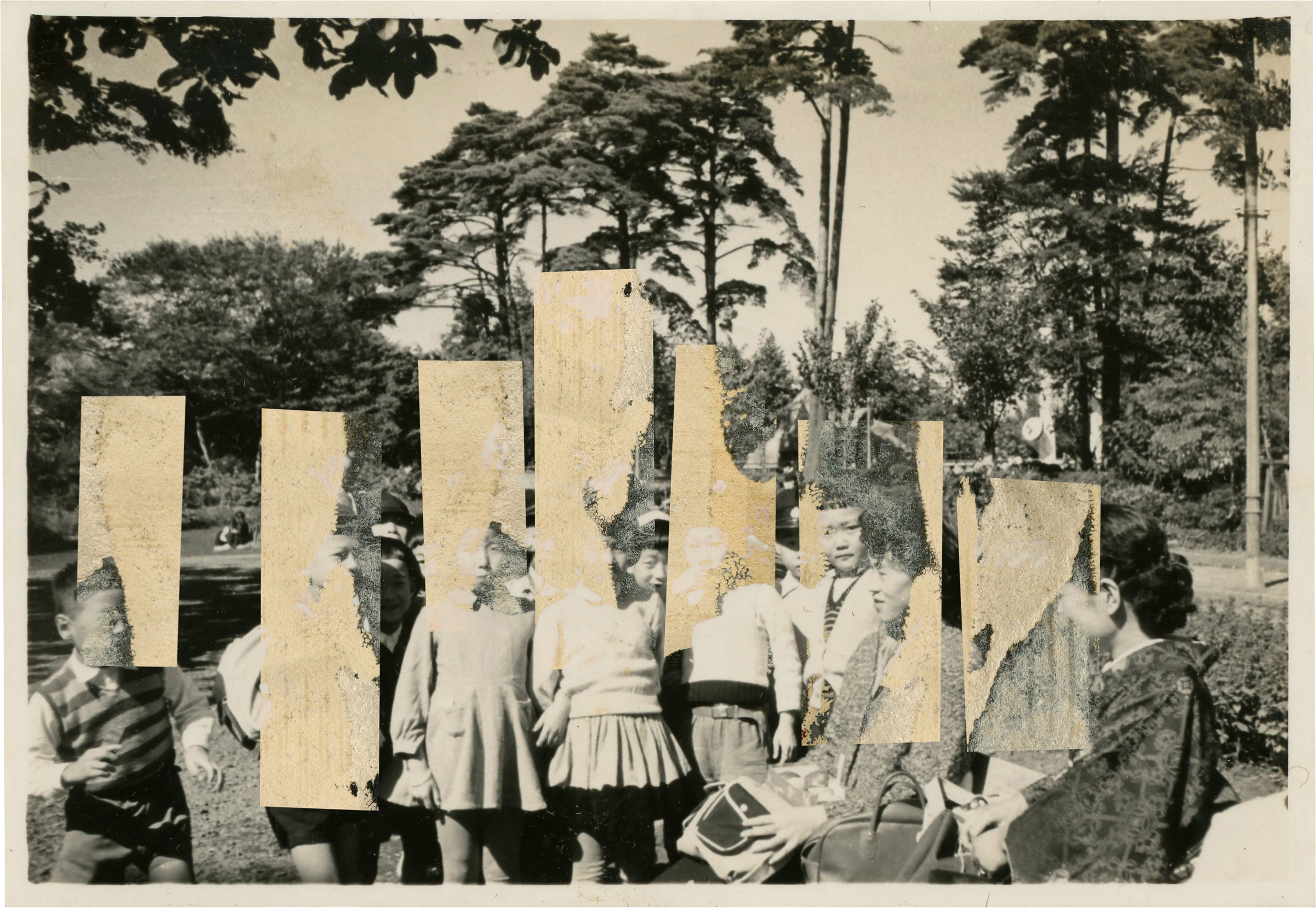
I’m trying to highlight what I think is a significant piece of history; this little photograph that captures a forgotten moment in time. By distorting it, I want to remind people that these people or places will be lost if neglected. It’s just so important that they are looked after and preserved.
Layering is significant in my practice — as time goes on, the delicate photographs decay or are considered worthless. I’m layering to remind people that they’re still there, just below the surface and that these memories are special even if not to you personally, so take care of them!
That’s interesting. Now that you say that, you’ve almost started that fading process yourself where something that was obviously very full on is now starting to recede into the background a little bit.
Exactly! I’m speeding up that process and showing people what can happen. I’m inspired by those photographs you get where it’s just white blob with bits around the edge. It think they’re beautiful but obviously the content has been lost and that’s what I’m trying to highlight in my work.
When you’re looking at the original photographs, especially digitally, where you can zoom in and study a face, do you ever imagine those people’s back stories or even project onto them some kind of back story?
Oh, definitely! My final project for my masters revolved around a photo album of a couple on their honeymoon in Devon – Vi and King. It almost felt like they became part of my family. I visited all the places they went on their holiday and did as much research as I could into them. It was very interesting, but I kept hitting dead ends.
My tutors told me, “Don’t be afraid to fill in the gaps yourself. There are going to be gaps so use them as inspiration”. That was a turning point for me. It made me feel less worried about how I interpreted them. They said, “Add yourself into them. Add little bits here and there and make them how you want them to be. Give them personalities and see where that takes you creativity wise”. It was an interesting way of working.
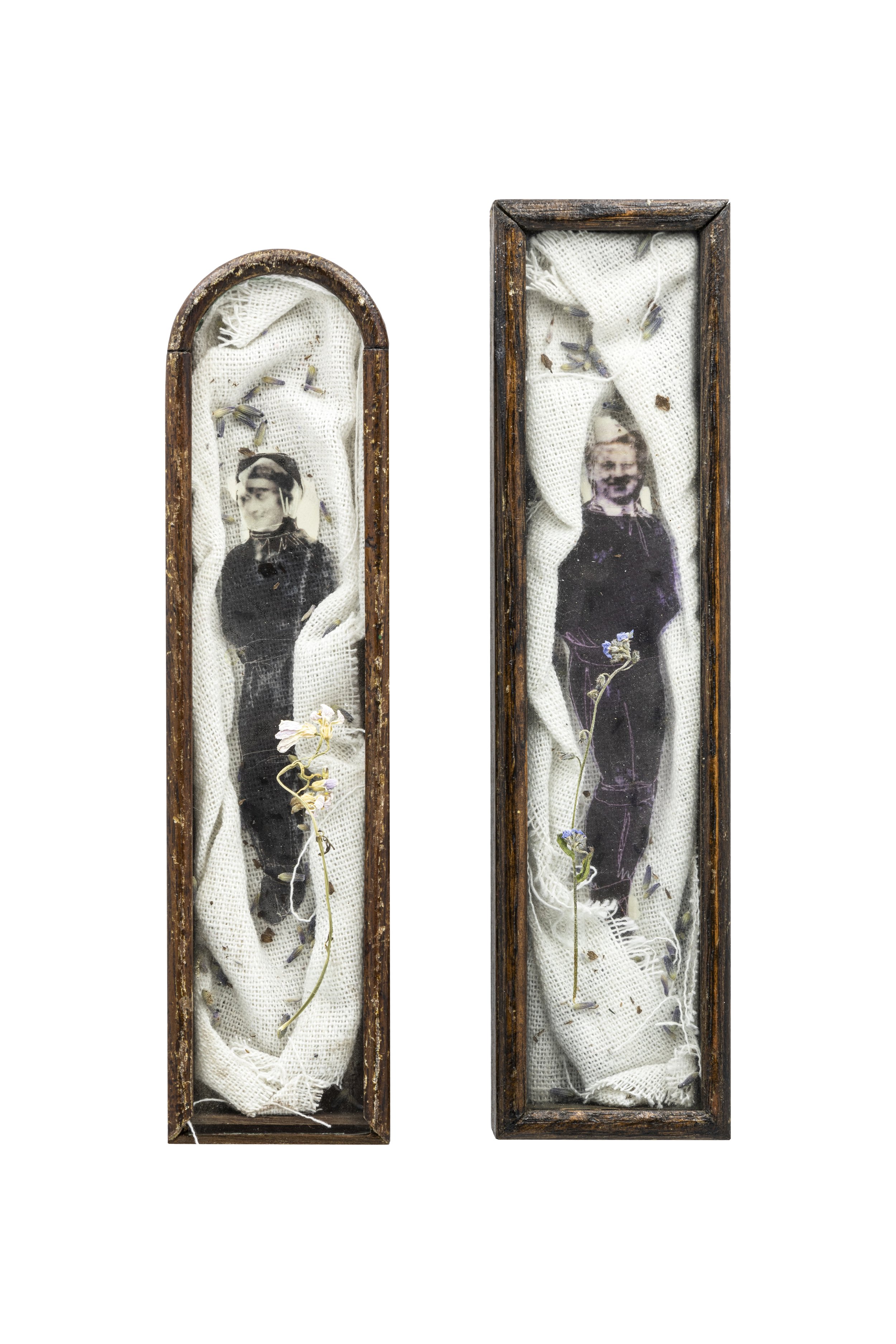

Interestingly, compared to other people that I’ve interviewed who work with old photographs and imagery, it seems to me, and correct me if I’m wrong, that wherever possible, you delve a bit deeper to the point of identifying the people.
Yes, if I can. It can be quite difficult. I had some photographs that I picked up in Scotland which I discovered belonged to a Canadian family that came over by boat just before the first world war. I managed to find them on a boat’s passenger list which helped me find out where they lived, which church they attended etc...I couldn’t believe it when I found them. Those are the most exciting archives, where you can piece the little bits back together. It makes me feel like I’m almost bringing them back to life again.
Have you ever been tempted to find the descendants of those people and say, “Look what I did with these old photographs that you perhaps haven’t even seen of your great-grandparents.”
I have tried a few times but usually get the same answer – most of the time it’s people clearing out old houses that then stumble across old photos in the attic and then sell them on to collectors or charity shops so they can’t provide a connection. Sometimes they have given me a rough location or date but not much more. If I had the photographer’s name, I could find out a bit more about where they might have lived or where they had travelled from to get their photographs taken.
I’ve also had people come to me with collections that they don’t know what to do with and want them to be looked after. I had a lady that lived in my village that was moving away and she didn’t want the photographs of the area to be forgotten. She gave me this gorgeous collection of photographs and said, “Just use them and look after them.” The lady attached sticky notes to each image telling me who was who and where the images were taken so I got some great connections there, but a lot of the time I have no idea and struggle to find anybody connected.
It would be fascinating to connect face-to-face with a relative or a descendent who would probably be in a position to give you more of the back story.
Yes, but it would be so nerve-wracking!
Your work has a kind of simplicity and a ‘less is more’ element to it. Is that a deliberate design plan when you’re working?
I like to enhance the beauty of the photographs by keeping things simple, but they don’t usually start out that way. I’ll put fifty things on and try loads of different layering’s, and
I’ll just look at it and go, ‘oh no, I’m just not sure’, and take everything off and start again. Sometimes just putting on two or three of the elements I had before is enough. That’s why I like working digitally because I can edit myself easily. Through editing, I bring the focus back to the image and add just a little something that makes it work.
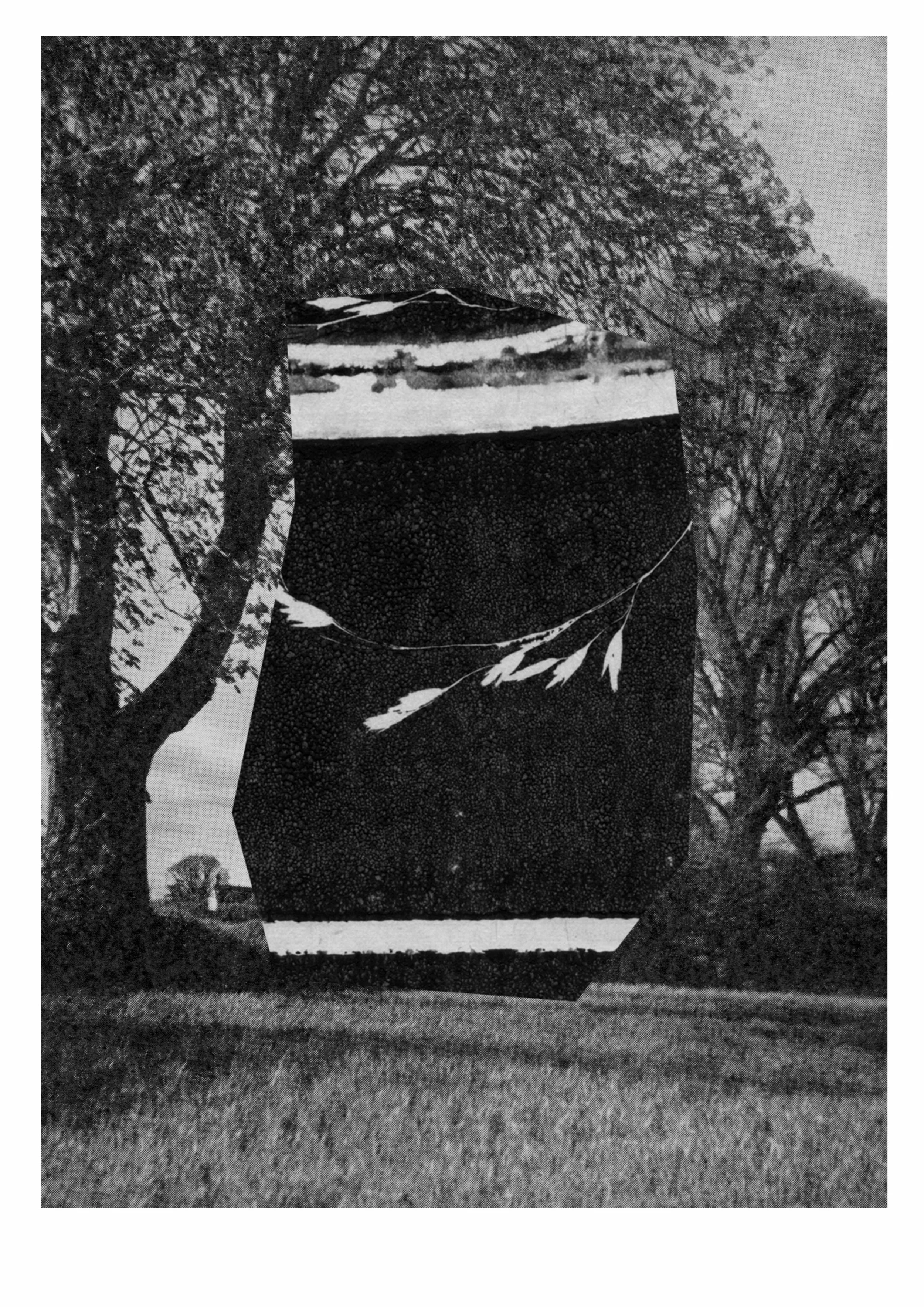
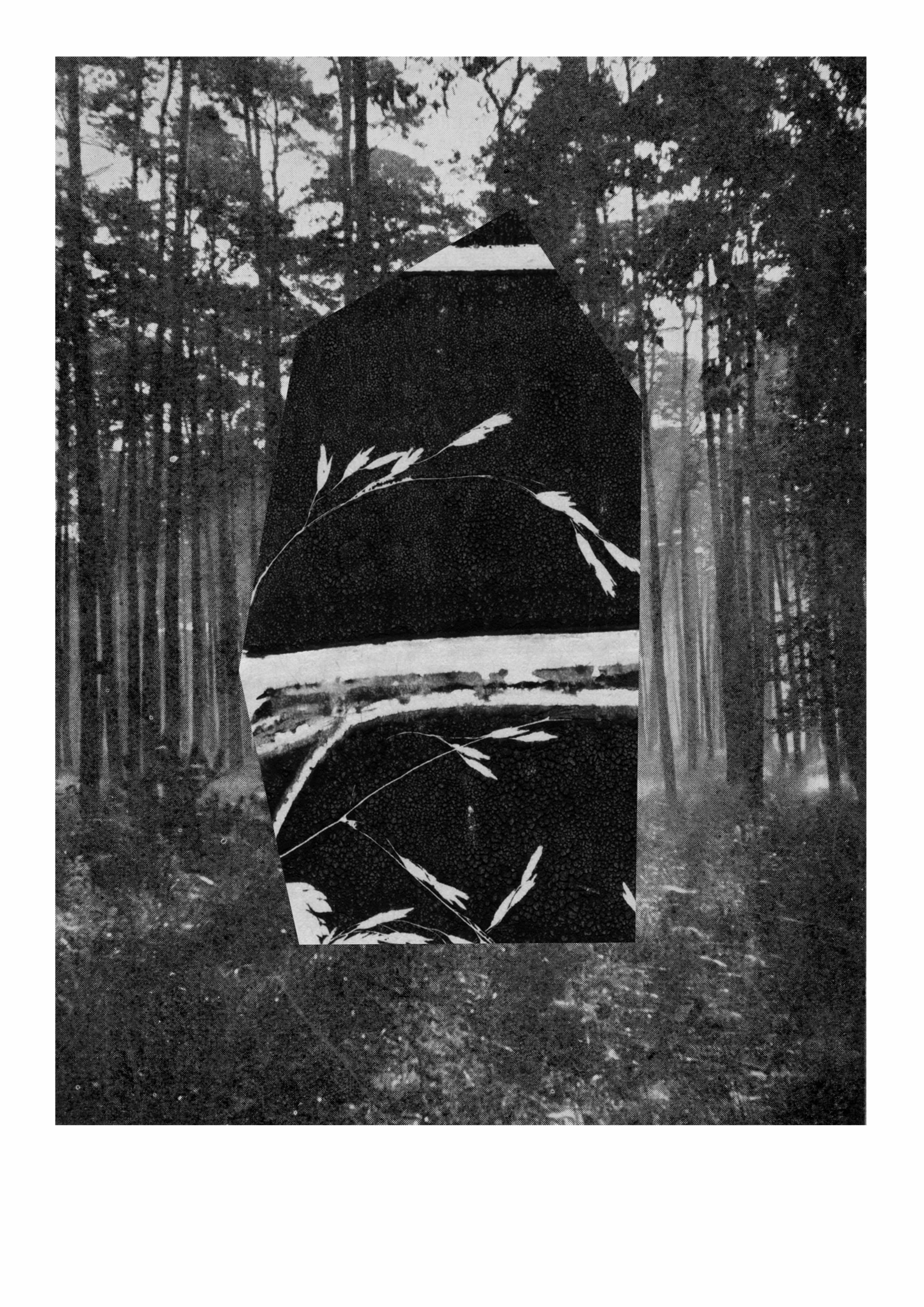
You seem to introduce a lot of additional textures and marks into those images. Do you have another collection of those things?
Like people photographs and then the elements that you use to interact with them?Yes. I’ve got my archive in one corner of my studio which is all lovely and neat and then on the other side I have a set of drawers and it’s like a bomb has gone off in there. It’s full of gorgeous collage-y bits that I collect or work on and then put away for later use. I also add all the materials I get sent by the generous collage community on Instagram. It’s a big, messy pile of stuff that I sort through and pick out. I have all sorts of paper and mediums and I love mark-making - I think the artist’s hand is so interesting.
My tutor at university was always talking about seeing artists so purely in their brush strokes which I think is very interesting. I love playing with that. It’s my own hand being layered upon these photographs.
What do you do with the images once you’ve created them? Are you selling them? Are you exhibiting? You’ve obviously got your own gallery, which I presume gives you some sort of exposure.
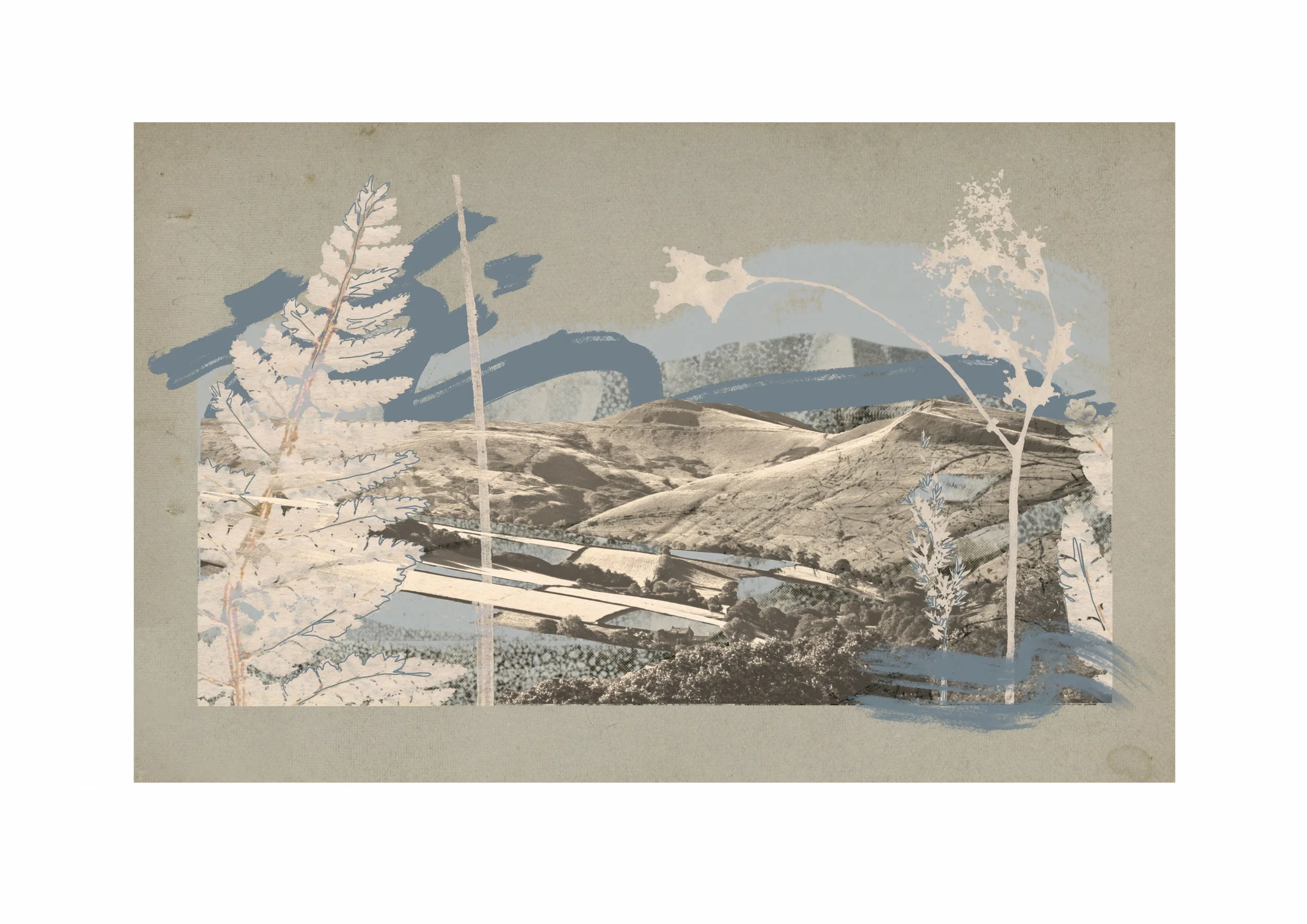
I showcase a different side of my work at my family’s gallery – I focus on local landscapes for that space which appeals to all the walkers and holidaymakers we get visiting the village. A memento of their trip to the Peak District! I still use vintage photographs and pinch bits and pieces from my Dad’s archive of the area from before I was born.
I exhibit my found photography work with the Manchester Academy of Fine Art. I just became a fully-fledged member a couple of weeks ago and it’s exciting to showcase my work with them around the country.
I also have an online print shop that I make prints for. It’s nice to see the images in the flesh after they have been designed digitally. When they come back from the printer, it’s like ‘oh yes, it came out just as I’d hoped’. It’s so different to see something on a screen versus in your hands.
You’re also working with ceramics as well.
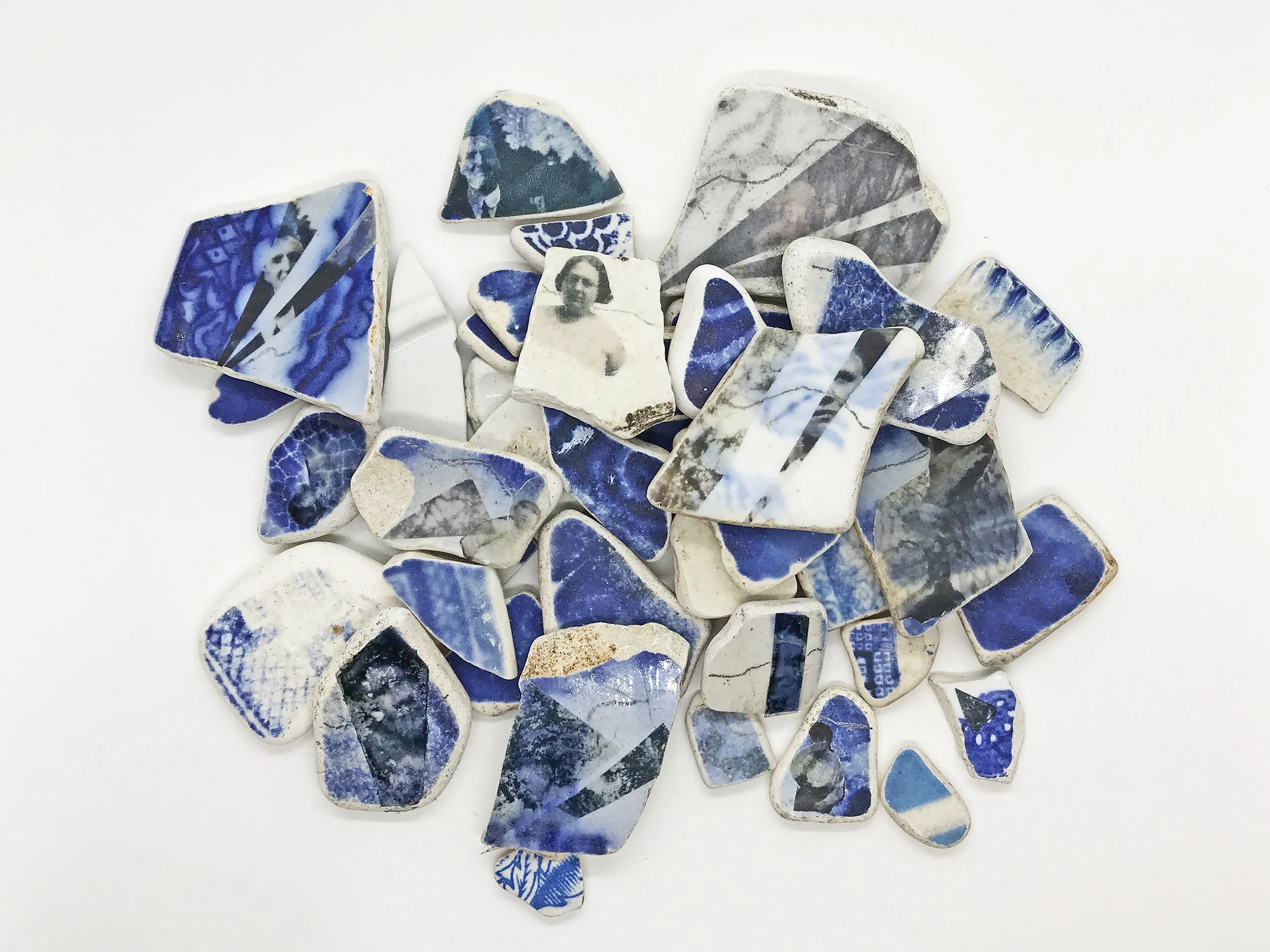
Yes, I have dabbled in ceramics. I find the transience of things very interesting. Ceramics have that interesting sort of breakable-yet-can-survive-thousands-of-years- thing going on. I’ve worked with sea pottery. I’ve made my own ceramics. I’ve thrown pots. But since coming away from university and not having a kiln it’s a little bit difficult to do it, so I work with air dry clay now. There’s no medium I’m not willing to try!
Reconstructing Landscapes
Looking at some of the ceramics on your websites, it looks like you’re using flat ceramics as a kind of substrate, like a canvas. How are you actually getting the images onto the ceramics?
I do it in a mixture of ways. Sometimes I literally print out on tracing paper and glaze it onto the ceramic and I also use the ones you put in the oven. None of them are dishwasher safe or anything like that, they’re purely just to be looked at. I like the results I get working in ceramics. It’s nice being surprised!
Looking at your work now and the variety of approaches you have, do you have plans to commercialise it at all? You’re dabbling in prints but it seems that the imagery that you’re using, which is very evocative and timeless with historic value, could be applied across a whole range of things. Those ceramics could actually be ceramic tiles. Do you have plans to move your creativity more into a business?
I just go with the flow really – I’m happy just slowly growing my Eve Illustration business.
I always try to keep myself visible, so people know what I’m doing and a lot of the time people come to me for commissions using their old family photography which is lovely. But if somebody turned around and said, “I love your work. Let’s do a book cover design” I’d be very happy to do it and I’ve done a couple of projects like that in the past. But it’s not about the money for me, I have a passion for being creative and luckily that’s what I get to do in all my work!
Do you have any specific plans for the future?
I’d love to do a PhD.
What would you do it in?
I’d probably carry on with illustration but look at commemoration in a wider scope and where my art would fit in with that. I looked at a lot of historical references when I was doing my masters and it would be lovely to delve a little deeper into those things.
Have you ever been tempted by the curatorial and historical routes where you’re researching and perhaps revealing the stories of the past?
I’d love to be a curator. At my family’s gallery, we had the opportunity to be involved in the design, curation and hanging of exhibitions at other galleries. I’ve worked with the Cooper Gallery in Barnsley where we hung a big exhibition of work by the artist Harry Ousey. He was quite well known in the 1960s, and had a couple of one-man shows in London. He does these huge abstract watercolours. I was able to do some amazing digging into his past and I absolutely loved it and the gallery was very pleased with how it turned out. I would love to do something like that but a lot of the time you need a degree in curation which is never very helpful when you’ve already done one on something else!
It might be your PhD.
It would definitely be something I’d be interested in looking at. It would suit me very well.
You can see more of Eve’s work on her Instagram page : @eveillustration