
10 Questions with : Wayne Hunt
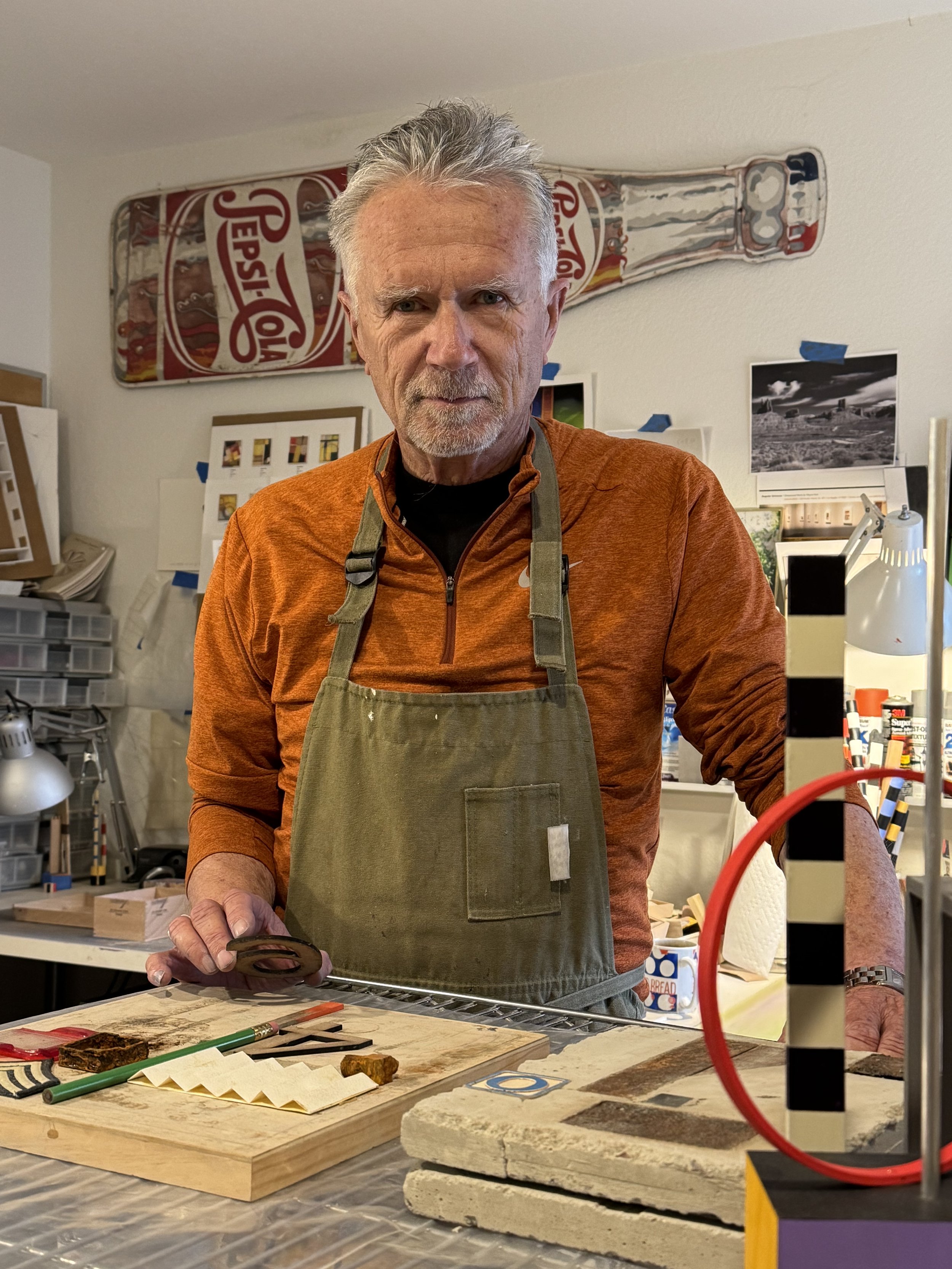
Wayne Hunt is a collage artist whose work explores the interplay between image, texture, and narrative. Drawing on a wide range of found materials, his practice is rooted in experimentation and an intuitive approach to composition. His distinctive style reflects a deep engagement with visual culture, where fragments are reassembled into layered, thought-provoking works that invite closer inspection.
01. When and how did you first get into collage?
As a high school student I was well into art – drawing, painting, sculpting – when I saw a work by Robert Rauschenberg in a museum. Wow! Here was a guy creating fascinating art using only found materials – making something out of nothing! It wasn’t collage in the traditional sense; it had newsprint, fabric, bits of wood and gobs of colorful paint arranged in an energetic composition. The finished piece had power, richness and implied narrative, but the qualities and character of the individual components remained, along with a new dynamic totality. I learned later that the genre was known as assemblage, collage’s more dimensional cousin.
02. How would you describe your approach to collage and your specific style?
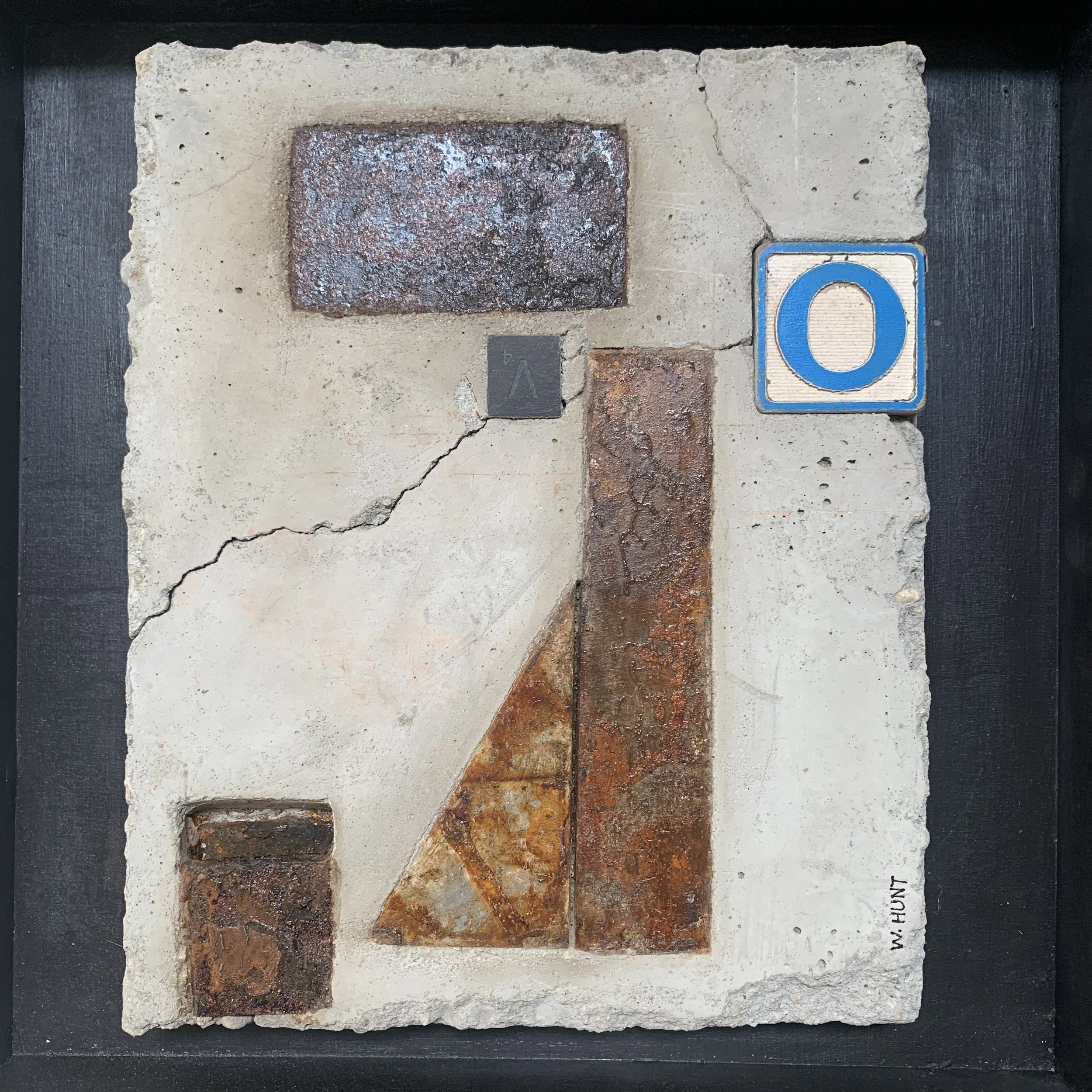
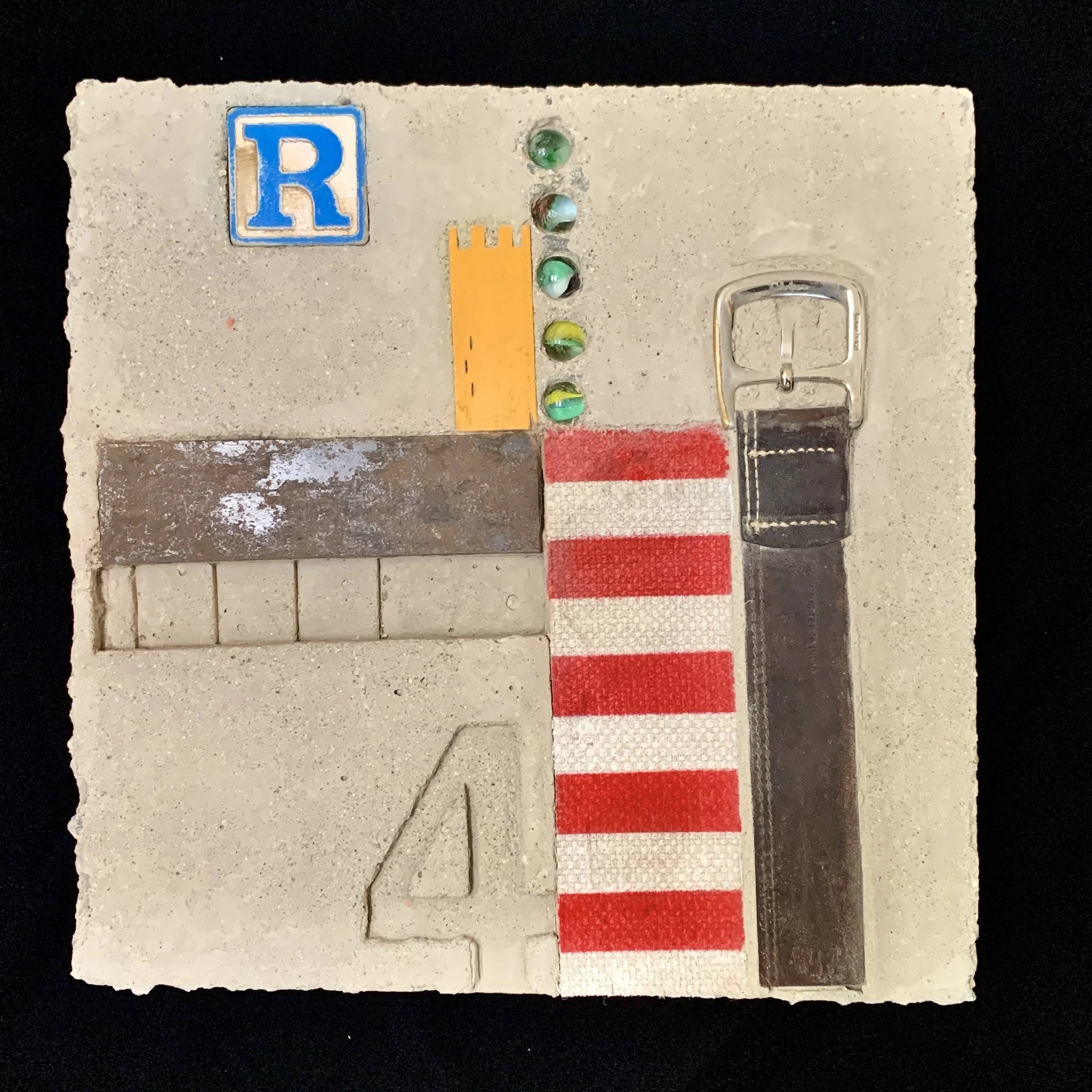
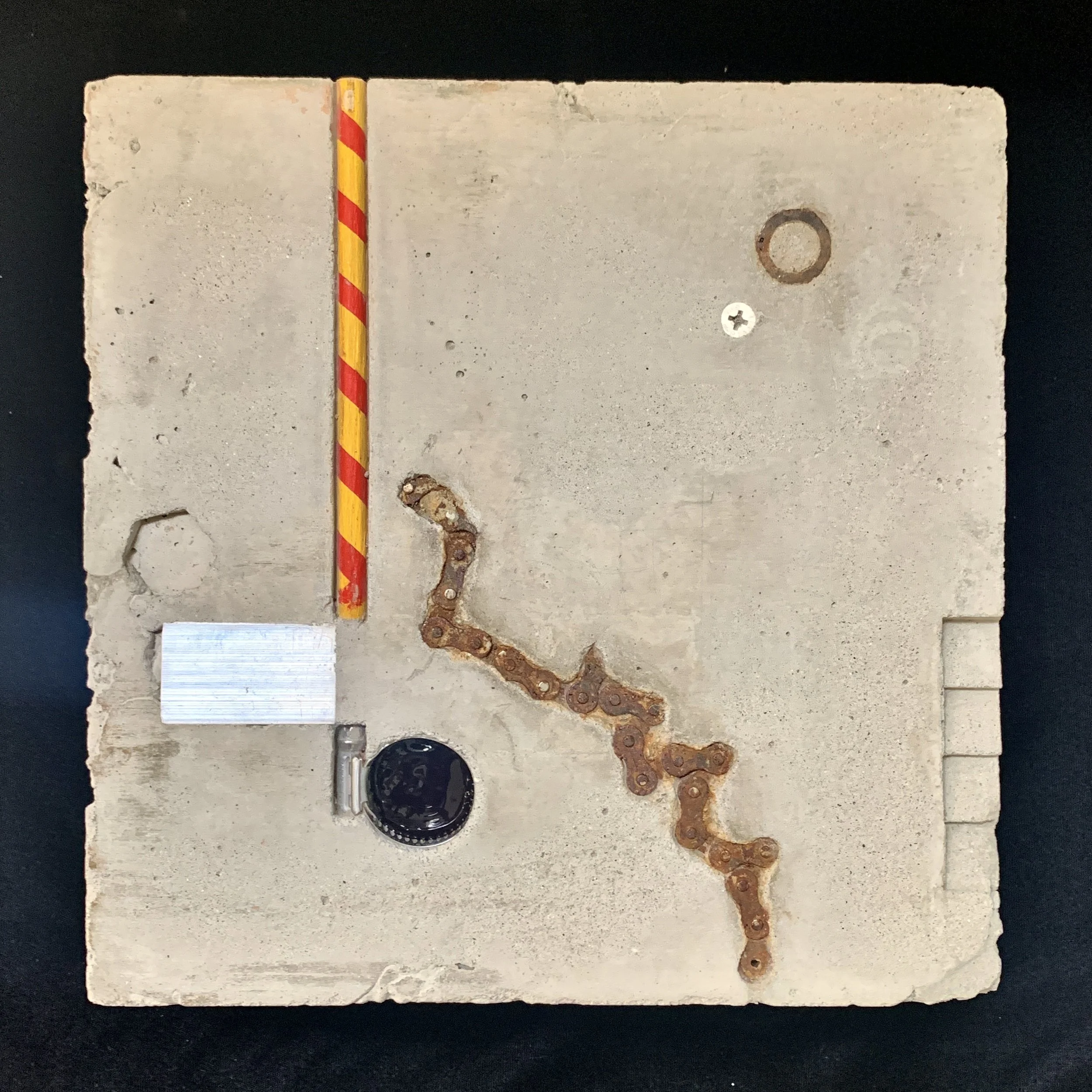
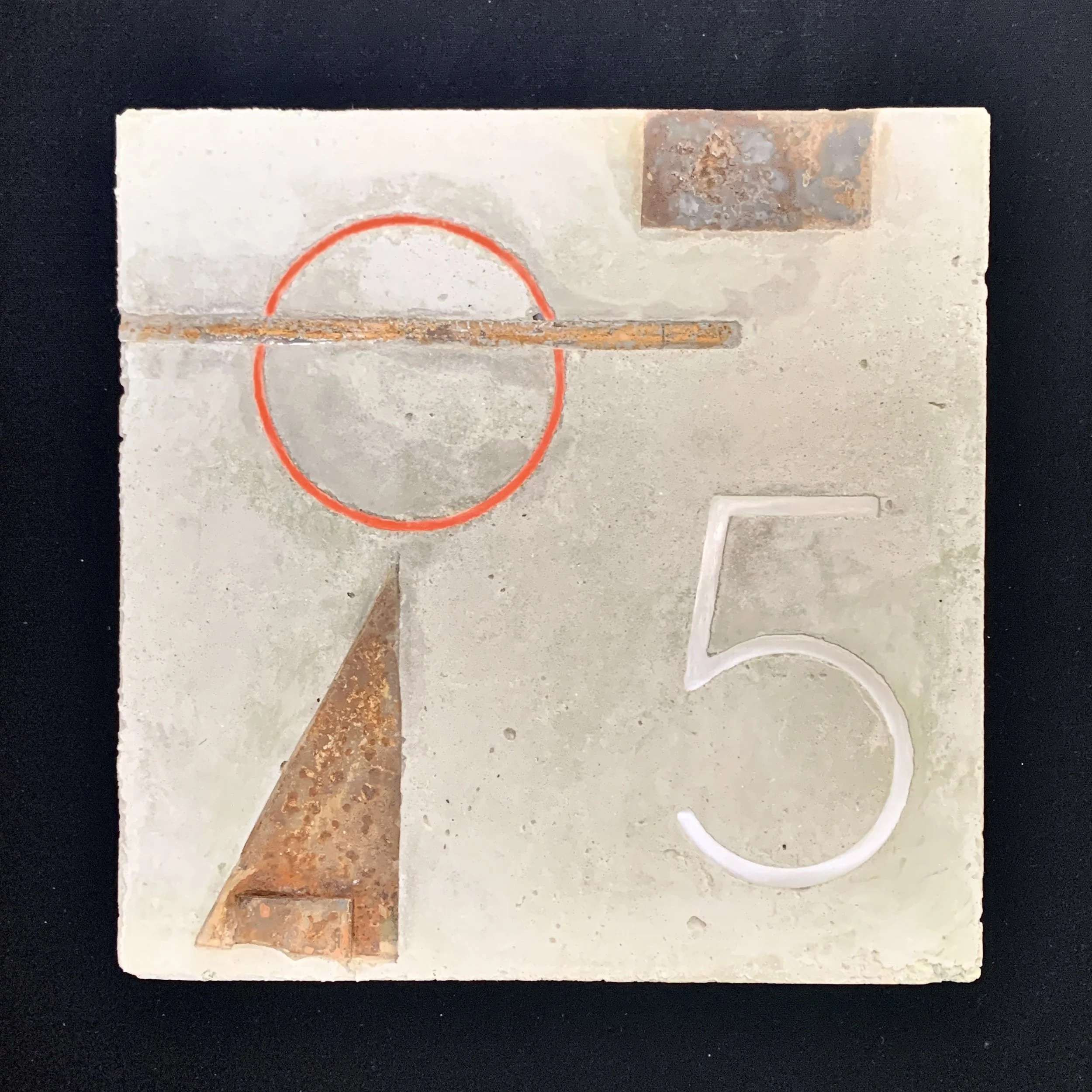
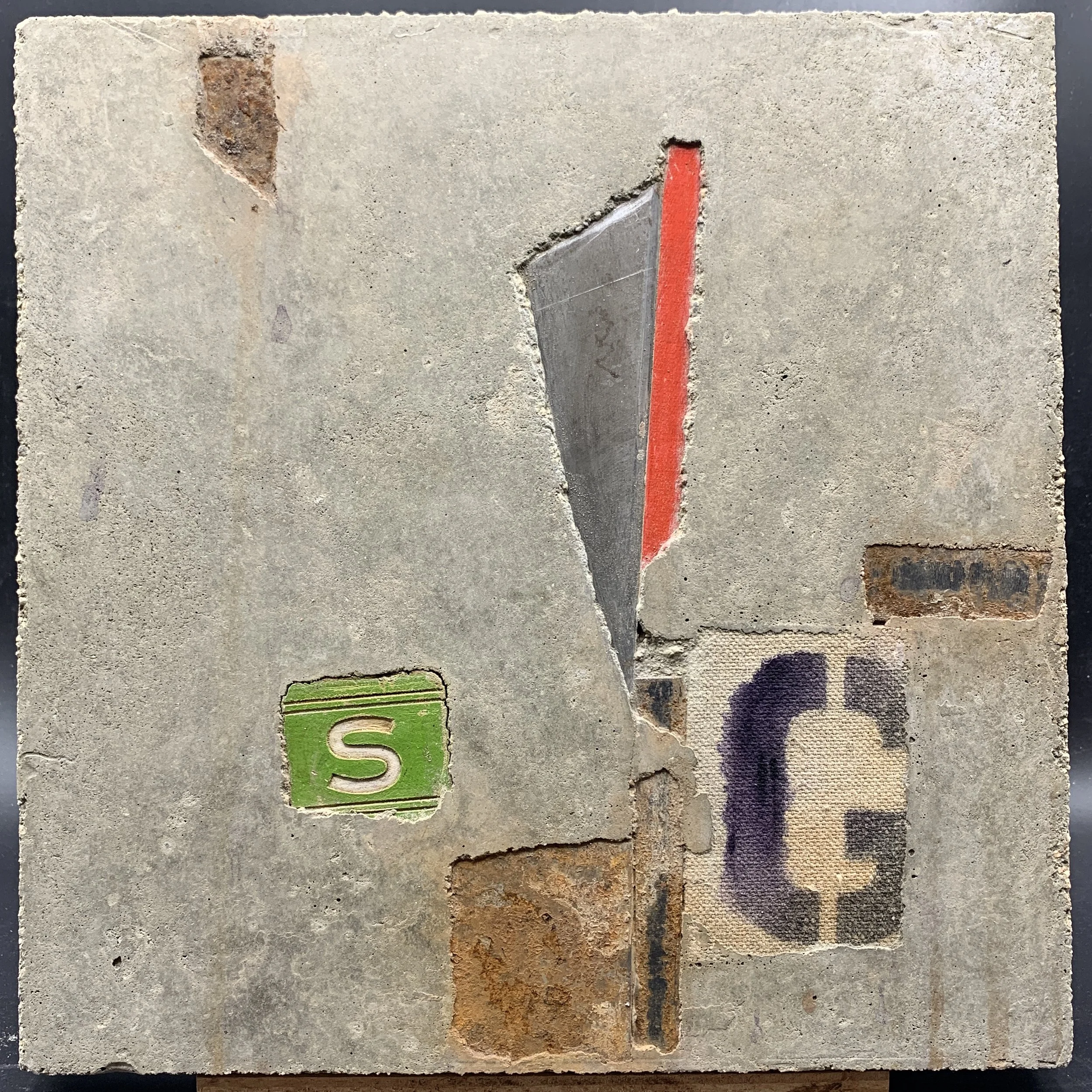
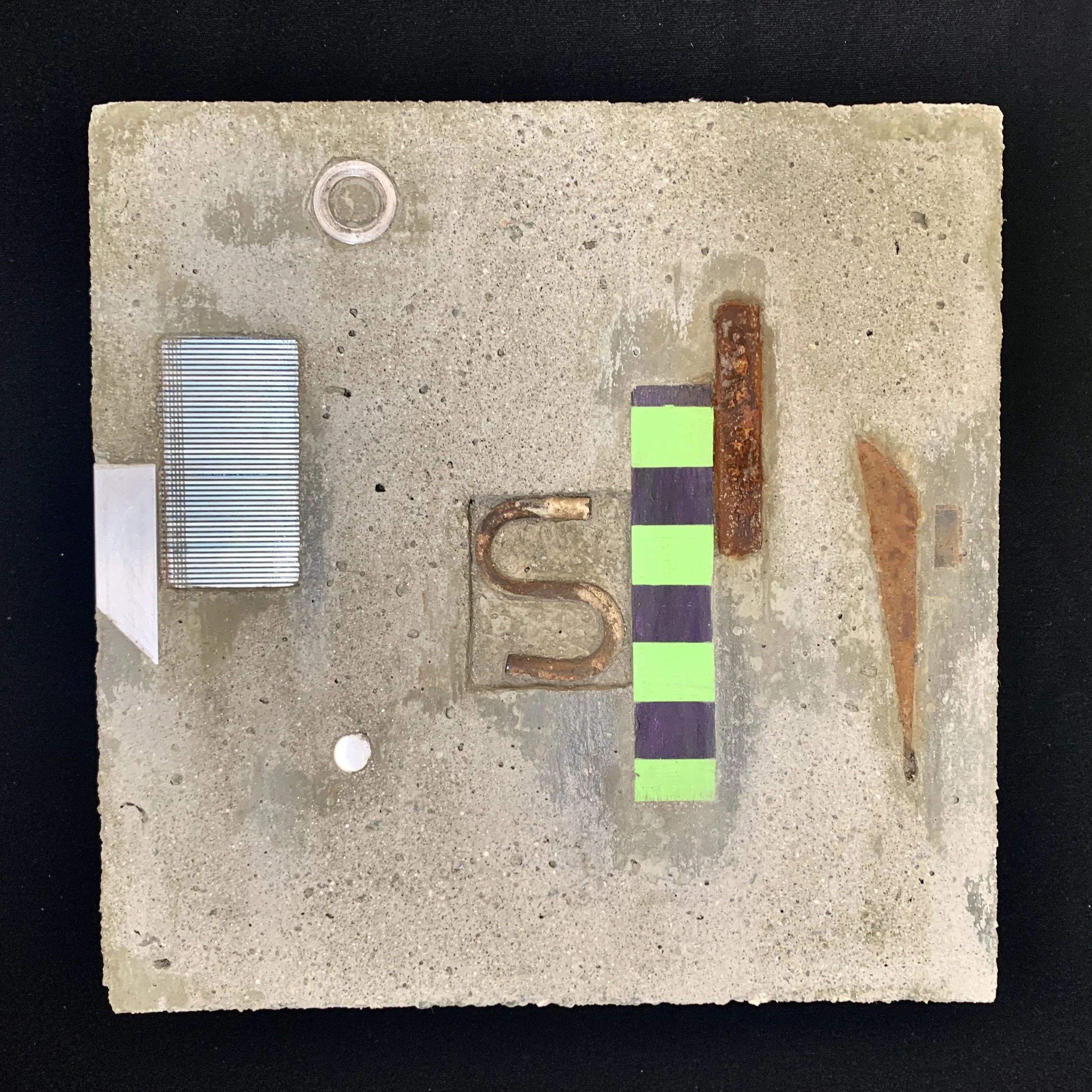
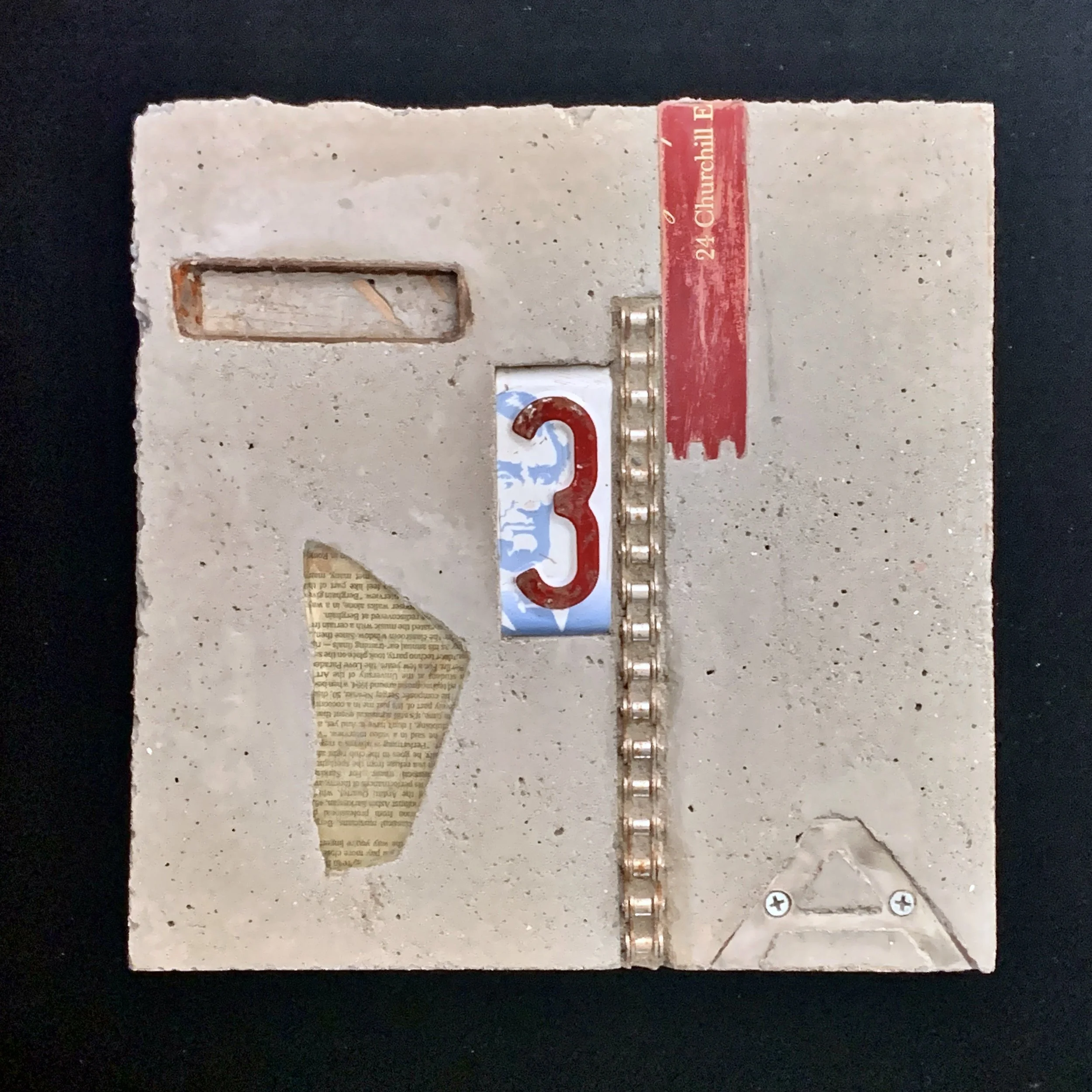
This current series is unique for me and is collage in the broad sense in that I arrange found materials to make a composition. But I don’t use paper or ephemeral media; I select scraps of metal, plastic, glass, wood and even fabric and embed them in concrete. The result is still largely two-dimensionaland collage-like.
03. What would be your artistic statement in terms of what you’re seeking to achieve in your work?
This series is inspired by the streets and sidewalks we use every day. It refences odd and random objects that get cast in sidewalks or pressed into asphalt pavement over time. There’s a fossil-like feel, that much time has passed and these simple treasures are frozen forever in random compositions. Maybe these are slabs cut from walls of some past or future civilization and the objects are a kind of arcane sign language. Regardless, I’m into the texture and visual ‘weight’ and overall eye appeal. The concrete brings a certain permanence.
04. What do you want the viewer to get from your work?
My first goal, as it should be in most art, is to be interesting, to attract the viewer and make them look closer. Next, I’d like the viewer to get into the composition, the relationship of the seemingly random elements. The concrete material seems to suggest a kind of strange universe or environment, a mysterious medium. And, like any artist that uses found objects, I want people to unconsciously enjoy the subtle tension between the new composition, and the still-recognisable qualities of the parts and pieces. Also, the material (concrete) is a major attraction for me.
05. Who or what are your biggest influences and why?
I love and admire dozens of artists and styles from all eras, especially Twentieth Century modernists. But collage-wise you gotta’ go with Kurt Schwitters – clearly the father of collage. His work has never been equaled and even after a hundred years his beautiful small collages remain icons of modern art. He also worked in wood and mixed media, venturing into assemblage. And in that vein, Rauschenberg, Ed Kienholz, Larry Rivers and George Herms are favourites. Taking it a bit further, throw in Joseph Cornell, who really knew how otherwise mundane objects can come together with great power.
06. What ambitions do you have for your art - are there directions you’d like to move in?
Like many artists I can get bored easily and wander off onto a new trail, often leading to a dead end. Re the concrete series, I’d like to work larger, but the pieces at 11”x11” already weigh 11, 12 pounds; even going to 15” square nearly doubles the weight. Also, there is a high failure rate on the casting as I try to maintain minimal thickness.
07. What do you use as your materials and where do you source them from?
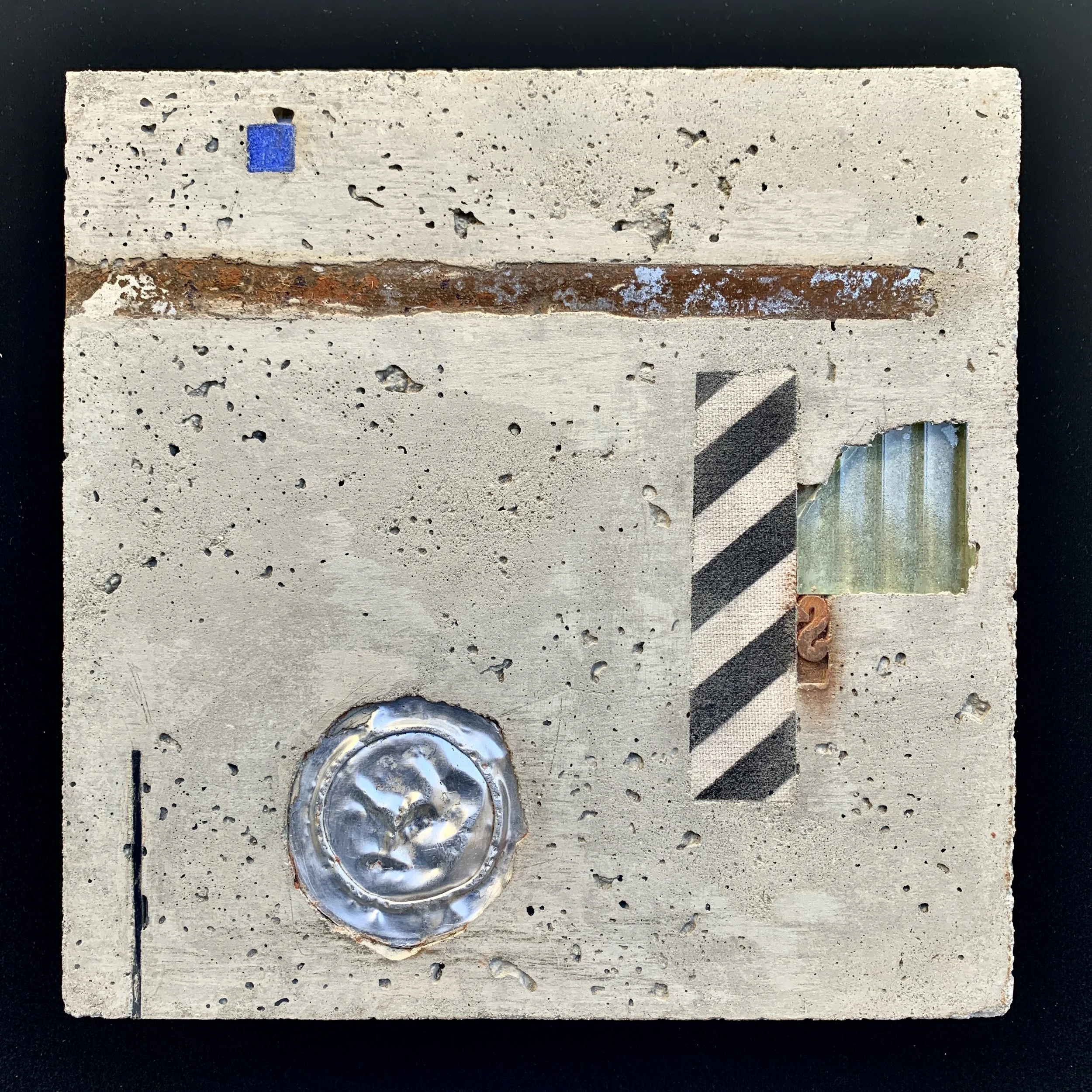
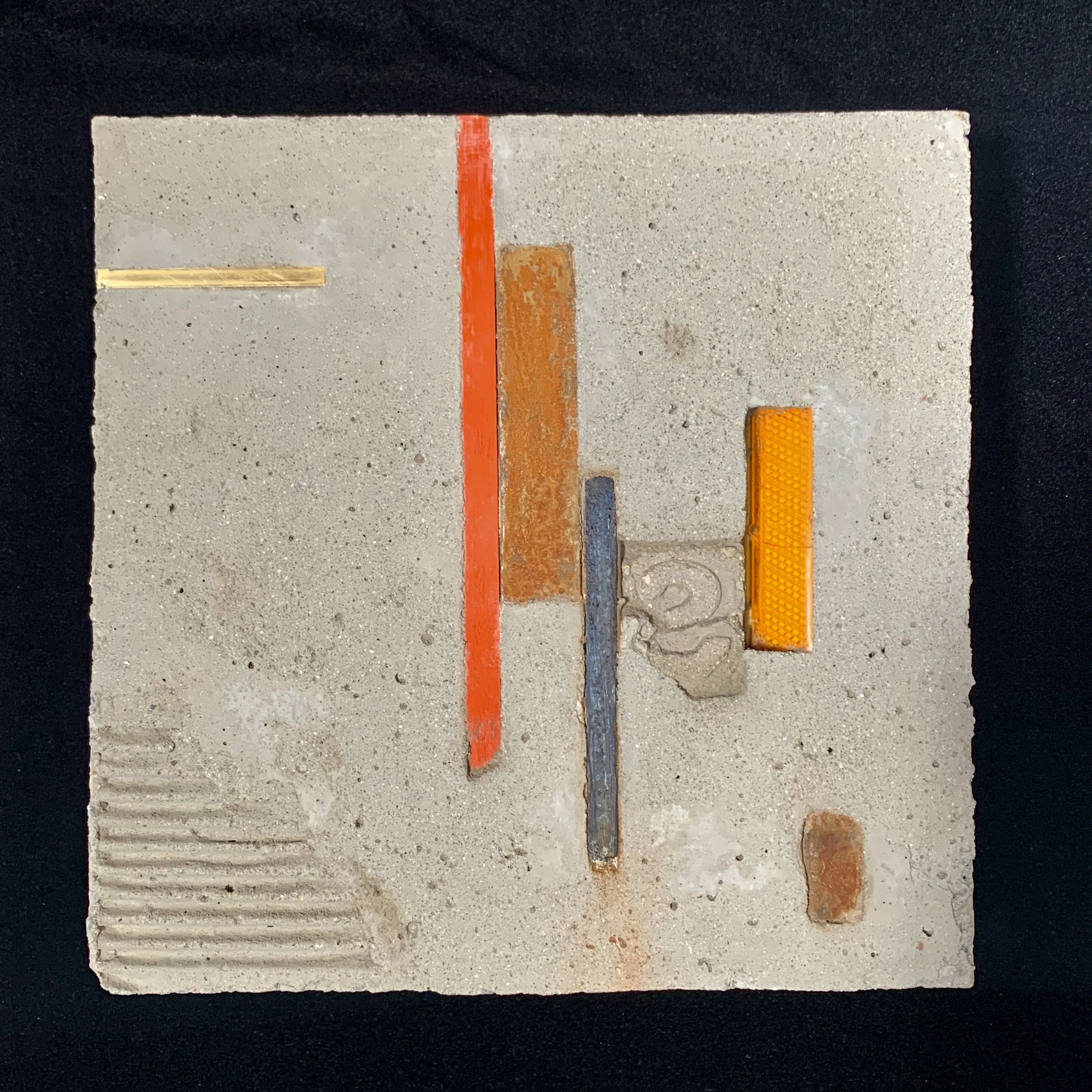
For these concrete pieces I look for random-seeming bits of rusted steel, metal rings, bottle caps, broken taillights, stainless steel numerals, you know, the usual stuff. Like most collage artists I have small boxes and drawers of interesting junk. Since I’m intrigued by pavement and the ground plane (see No. 03, above), I find cool things while walking around town – bits and pieces that get swept to the curb by traffic. I also have a steel-fab guy who saves steel cut-offs for me.
08. Can you choose one of your pieces and give us an insight into the story behind it?
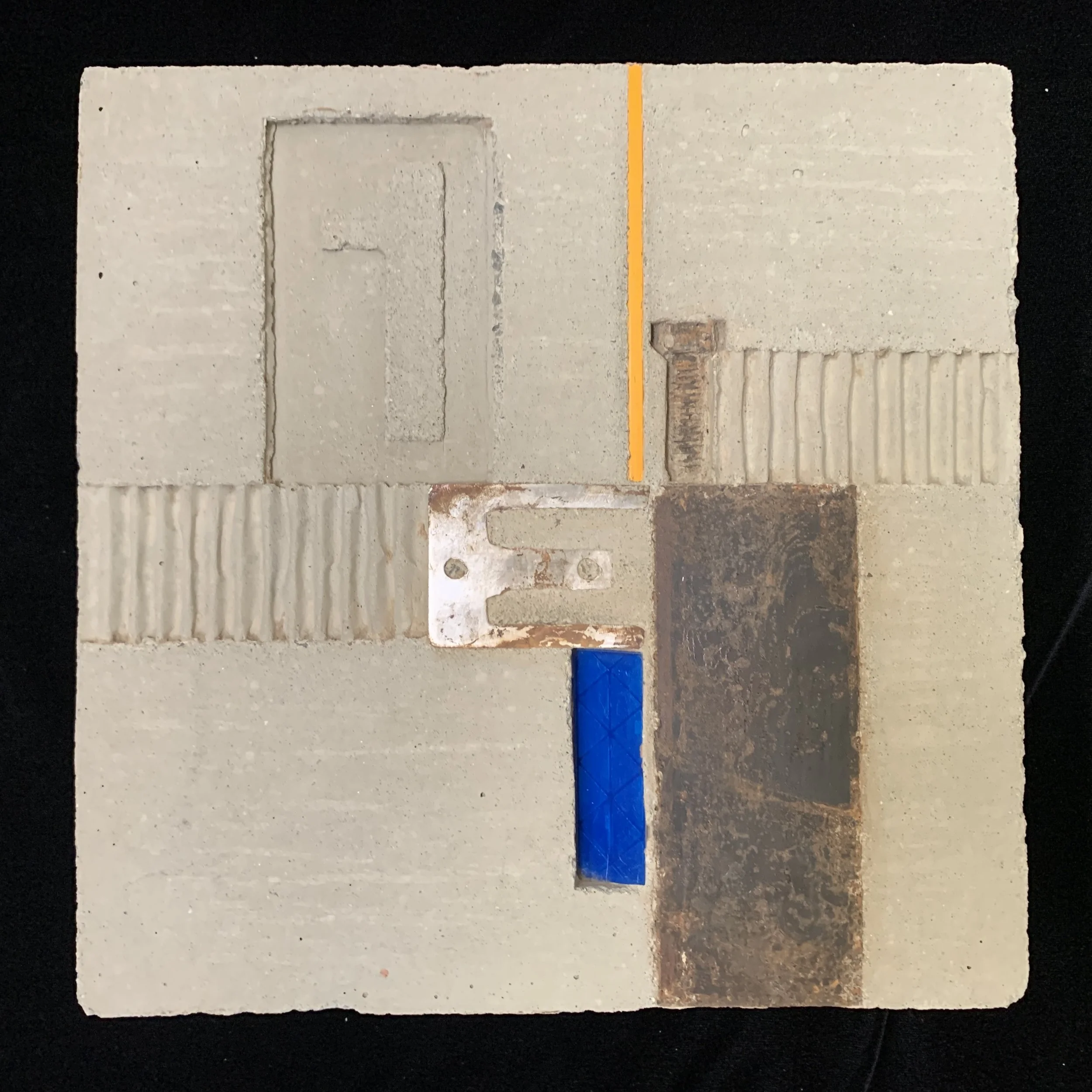
E Bolt is a more recent effort with an architecture-like structure. It’s all about the composition; activating the space and maintaining visual interest. I’m committed to the basic principles of design. Not much more of a story other than an interest in including colour and typography – the blue form is a fragment from a street reflector.
09. Collage is…
Basically making something out of nothing, that is, repurposing largely discarded ephemeral materials, mainly paper, into new forms. Sometimes the materials are selected for color and texture and used similarly to a painter’s brush strokes. Most times the ephemera retains imagery which plays a role in collage’s composition and content.
10. What’s the one question we should have asked you, but didn’t?
How do you make these?
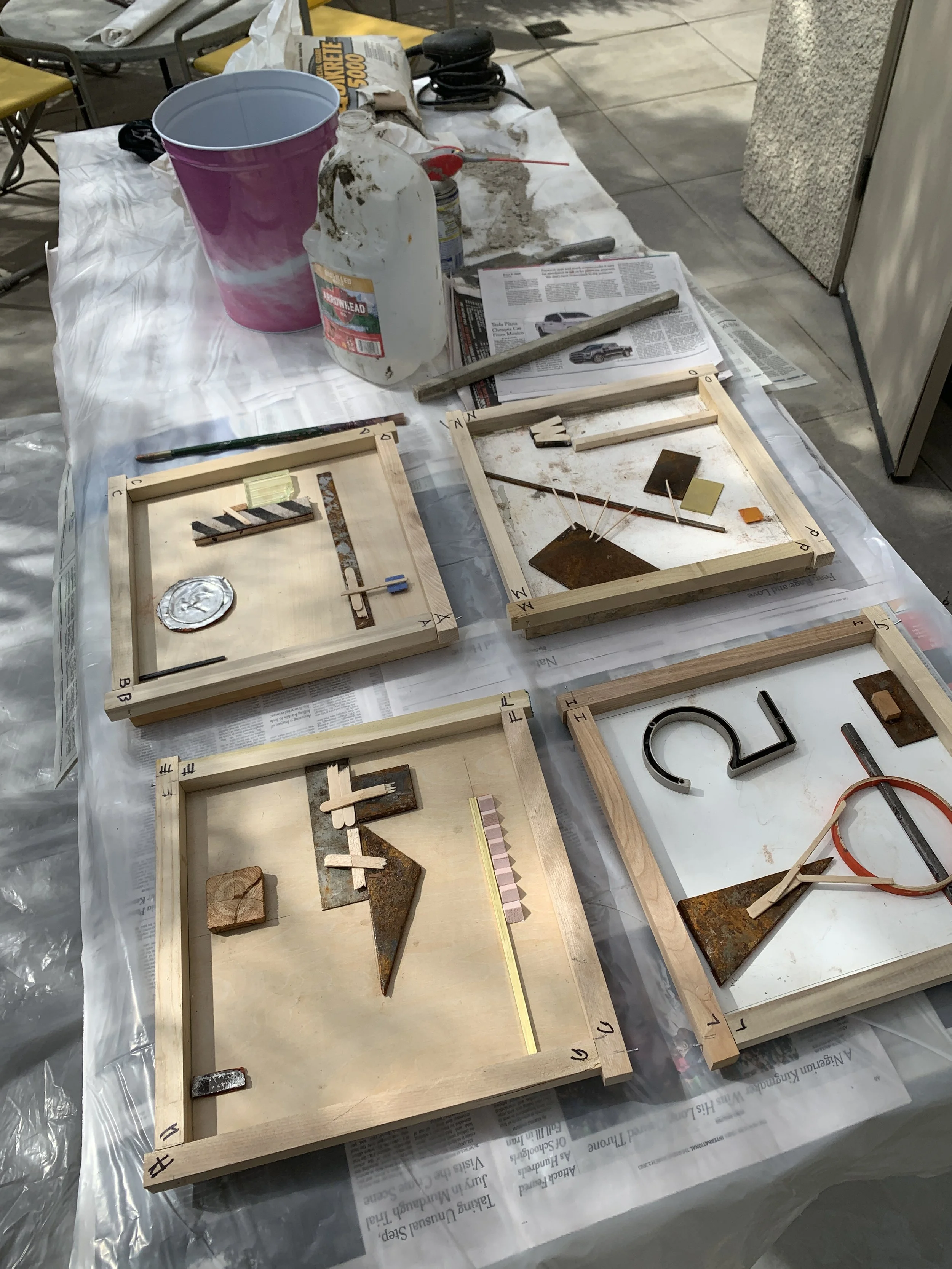
Well, first, spontaneity is not an option. I carefully select and compose objects, trying to visualise how they will look as flat surfaces when embedded. When I’m good with the layout I place them upside down and in reverse in a wood concrete casting form. A big challenge is securing the pieces so that the concrete pour doesn’t knock them out of position, so they remain on the bottom surface (soon to be the front surface). Because the concrete set-up and process is time consuming and way messy, I pour two or three pieces at a time and hope for the best. Then I have to wait two(!) whole days to see the result. And then it is what it is – no going back, no corrections or changes, take it or leave it.
You can see more of Wayne’s work on his Instagram account : @waynehuntart
Enjoying the CC. Blog? Support us for as little as £1 per month