David Fullerton
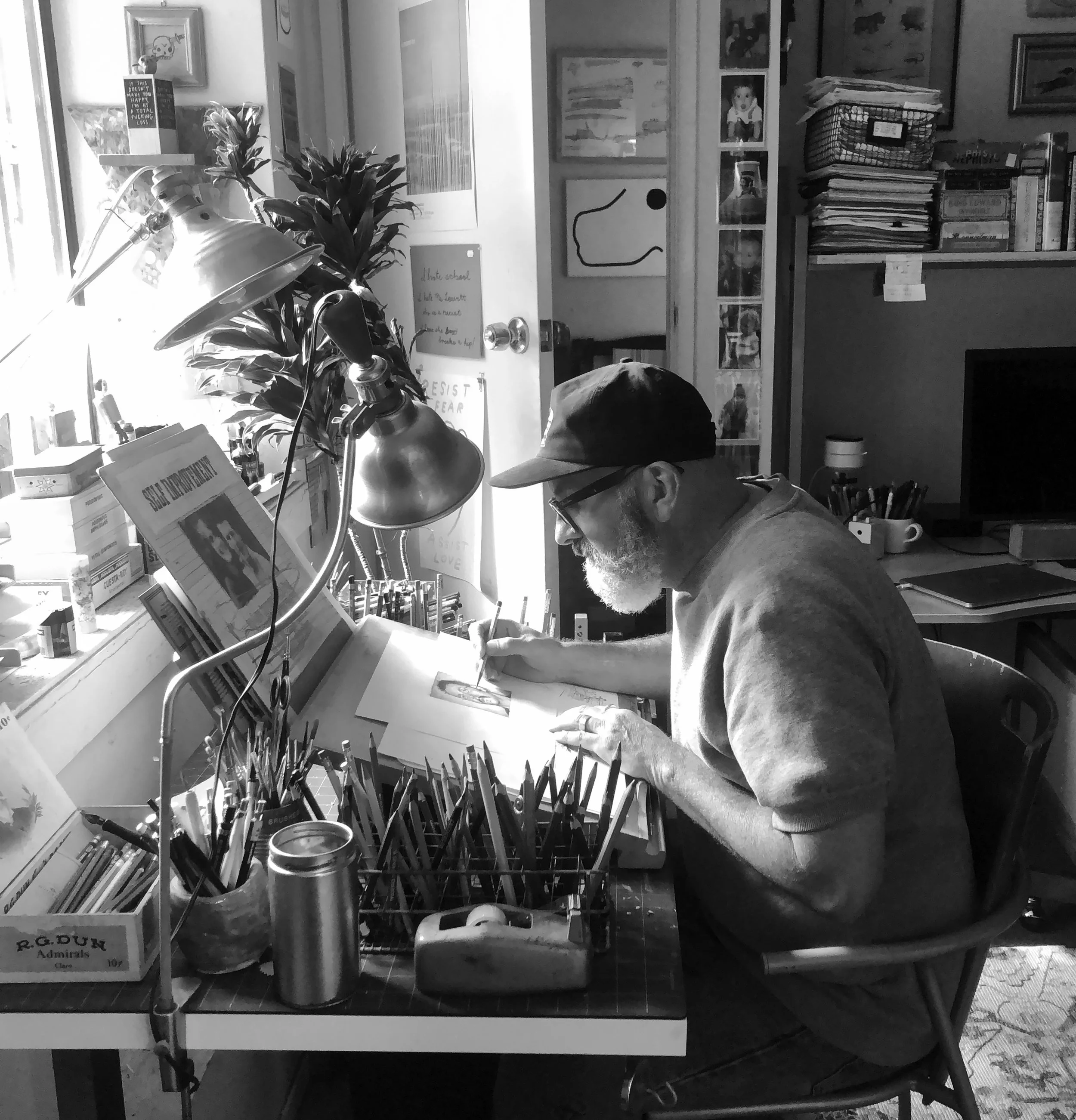
David Fullarton is a Scottish
born copywriter and artist who
now lives in San Francisco. His
hilarious collages take an irreverent
and cynical sideways look at the
mundanity and absurdity of every
day life, combining stunning
illustration with a low-fi, grunge
aesthetic. We've been in stitches
pulling this article together, we hope
you enjoy his unique view of the
world as much as we have.
Originally published in Issue #10 of Contemporary Collage Magazine 2022
Hi David, I’m interested to know what made you take the journey from Scotland to San Francisco?
It wasn’t my decision, it was my wife’s, she’s American and we met in Glasgow. She stuck it out for three or four years in Glasgow, and after that we thought we ought to go somewhere a bit less grey. She had friends in San Francisco, so we came over to visit and really liked it, and that was that. We got married and came over here, and we’ve been here for 26 years.
Presumably you studied in the UK then?
I went to Edinburgh College of Art and got a Drawing and Painting degree in 1984.
In terms of your work, I’m not sure where to start really, there are so many elements and so much to pick apart. My umbrella question I suppose is, what’s it all about?
I’ve been asking myself that lately, actually. Right now I’ve got a solo show, it was funny because they asked me to come up with a title for the show and I hate doing that stuff, but the title I came up with was ‘Further Exercises in Futility’.
Instructions
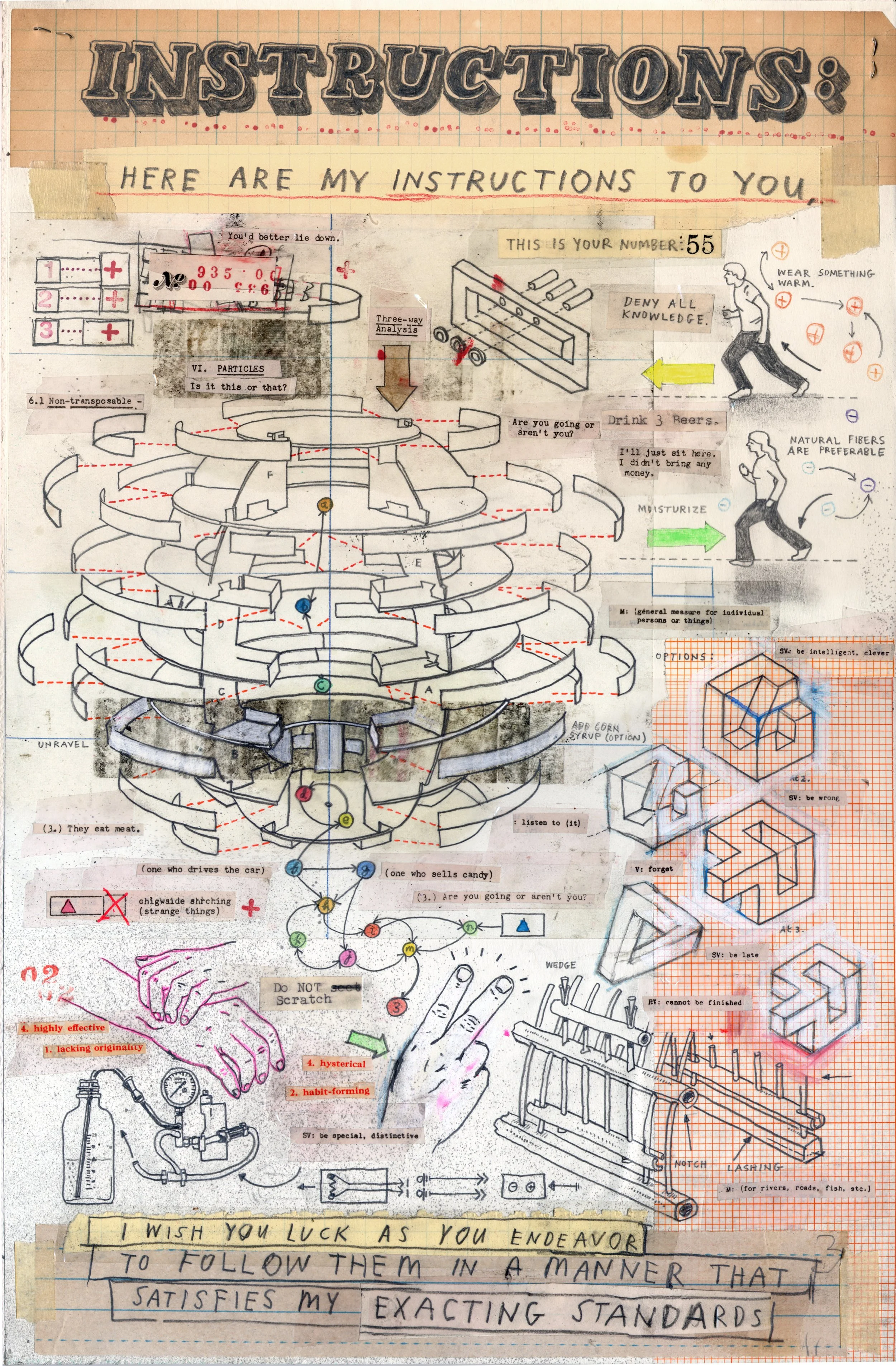
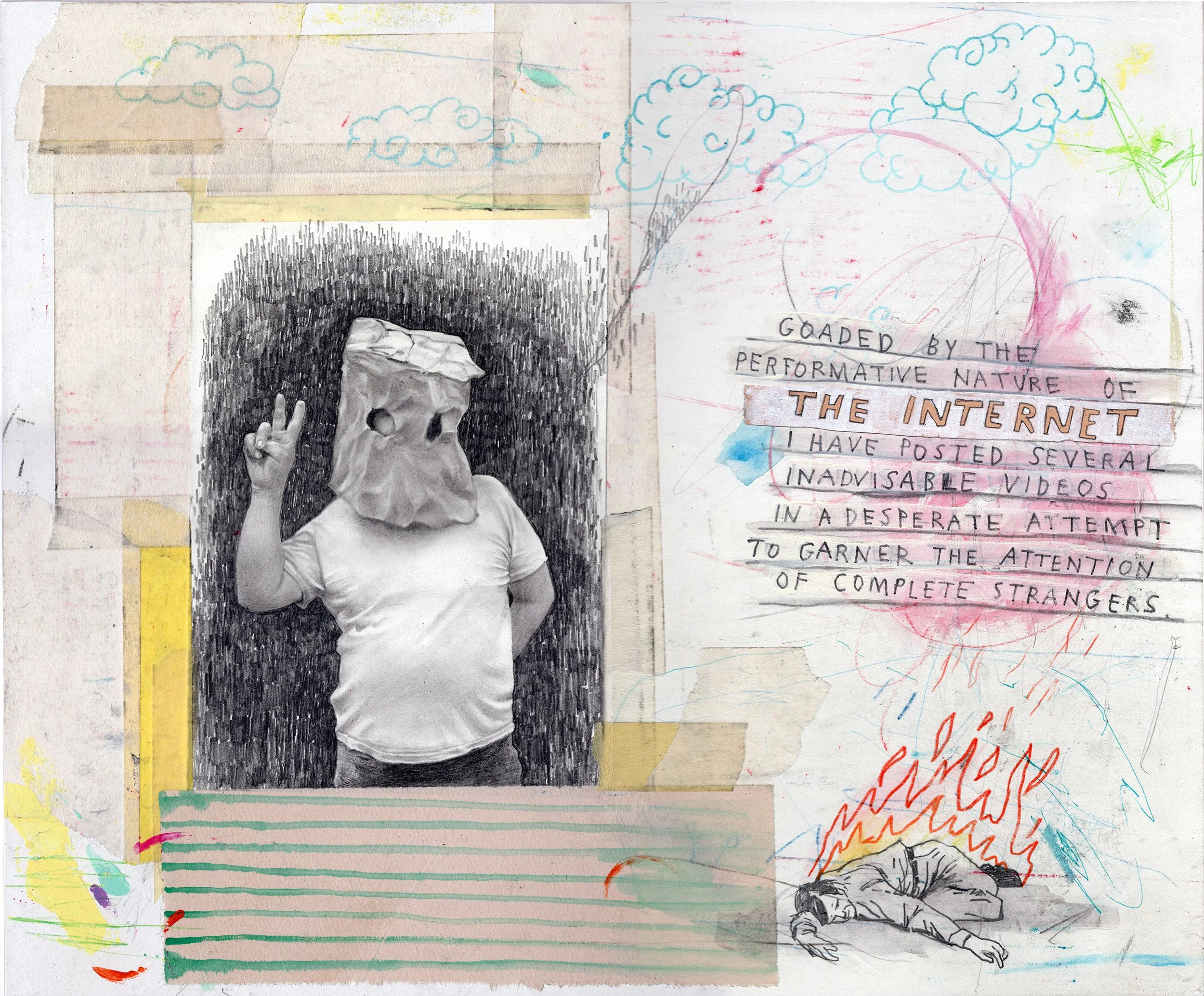
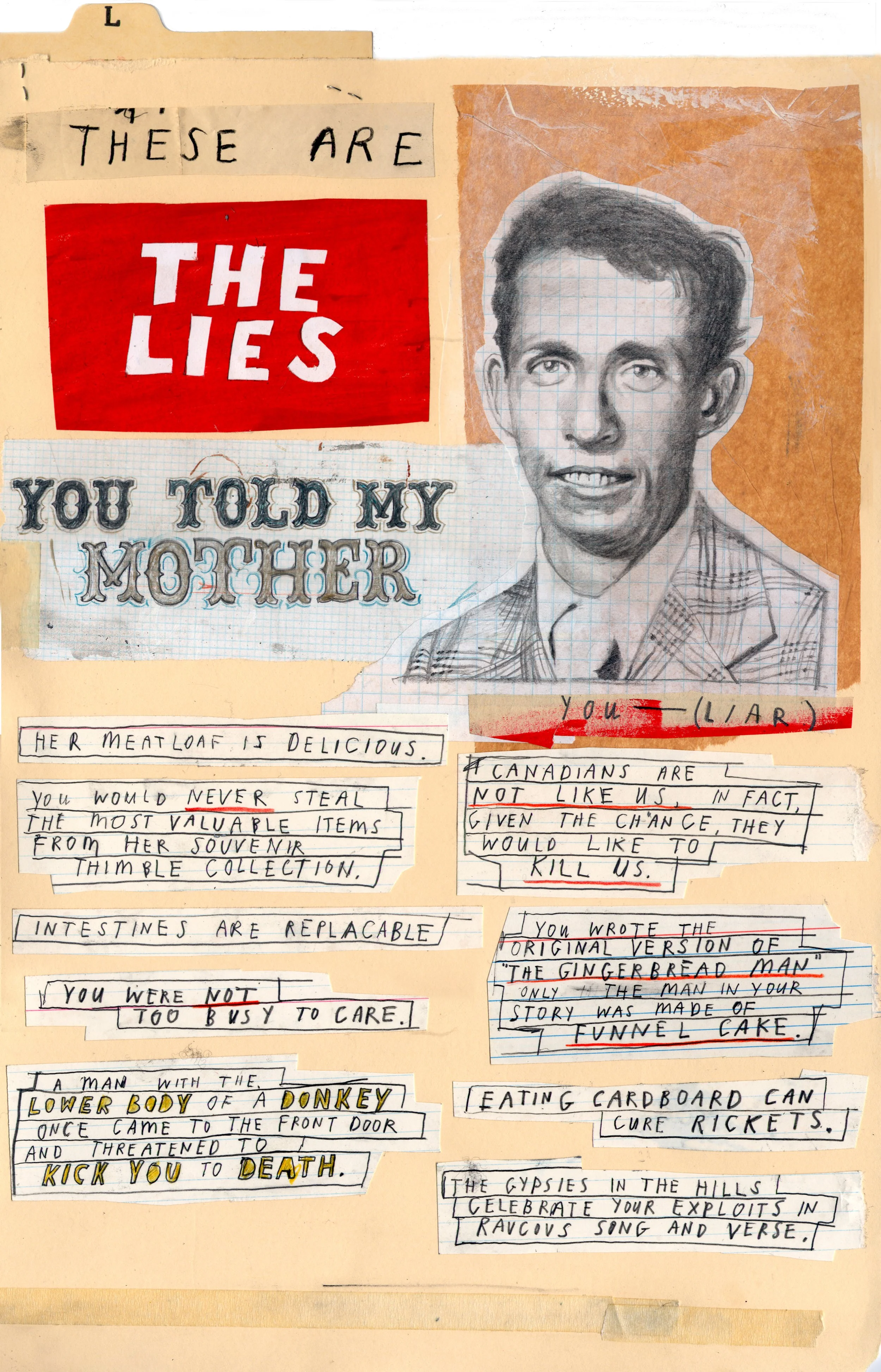
Once I had the title, I kept looking at the pieces that were going in the show and there were so many of them that resonated with it, and the futility of life and modern existence. I think a lot of my work is about that, how people get through mundane everyday existence and seek some joy out of that and find a way to make sense of the modern world. A lot of it’s to do with that. A lot of people think it’s dark and gloomy but I think it’s the opposite. It’s finding the humour in that stuff and that’s what helps you get through life.
Coming from Scotland, there’s that attitude of having to find the funny side otherwise you’ll go mad. Moving here where there’s a massive emphasis on being happy and the pursuit of happiness with a kind of desperate optimism, that’s also a big influence.
I also think a lot of my work is a reaction to that relentless pressure to always be happy and optimistic, which can be really destructive. There’s relief in admitting that shit happens and that it’s okay, and if you can find the funny side of that then you’re going to be a much happier person.
Life Choices
I’m interested to know what your process is? When I look at your work, it seems to me that you are a highly skilled illustrator and draughtsman in terms of your pencil drawings, which are then taken into these completely different environments that are rougher and grungier. Then, of course, you add the words which take the portraits into a totally different dimension - is there a general order of things?
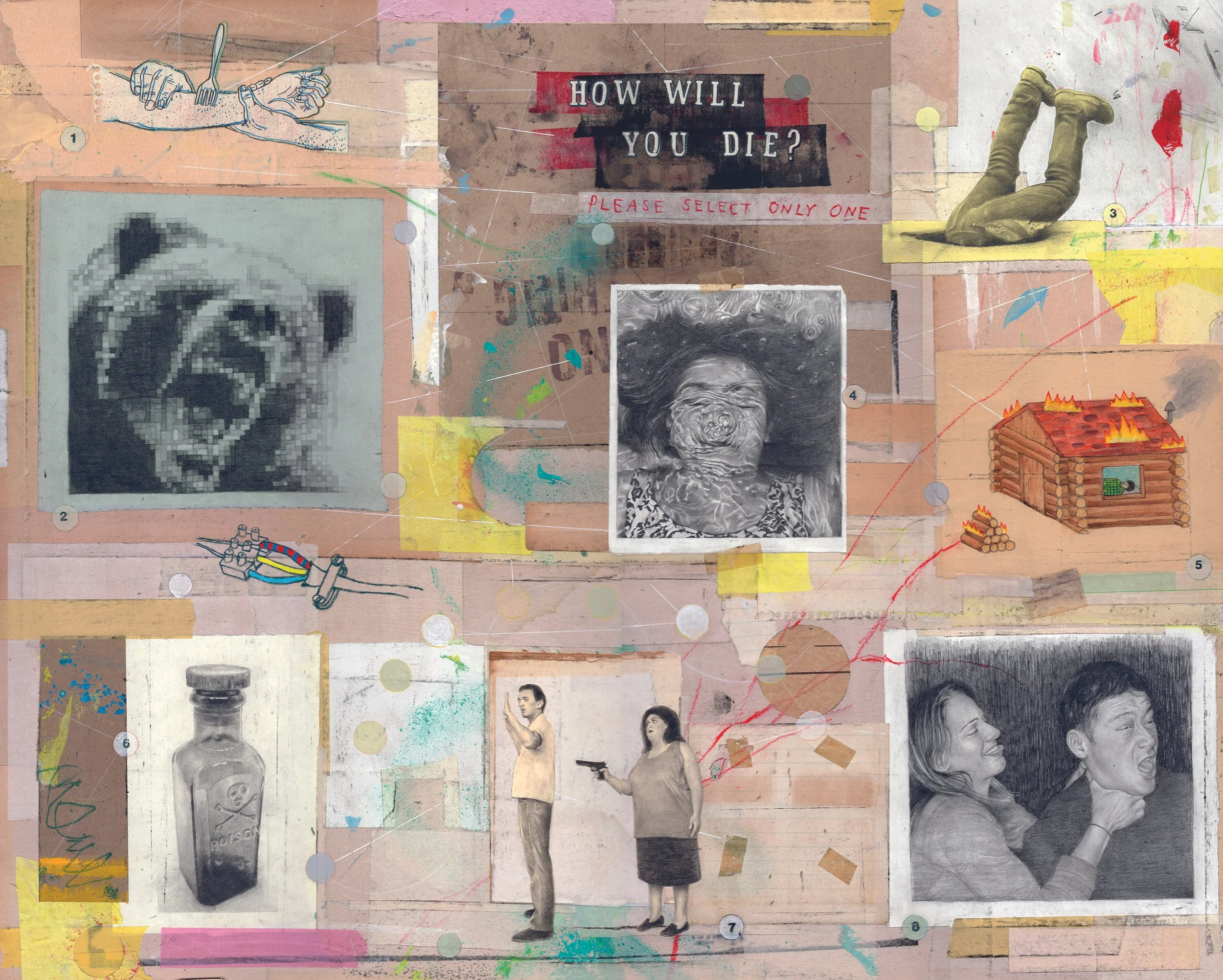
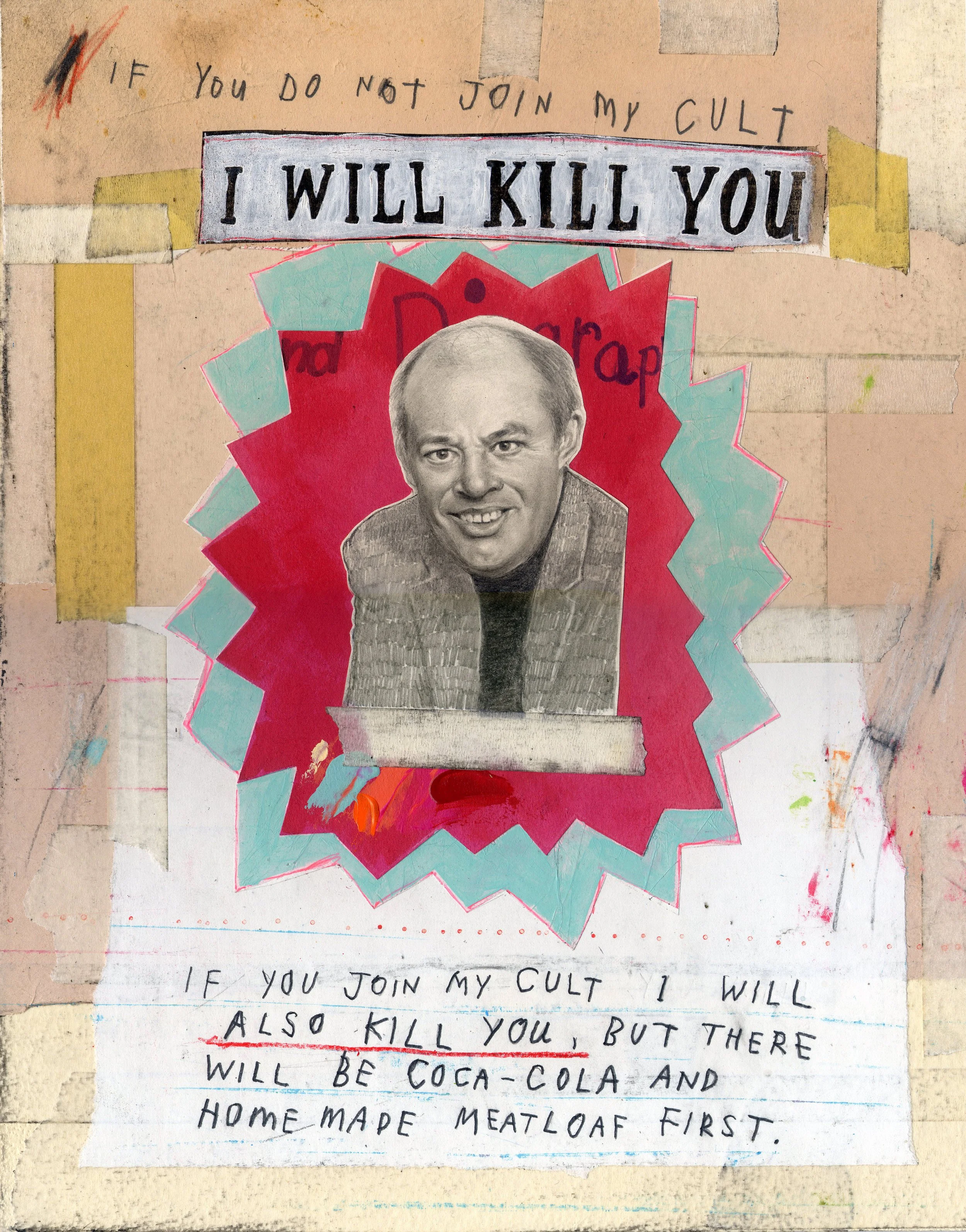
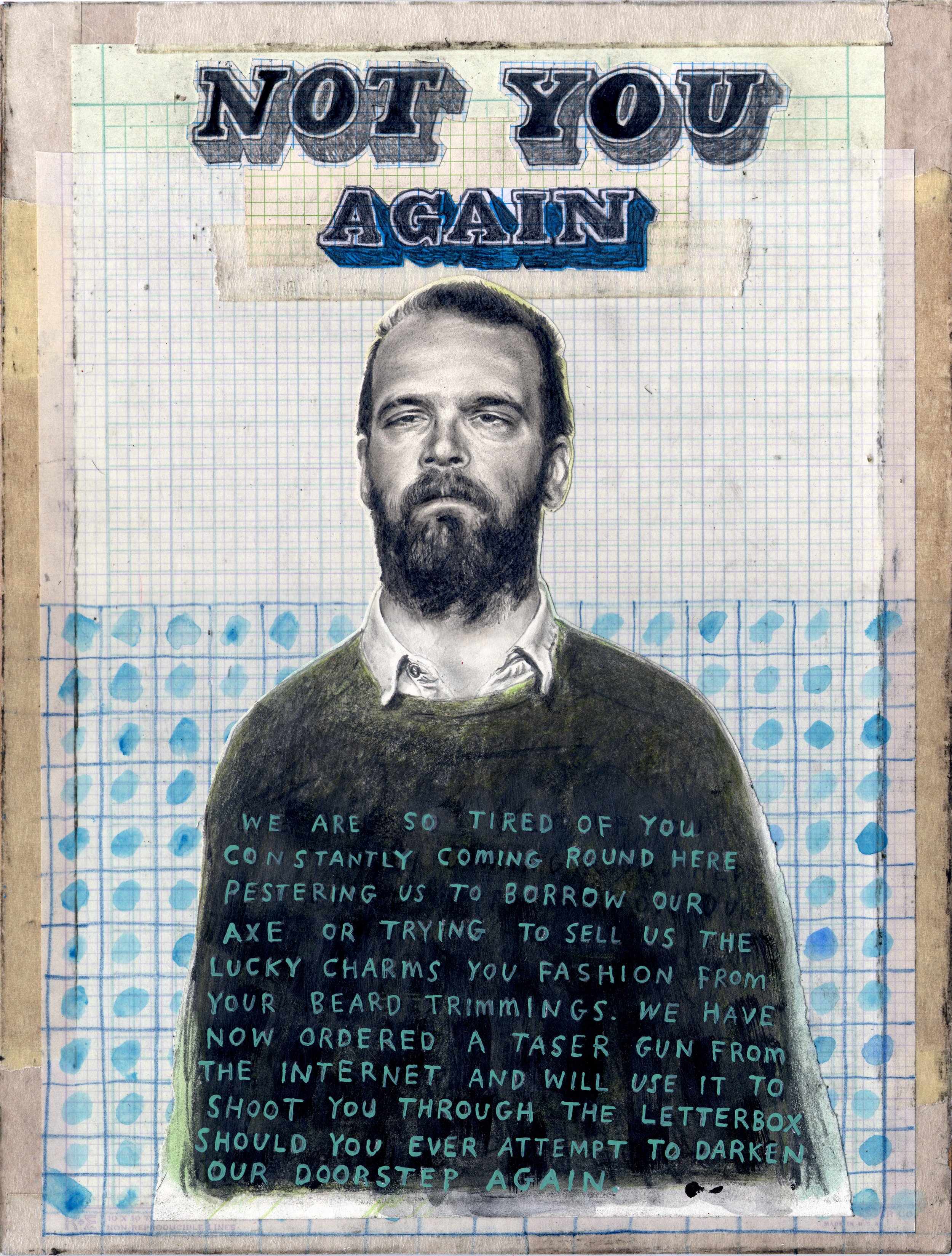
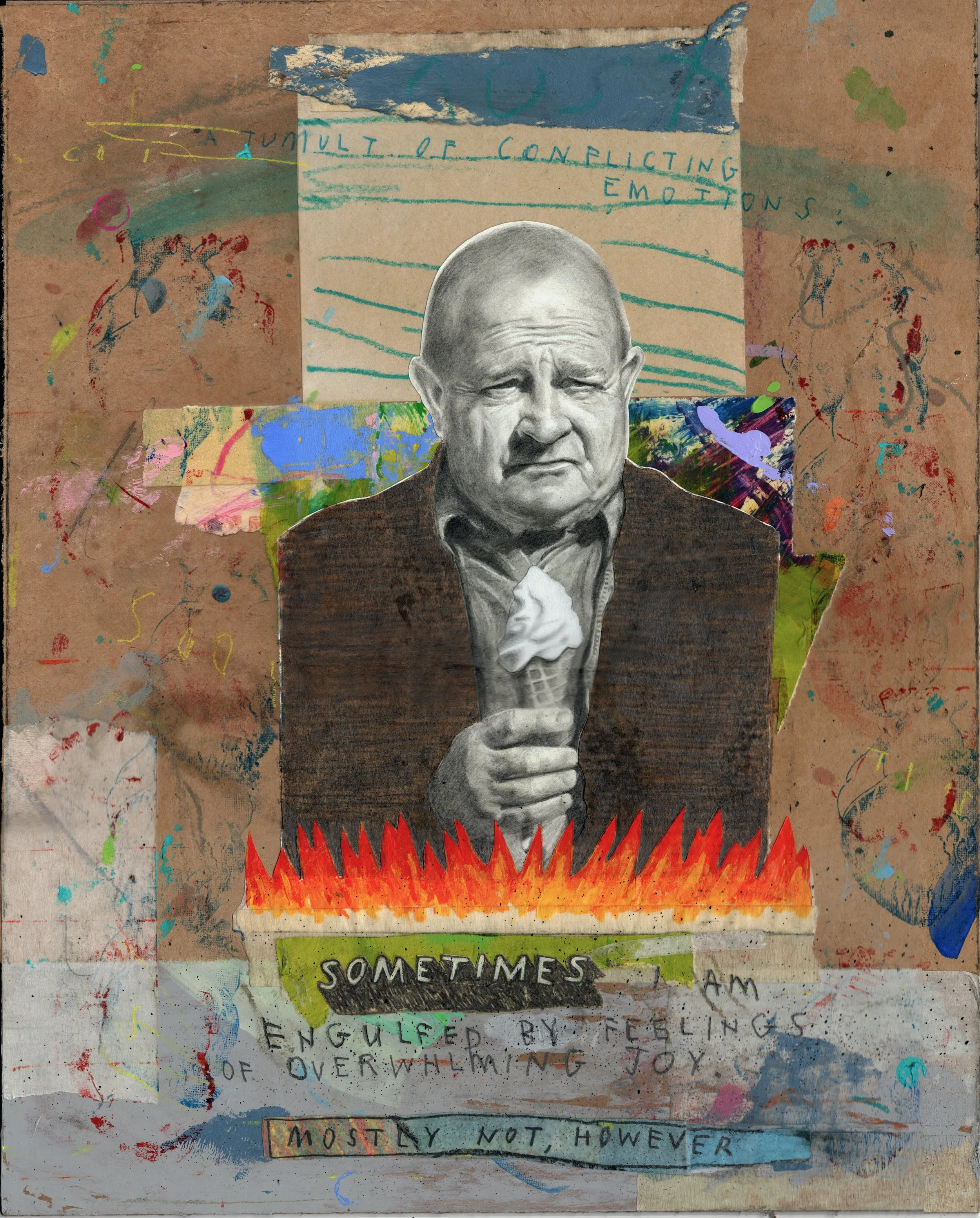
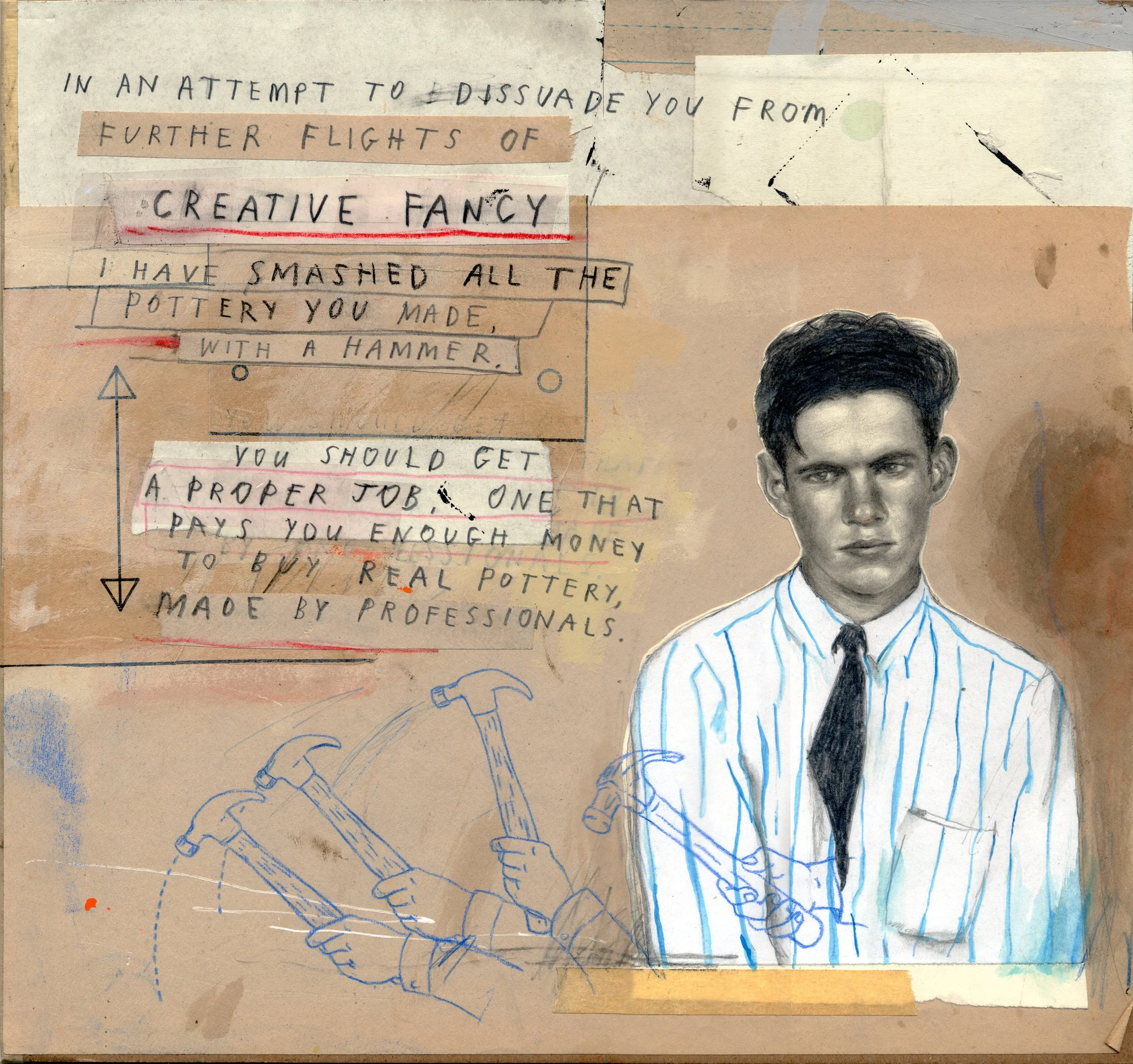
There’s kind of an order but not always. The portraits have evolved a lot over the years. I've become more and more obsessive over those drawings, as I’ve got older I’ve got a bit more meticulous with them until they’re perfect, and then when they’re finished I’m actually kind of annoyed at how nice they are. They’re these really nice drawings and that aesthetic doesn’t really appeal to me after I’ve done them.
That’s why the other stuff comes in because then I can mess them up and make them look like something I actually like. It’s kind of a way to free them up. I really enjoy the process of drawing but I don’t always like the results, so the collage part, the messing things up and tearing things, it helps me feel better about the illustrations. I like the whole accidental part of the collage as well. The drawing part is so tight that the rest of it gives me the freedom part that pulls it together for me.
The part with the words and the pictures is kind of fluid. I’ve got lots of notebooks that are full of words and thoughts, little collages and drawings and that’s where all the ideas live. Sometimes I’ll start with the words and try and think of a way to put that together which often can end up super illustrative and a little bit obvious. Other times I’ll start with a drawing that I want to do and then try and reverse into the words and try to make that work.
That way often ends up with more interesting juxtapositions, with words and images that maybe add a little more depth or unexpected meanings.
I also do larger drawings on wood panels and canvas and those tend to be a lot freer, I’ll do the collagey parts first on those. I’ll get the canvas and mess it up with lots of collage and paint, then after that, I’ll attach drawings and words - those always feel much freer and more fluid. I’ll almost never have an idea when I start those bigger ones.
After I left college I basically gave up art for about 10 years. Then, when I moved over here that’s really when I started again. For the first six or seven years all I did was bigger pieces which were much more collagey and free, but they just took so long and I got frustrated with how long they took to do, so I started doing the smaller, more illustrative type pieces.
Are the portraits of real people or are they imagined?
They come from various places, I’ve got a lot of old magazines. A lot of the drawings are old images of people, it adds a different dimension with the fact that they’re slightly dated and look a little bit out of place, I enjoy that aspect of it. But then you get people around today who actually look like that too, and I like that. I collect lots of old magazines and then, if I find someone who looks interesting, I’ll draw them. I also trawl Flickr and find snapshots of a family party with someone making a stupid expression in the background, that type of thing is perfect.
Are you working with the original drawings or do you photocopy them? They feel like quite precious things to be ripping up.
I use the original drawings in the collages. Once I have the finished drawings, they often annoy me, so it’s great to mess around with them and make them less perfect. I feel like I’ve got this weird obsession to get everything just right with the illustration, I don’t know why. I generally like other people’s art that isn’t as tight and I ask myself why I have to do it. When I’m drawing, sometimes I’ll work from the image in the magazine or sometimes I’ll scan them in and blow them up because it might be that the person I’m drawing is in the background of a photo, because that’s usually where the more interesting things are going on.
How much of the messages that you put on are you just messing around with concepts and that comedic juxtaposition of stuff, and how much of it is about the way that you actually feel?
It is a lot of how I see the world. It’s cathartic for me to get that stuff down on paper. I don’t feel like I’m trying to put across a message, but it makes me feel better to put that shit down on paper and get it out of my head.
It’s funny because, quite often I’ll think of a stupid phrase that will have just come to me, so I write it down or else I’ll forget it, or I’ll be reading something, and part of the sentence will make you think of an alternative ending for it. It’s not that I’m thinking ‘this is the subject matter and I’ll write a line about it’, it tends to be more spontaneous. It’ll just appear from somewhere and I’ll use it.
When I flip through your pieces, whilst there’s an underlying cynicism of life, there’s quite a diverse range of subjects or routes into that, are those things literally popping into your head?
I’m not saying that stuff’s coming into my head all day long, it’s not like that. I have to get into a certain state of mind and then I can start to think of those things. When I’m drawing, I go into this weird state where I’m thinking, but not really thinking and that’s when things will start to come to me. Sometimes, if I’m reading a book, what I’m reading will spark thoughts that aren’t really related to the book, but I get into that way of structuring sentences and things will come from that. If I’m out having a walk and thinking random rubbish, one thought will enter my head and that will lead to something else. There’s a sort of writing process. Professionally, I’m actually a copywriter, so that feeds into it.
I was going to ask about that - if there was another job. So, as well as the copywriting, is there a commercial illustration element to what you do professionally?
I work with designers and art directors so they do that part of it and I just do the words. About ten years ago I got a bit sick of being a copywriter so thought I’d try illustration and I got a decent amount of work and had some stuff in the LA Times and the Washington Post, but I found it really frustrating. I was doing stuff that I think of as being similar to my artwork, but without the control. You’re working to a brief and dealing with an art director who's asking you to change this and that. It got to a point where it was so frustrating that I decided to just stick with the copywriting and keep the art completely separate.
I don’t really do a lot of commissioned stuff now, the art for me is really personal and that’s what keeps me sane and on track.
How much do you make yourself laugh when you’re coming up with the concepts for your work?
I never laugh! It’s more that I feel that something is working. But I never laugh about it, no. I sometimes can’t tell if it’s funny or not. Some things that other people find hilarious, I won’t think is, I’ll think it’s serious. I think that’s a really British thing, that idea that humour can be serious, you can convey a serious point which I think is really lost over here. People are very literal, it’s funny therefore it’s not serious or vice versa. I don’t really sit and laugh at my own work at all but it’s nice to see other people laughing at it.
With that particular humour within your work, how much are you aware of that lineage within your approach? Going back to Monty Python, Spike Milligan or modern day, David Shrigley – those people who are a bit off the wall and come at things from such oblique angles and are thinking about things that most people don't.
Obviously I grew up with Monty Python and I love Spike Milligan, when I was a kid my dad used to read me Spike Milligan poetry and I loved that whole absurdity and way of looking at things, that was still rooted in reality – it comes back to that idea of being funny but serious. It’s hilariously funny, but a lot of the time it’s incredibly real. Being so ridiculous, highlights the absurdity of reality which I think a has lot to do with my approach.
It’s very much part of that British outlook isn’t it, that gallows humour – even in the worst situation you can find something funny.
And nothing’s off the table, you can pretty much laugh about anything which I think is great. I think that’s something that’s disappearing as well. It’s a generational thing, our generation just didn’t give a shit and now people tend to be much more respectful.
People back then seemed to understand that it was a joke and it wasn’t a personal attack. I understand that people can take things personally and it’s hard when people misunderstand my work, but I hope there’s a way of saying something that is so obviously a joke, it helps you find humour in difficult situations.
There’s no doubt that the politically correct brigade in this day and age are dampening some of that ‘out there’ humour.
I think so. I do think political correctness is needed but also I believe that it’s good to be transgressive sometimes and just look at how ridiculous everything is.
A lot of that then is about analysis, it’s about looking at a situation that people generally think is normal or acceptable then looking at it from a slightly different angle and seeing it for what it really is in a different context.
Yes, you tend to go through life without analysing everything, as a survival mechanism. You have the routines you use to get through your day. But when you take a step back and look at how we live, it’s insane what we do all the time.
Craftsman of Destruction
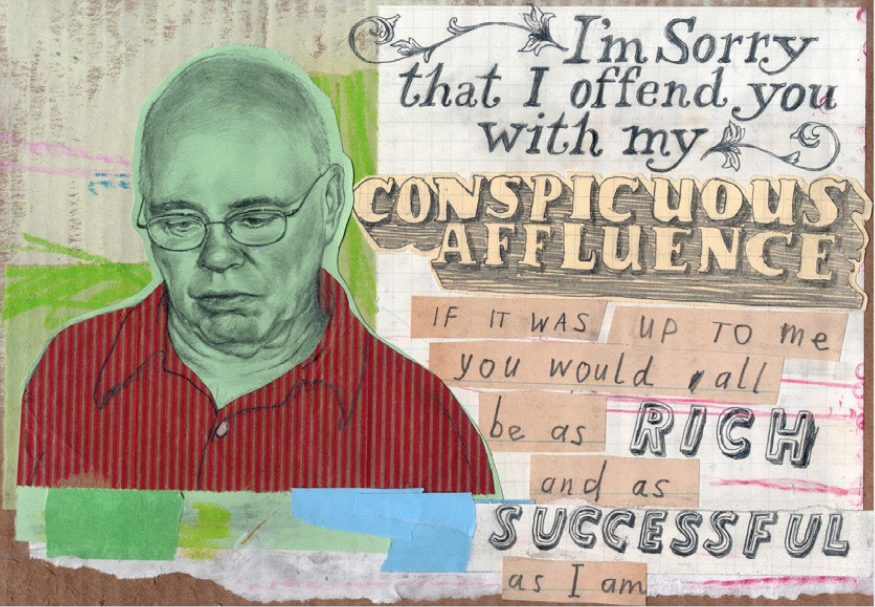
What about some of the themes in your work then David, I saw on your website that you’ve got a body of work called ‘Apologies’, can you tell me a bit more about that?
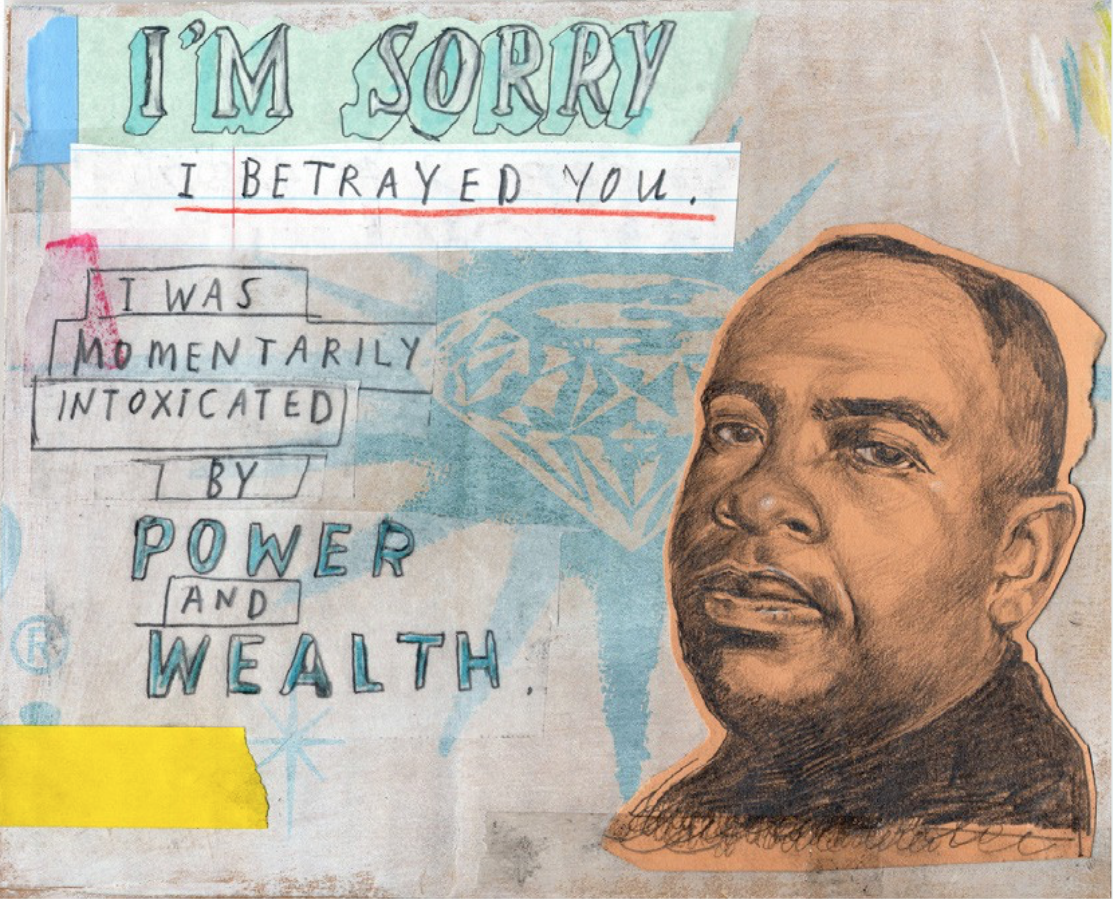
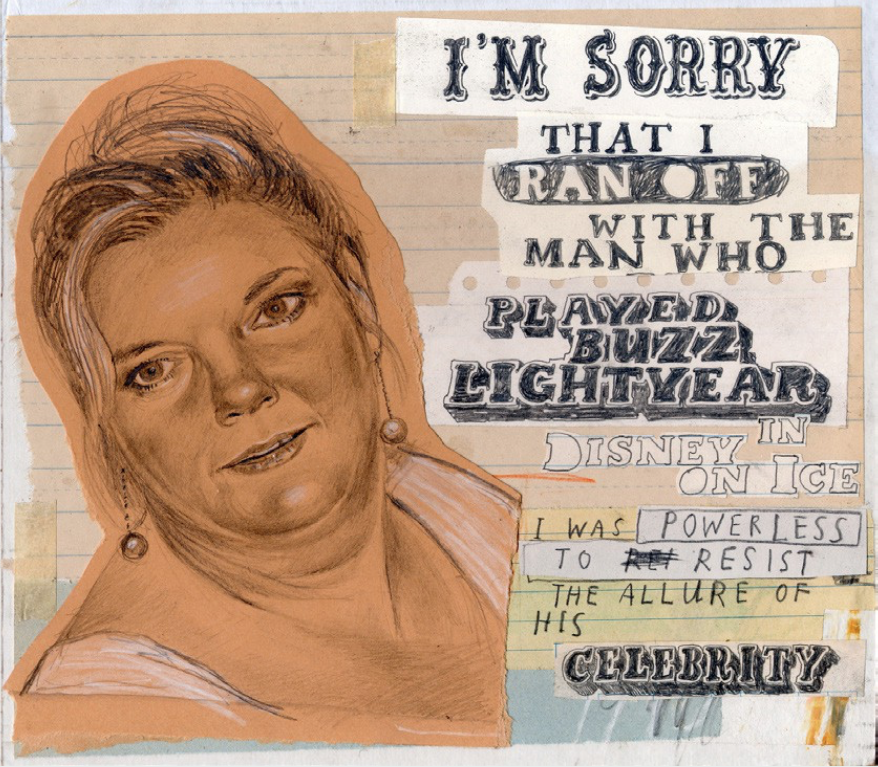
That came about when I was stuck. I’d got to this point where I’d lost the plot a bit and didn’t really know where to go. It started out almost as a mechanism - I thought I could do a series to get me out of this block that I had. I’d done a few drawings before that, that had apologies worked into them, and I just liked that structure. You know when people apologise, there’s always that ‘I’m sorry, but…’, with the added qualifier to justify what they did. It was just a great mechanism to put stuff together. You could make the funny part the apology or you could make it the excuse part, or both, and they just worked together really well. I came up with a whole bunch of them in a little book and started looking for drawings to match the portraits to the apologies. I must have done about forty of them, and it really got me on a new path because that’s when I started doing the smaller drawings with text worked into them.
It’s funny as well with the whole British/American thing. British people apologise for everything, but Americans tend not to. I did a lot of those apologies really quickly and it was great. I really stumbled upon something there. I still occasionally come up with them, I haven’t done one in years but I have a list of around five or six that I intend to use at some point.
What’s your typical day like, are you producing collage everyday?
The last couple of years have been great because I’ve been working from home, so even when I’m sitting in pointless video meetings I can draw. Obviously, when you have a day job, a large portion of your day is spent doing that. But it’s great to work from home, I’ve produced a lot more work, to the point where I’m doing my second solo show since the pandemic began. I work four days a week so usually on Friday, Saturday and Sunday I’ll draw and, if I have the energy, I’ll do it in the evenings as well.
Once you’ve produced a piece, what do you do with it? Have you got a vault of finished pieces?
Right now I’ve got virtually nothing, because I’ve just hung that show. I’m lucky because people do buy stuff, so I tend to get rid of it. I don’t have a backlog of old pieces here, but the gallery looks after any unsold stuff. Six weeks ago, my studio walls were covered in pieces. I just put them on the wall, but then I’ll look at them again and get that horrible thing where I’ll need to go back and redo bits here and there. Sometimes it’s nice to get rid of them because it takes away the desire to rework stuff.
What’s the next phase for you?
I actually just turned 60, so I’m kind of hoping there’ll be less work in the future and more drawing and art. I’m working towards transitioning out of my day job and pushing the art a lot more. It’s what I love to do and what makes sense to me. It’s what I’m here for as far as I’m concerned, the rest of it’s just what I have to do.
As well the gallery in Oakland, I show my work in Los Angeles at a gallery called the Dove Biscuit, I’ve always done little things for them, but they recently asked me to do a proper solo show next year, which is great because it gives me something to really focus on, so I’ll just keep going.
You can see more of David’s work on his Instagram page : @hughjanus