
A New Cell is Born
By Helen Hartmann
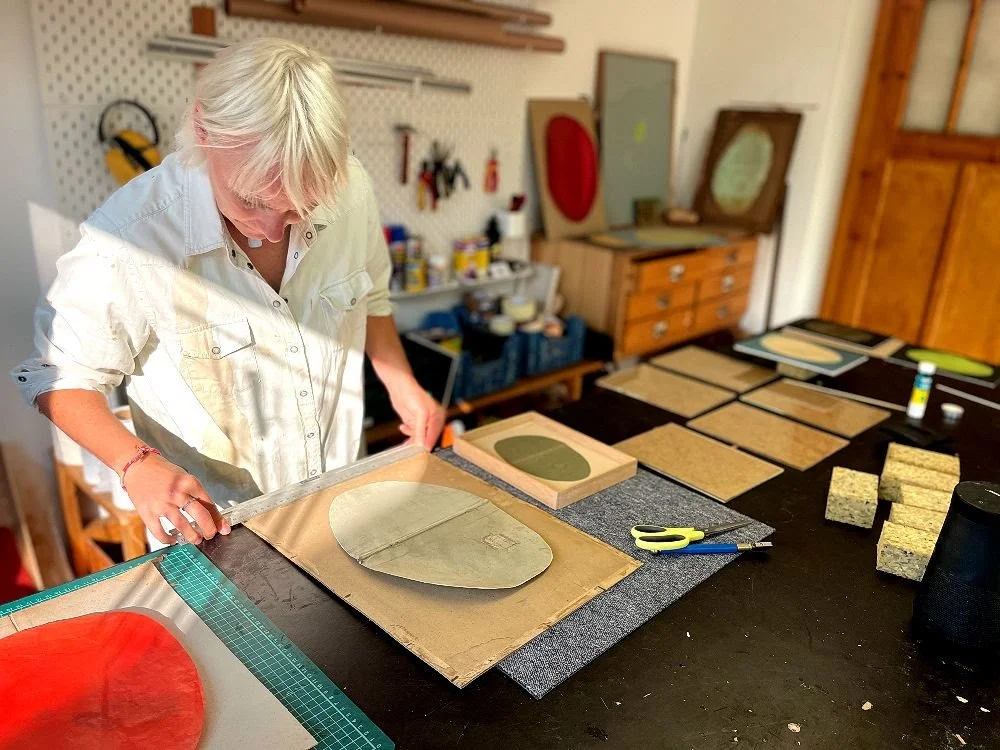
Ilse Pierard in her studio
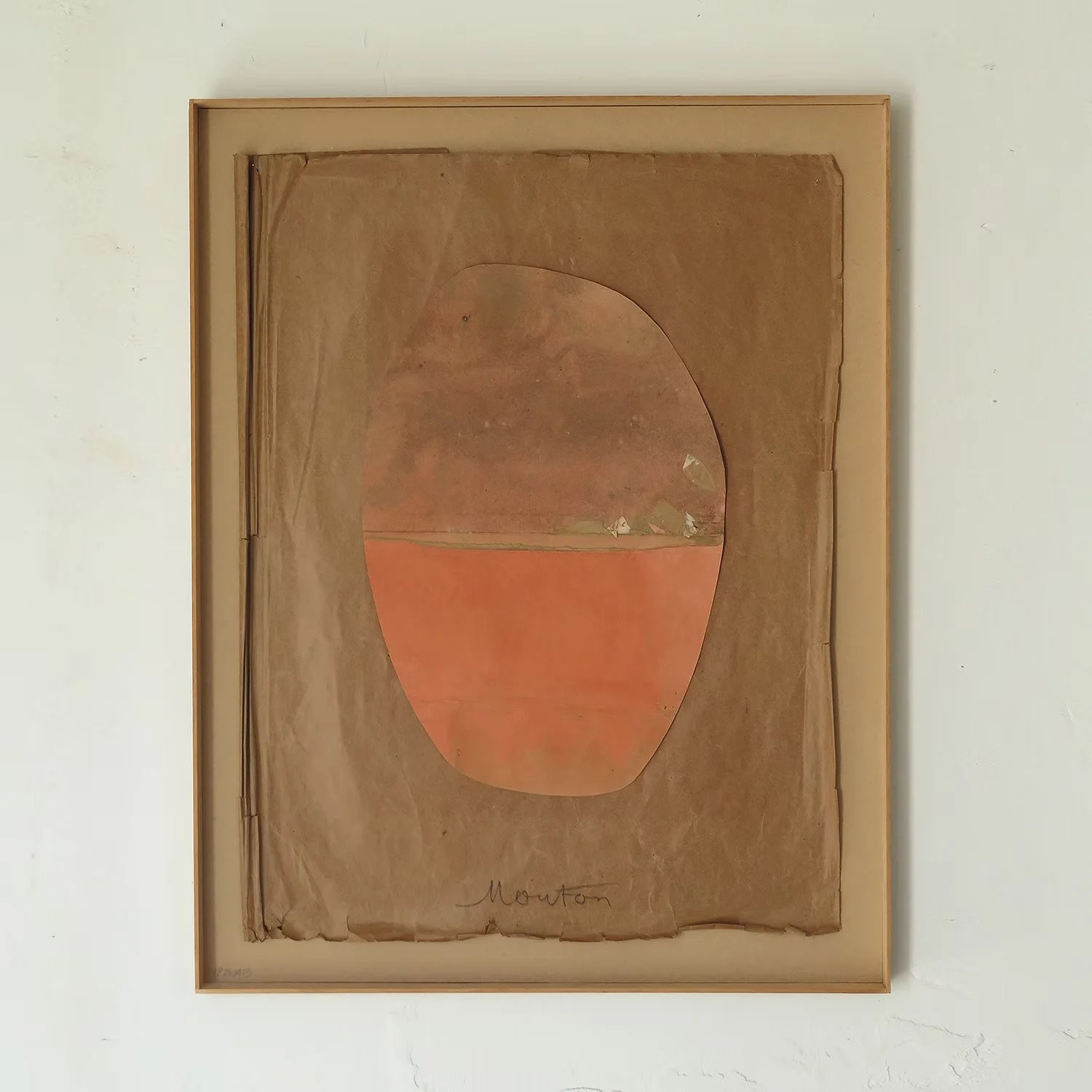
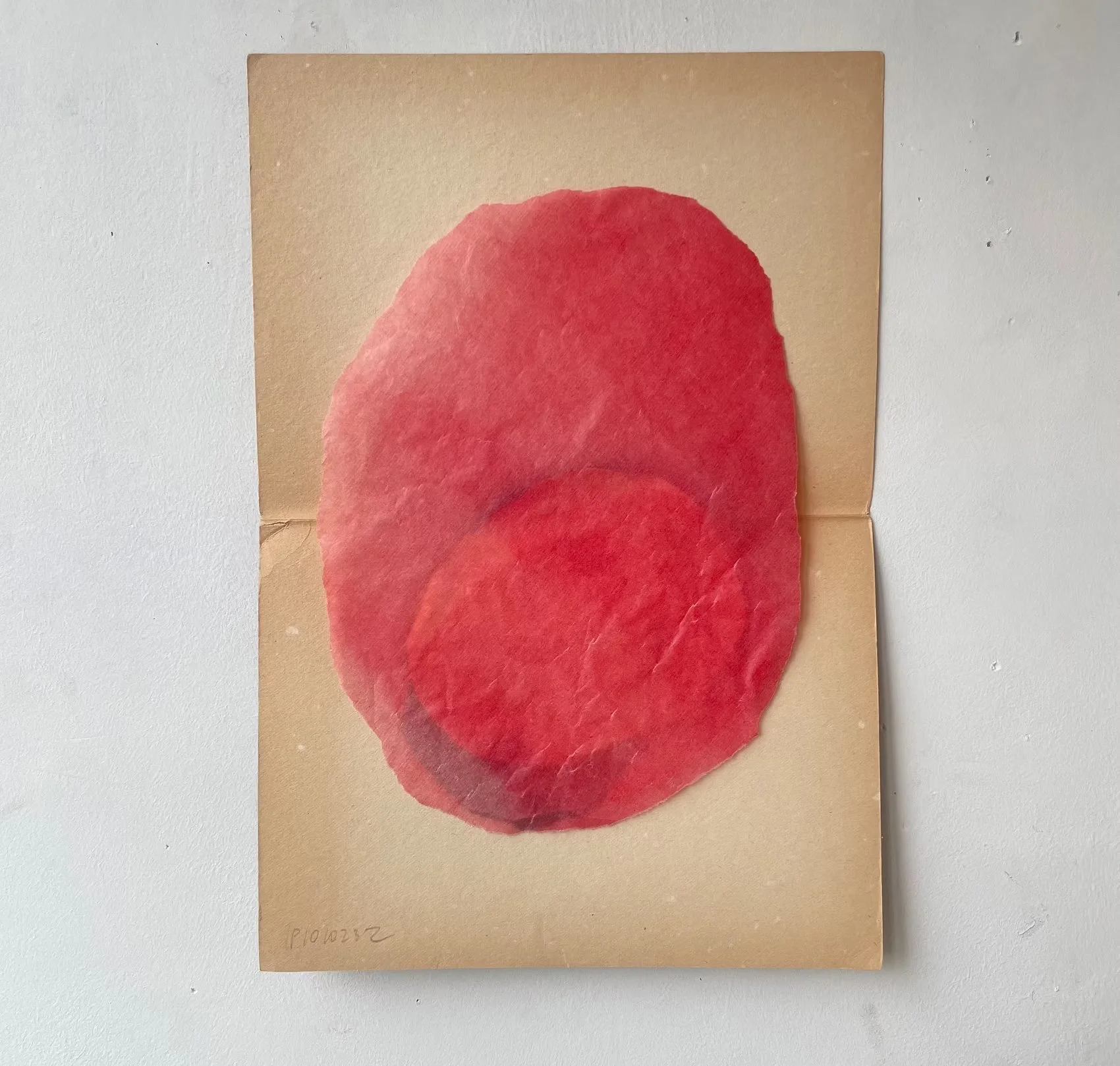
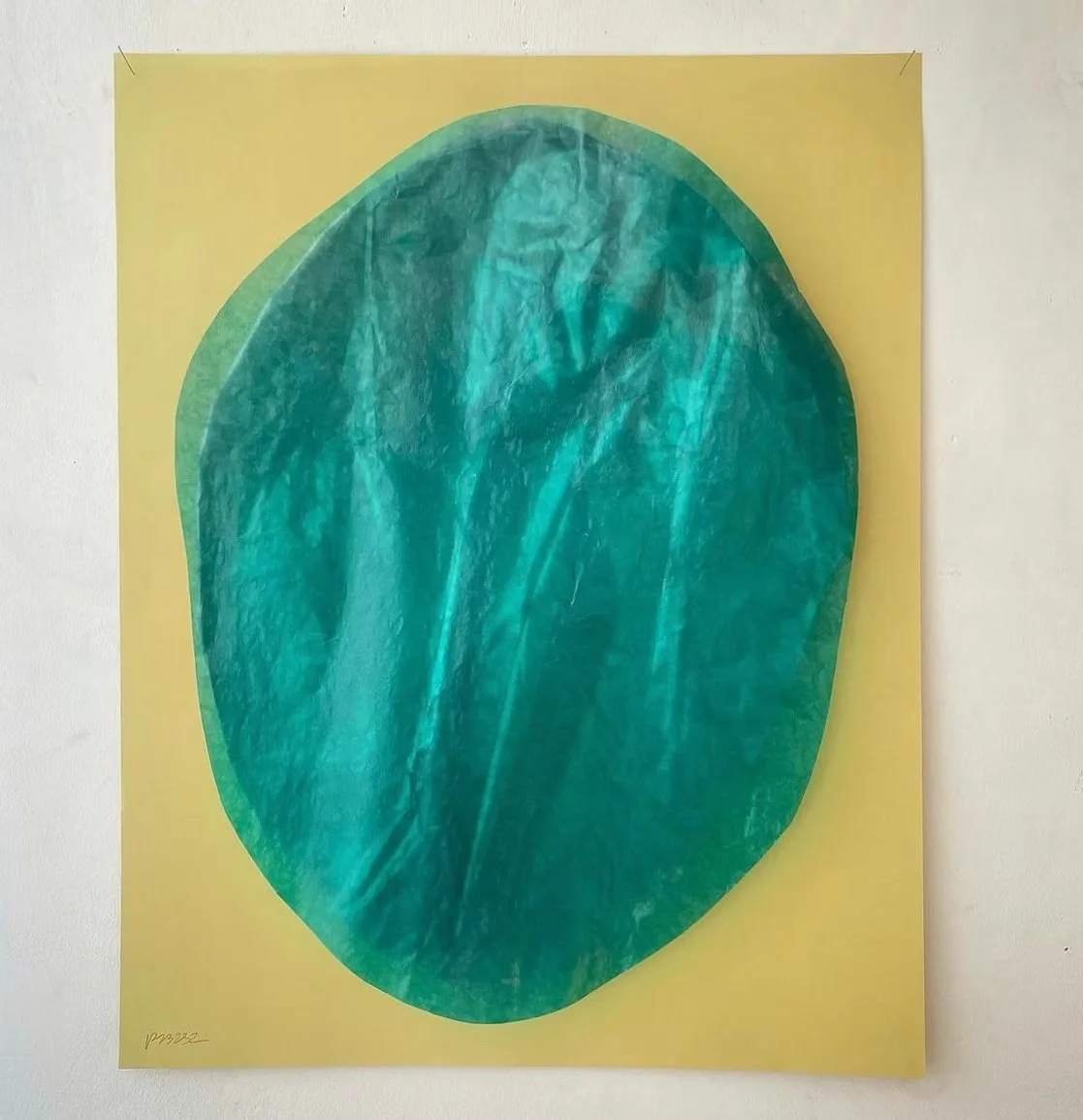
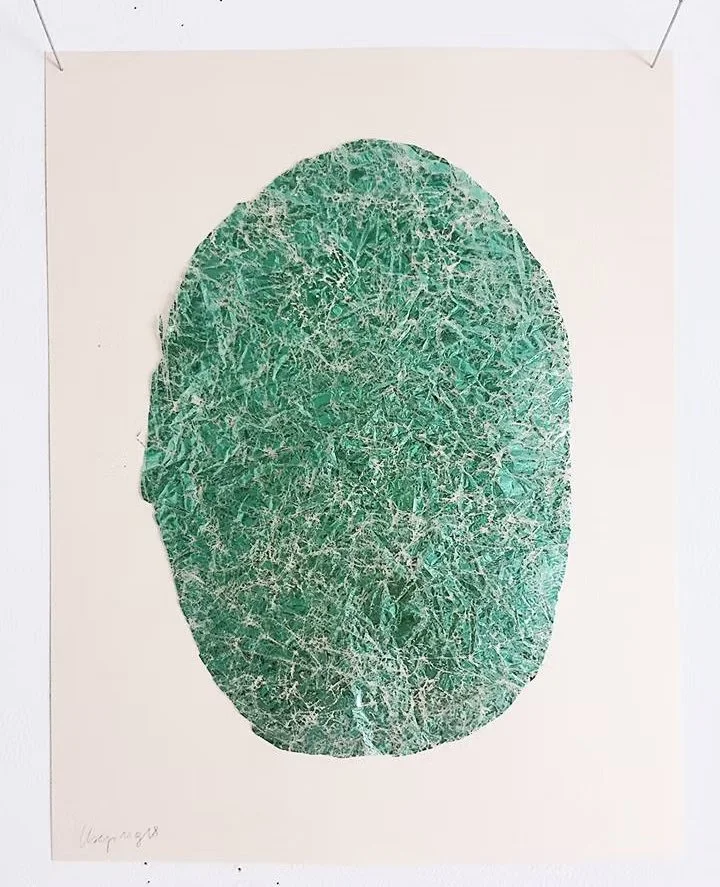
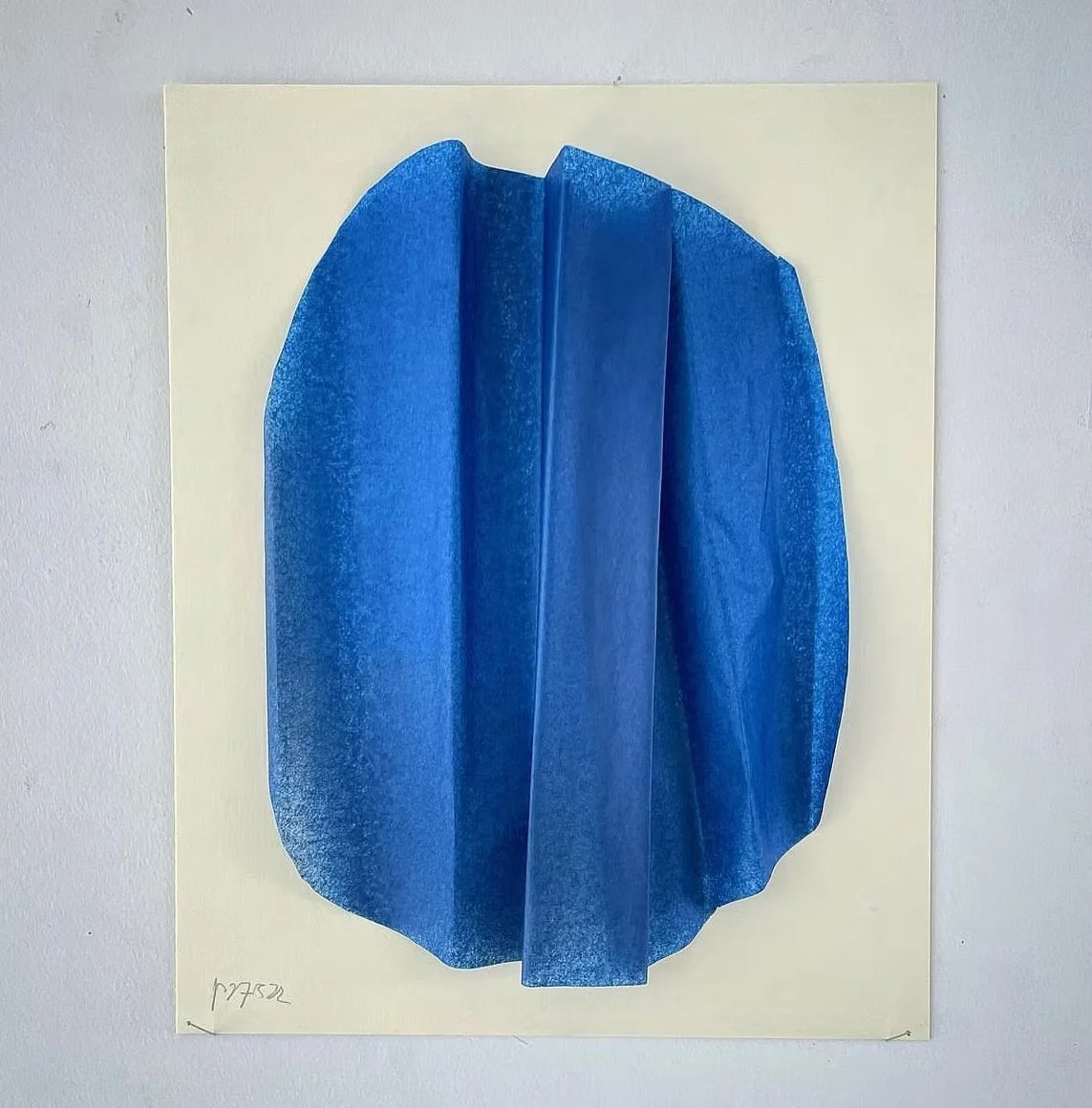
I first came across Ilse Pierard’s work years ago. It touched me deeply, though I couldn’t quite explain why. I stopped trying to make sense of it, and simply enjoyed enjoying it. Ilse (1976, Sint Lukas, Brussels) is a Belgian artist who makes delicate paper objects from found paper. When we speak online, she tells me her home studio, near Antwerp, is filled with materials. We might find silk paper, transparent paper, old carriers, even partially mouldy sheets peeled from the walls of old factories. “I feel like an archaeologist of forgotten paper,” she says. “And some cells start as old paper but end as futuristic ones.” Her work revolves around one shape: the cell. Oval, egg-like, elemental. Each piece is, in her words, “an ode to the cell”, to the vulnerability and strength at the core of life.

Making
When Ilse works, she follows intuition rather than a plan. “I look for combinations between papers and their carriers until there’s a vibration between them,” she explains. “An energetic exchange.” Her most used tool? “My hands,” she answers immediately. “They’re the messengers of the soul. After that, it’s work for my scissors.” She describes her process as a conversation between the material and the maker. “I create quickly, sometimes up to twelve works in a single day. But that only happens when the conditions are right: when there’s enough space for me to drop out of my head and into the flow. I need to shield myself from distraction and stay open to what wants to appear, to playfulness, to intuition.”
“Even though the act of making is immediate, my process of selection is much slower. A piece often rests for a while, maybe on a table, or on the wall, until I sense whether it still resonates. If the frequency feels right, if it continues to hold its presence over time, then it may be selected and framed. Creation, for me, is fast and instinctive; curation is quiet and precise”. There’s a slowing down and a need to listen. “My work is very present. It invites the viewer to slow down too.” Viewers often say they feel the energy of the cell. “In it the cell holds a story that my hands gave form to, a story I ‘downloaded’ during the process and caught in the shape of the cell.”
Ilse arrived at the cell form in 2016. It was a result of a conscious decision to strip away everything that didn’t truly matter. “It came out of a deep search for essence. I was drawn to the minimal, the elemental. That’s when this primal shape found me: a form that holds both a beginning and a promise. Over time, it became a unique visual language that continues to invite me to explore, to listen, and to evolve.”
Motherhood
Ilse’s path hasn’t been exactly linear. Her professional background includes work as an art director and web designer. She moved from the city to the countryside. The impact of her children on her life is unmistakeable. Now young teenagers, they changed her life, and they brought her clarity. “My role as a mother asks a different energy from me than my role as an artist,” she says. “I tried making art with a baby on my shoulders, let's just say it didn’t work for me.” After a period of reflection and inner work, she slowly found her way back to herself. What followed was a quiet but powerful shift, a transformation that gently reawakened the artist within her. “I woke up to the realisation that I can navigate my life from a place of feeling and knowing.”
“To be honest, I still find myself bracing for the week my two teenagers are with me. Not because I don’t love being their mother —because I do, deeply — but because that week asks everything of me. It’s intense, full, and constant. There’s very little space left for creation, for quiet focus. It’s a kind of split rhythm I’ve come to accept. And yet, I do my best to show up for it fully. This is the practice. In essence, I wasn’t born to be a mother in the traditional sense. At home, the dynamic with my children can be challenging, love is there, but so are the patterns. In the forest, it’s different. Surrounded by many children, I feel in flow. I’m heard, respected, and there’s connection. Something in that space allows me to lead from presence, not from role.”
Her art and her play forest both grew from that same impulse: to live and create from intuition, not instruction. In that space of freedom gratitude begins to take root, along with a quiet willingness to contribute to the greater whole. The children start asking for tasks in the forest, eager to help and be part of something beyond themselves.

Playing
Alongside her studio work, Ilse founded Onder De Eiken, a play forest in her back garden in Belgium. The project grew from a single moment, after reading an article which talked about the ‘extremely low percentage of children who play outside’. She decided to act that very same evening and one month later, the foundation was registered and the first camps began. Her play forest revives Carl Theodor Sørensen’s 1940s idea of the adventure playground, a place without fixed equipment or rules, where children shape their own world through play, risk, and imagination. At Onder De Eiken, children decide when they want to eat and how to spend their time. “I’m not a mother figure there,” Ilse says. “I’m playing and creating, fully in a flow. The kids bring me gifts, nature's treasures that they’ve found in the forest. We’re equals.” Spending time in nature or in the studio, it's both about the inside. Getting quiet and letting go of expectations. “I am present and aware and become one with what is. Out of that comes action. Meaningful creation and compassionate action.”


A bridge
Ilse sees both her art and her work with children as part of one philosophy. To be authentic and true to yourself and trusting your intuition, honouring what’s already present and allowing things to emerge. “What if you take away everything and look at what’s left? That’s your essential interaction with the world,” she says. “I do this with the cells and I invite the same experience for the kids, they are not entertained or instructed, they’re the captains of their own ship. And if the wind doesn’t cooperate you adjust the sails. I see the greatness and potential in every child, and I trust that the answer lies within them. I stand in my own strength, take ownership. I believe this is how I can make a difference, by teaching through example.” In the play forest, learning happens through experience and connection. The same search for essence guides her art. Each cell is its most basic form, where colour and texture react together, free from anything superfluous – allowing its potential to reveal itself. “It’s the unspoken moment when the work holds its own, when I step back and it no longer needs me.”
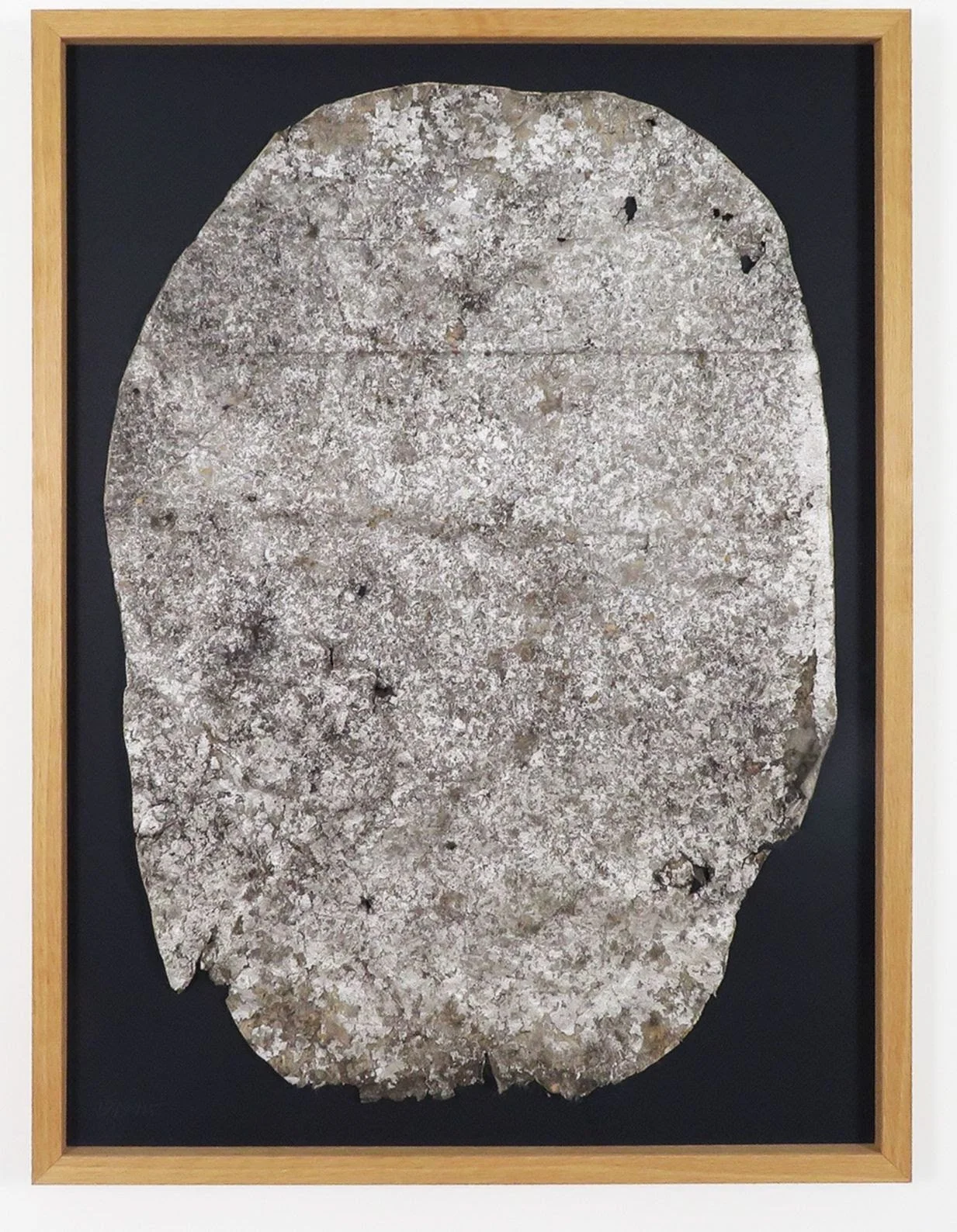
Back in her studio, Ilse shows me a new work in progress: a body-sized silver cell. It looks futuristic and out of this world. I think that maybe Ilse is a time and space traveller. One foot rooted in the muddy world of her back garden, where play frees her mind and lets children be exactly who they are. The other foot in her atelier holds space for the next cell to be born.
Find more of Ilse’s work on her website : www.ilsepierard.com and Instagram : @ilsepierard
Interview and article by Helen Hartmann
Photos courtesy of the artist